What is a filter bubble?
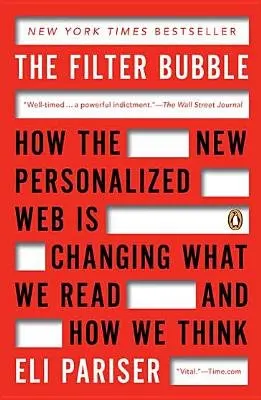
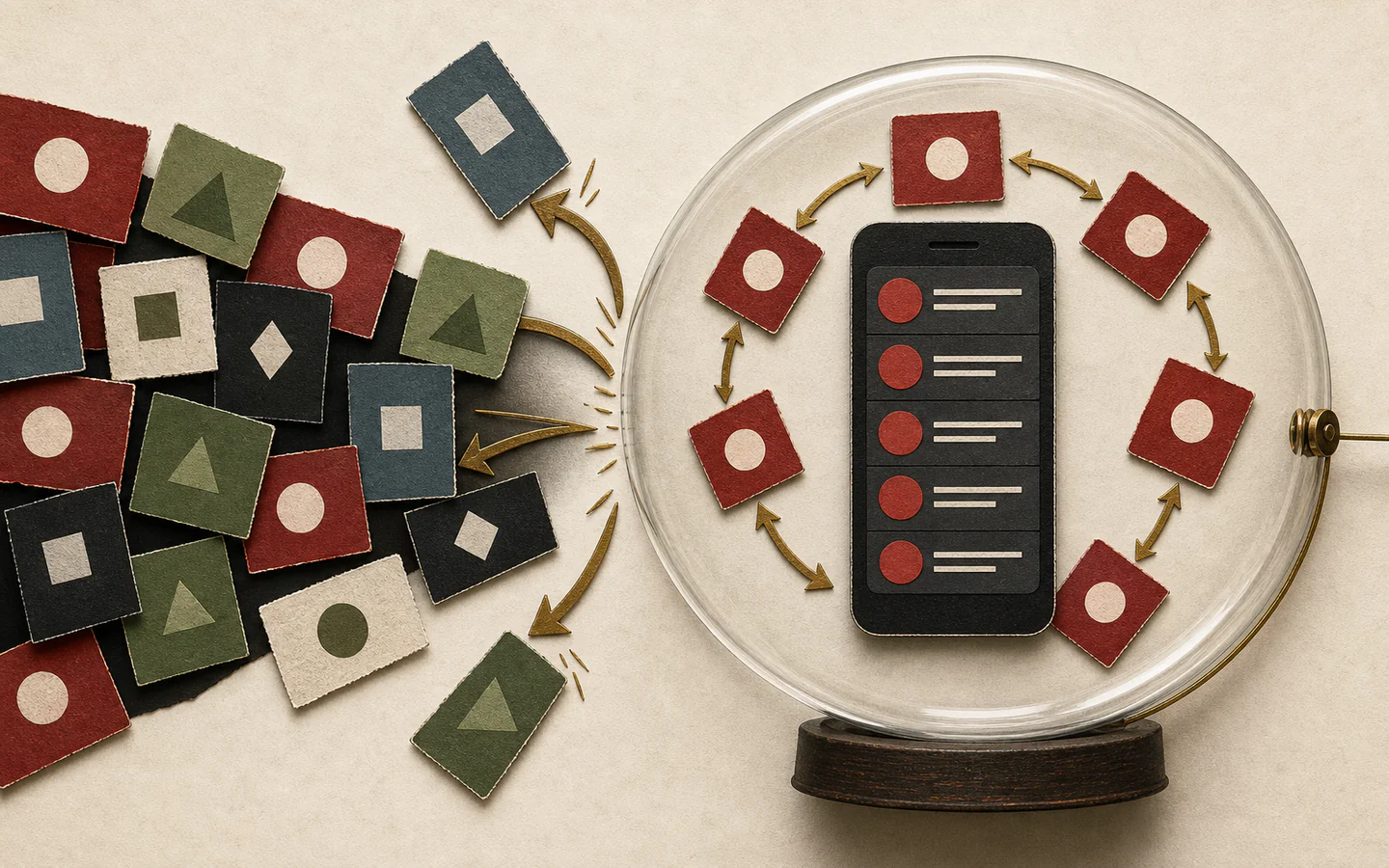
A filter bubble is the personalized information world that ranking and recommendation algorithms build around each user, showing more of what they are predicted to like and less of everything else. The activist Eli Pariser named it in a March 2011 TED talk, at a moment when, by the account of one Google engineer he cited, the search engine was already using 57 signals about a user, from their device to their location, to tailor results so that no two people saw the same page. The term stuck because it named something that had gone invisible. The feed was editing, and no one could see the cut.
Pariser found it in his own Facebook feed. A progressive who made a point of following conservatives, he watched them vanish:
Primary source 01 / 07
I was surprised when I noticed one day that the conservatives had disappeared from my Facebook feed. ... without consulting me about it, it had edited them out. They disappeared.
He gave the phenomenon its name and its definition in the same breath:
Primary source 02 / 07
And your filter bubble is your own personal, unique universe of information that you live in online. And what's in your filter bubble depends on who you are, and it depends on what you do. But the thing is that you don't decide what gets in. And more importantly, you don't actually see what gets edited out.
Built on relevance, blind to importance
The engine optimizes for relevance, and relevance is not importance. Pariser opened the talk with a line a journalist got from Facebook's Mark Zuckerberg:
Primary source 03 / 07
A squirrel dying in your front yard may be more relevant to your interests right now than people dying in Africa.
The industry did not hide the design. Pariser quoted Google's chairman describing the endpoint:
Primary source 04 / 07
It will be very hard for people to watch or consume something that has not in some sense been tailored for them.
Pariser's frame connects the feed to the oldest problem in this guide. For a century, human editors were the gatekeepers who decided what the public saw, and the study that founded gatekeeping research watched one of them reject nine-tenths of the wire. The algorithm inherited the job without inheriting the newsroom's rules:
Primary source 05 / 07
What we're seeing is more of a passing of the torch from human gatekeepers to algorithmic ones. And the thing is that the algorithms don't yet have the kind of embedded ethics that the editors did.
What the data actually shows
The filter bubble became a household phrase, which is exactly when a claim needs checking. In 2016, three researchers, Seth Flaxman, Sharad Goel, and Justin Rao, tested it against the actual web-browsing records of 50,000 Americans who regularly read news online. The result cut both ways:
Primary source 06 / 07
We find that social networks and search engines are associated with an increase in the mean ideological distance between individuals. However, somewhat counterintuitively, these same channels also are associated with an increase in an individual's exposure to material from his or her less preferred side of the political spectrum.
The alarm was real but smaller than the headlines, in part because most people were not living inside the feed at all:
Primary source 07 / 07
Finally, the vast majority of online news consumption is accounted for by individuals simply visiting the home pages of their favorite, typically mainstream, news outlets, tempering the consequences—both positive and negative—of recent technological changes. We thus uncover evidence for both sides of the debate, while also finding that the magnitude of the effects is relatively modest.
The honest reading is neither the open utopia the early Internet promised nor the sealed chamber the headlines warned about. Algorithms do sort people, and the sorting is measurable. They also expose people to more opposing views than a purely hand-picked diet would, because search and social drag in material a person would not have chosen. And the largest driver of what Americans read is still the plain choice of which homepage to open. The bubble is real, semipermeable, and partly self-built. Which is the useful part: a wall you helped build, you can climb. Following genuinely different sources on purpose is the manual override, and reading the same day across ten of them is one way to make the feed show you the cut.