The experiment that explains the argument
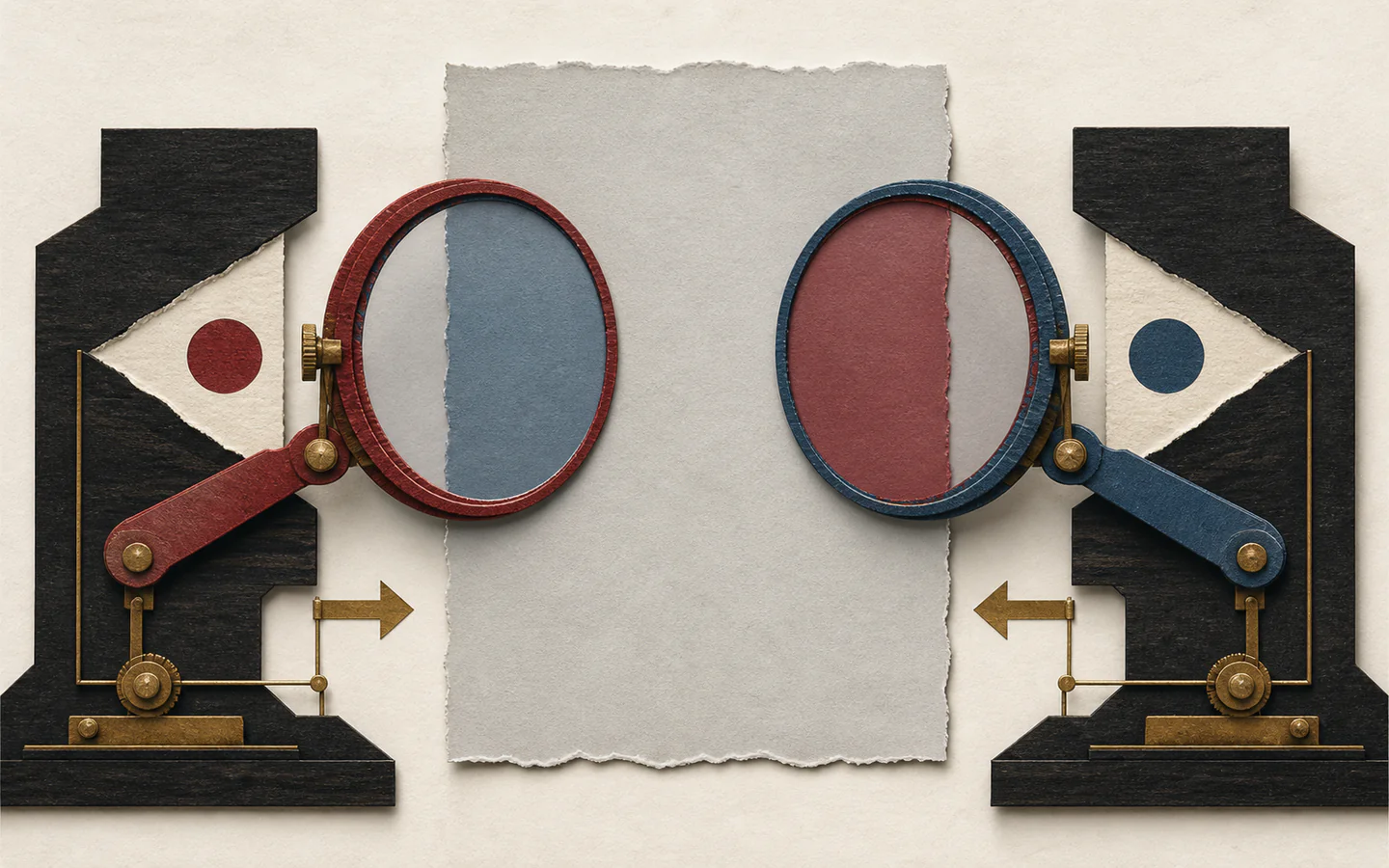
The hostile media effect is the finding that opposing partisans watching the same news coverage each rate it as biased against their own side. It was measured in 1985, when three Stanford psychologists showed pro-Israeli and pro-Arab students the same television coverage of the 1982 Beirut massacre. Not similar coverage. The identical tapes. If perceived bias lived in the broadcast, the two groups should have agreed on what they saw. They did not, and the disagreement had a shape:
Primary source 01 / 05
After viewing identical samples of major network television coverage of the Beirut massacre, both pro-Israeli and pro-Arab partisans rated these programs, and those responsible for them, as being biased against their side.
Both sides. Same footage. Each saw a broadcast slanted for the enemy, and each predicted neutral viewers would be turned against them:
Primary source 02 / 05
each group reported more negative references to their side than positive ones, and each predicted that the coverage would sway nonpartisans in a hostile direction.
The finding that should worry you personally
The intuitive fix for bias perception is knowing more. The study found the opposite:
Primary source 03 / 05
Within both partisan groups, furthermore, greater knowledge of the crisis was associated with stronger perceptions of media bias.
The more you know about an issue you care about, the more hostile the coverage looks. Being informed does not immunize you; it arms the effect. If you have ever wondered why the most engaged people on every side are also the angriest at the press, this is the mechanism, and it runs on the machinery from Act I.
Why balance reads as betrayal
The authors' explanation is a geometry problem. A partisan does not experience their view as a side; they experience it as the truth. So coverage that lands anywhere between the two camps sits, by definition, on the wrong side of true:
Primary source 04 / 05
According to the first mechanism, in which opposing partisans believe, respectively, that the truth is largely "black" or largely "white," each complain about the fairness and objectivity of mediated accounts that suggest that the truth might be at some particular hue of gray.
Primary source 05 / 05
even the most impartial mediators are apt to face accusations of overt bias and hostile intent. Such accusations, our analysis suggests, may involve far more than unreasoning and unreasonable wishes for preferential treatment. Rather, they may reflect the operation of basic cognitive and perceptual mechanisms that must be understood and successfully combated if mediation or negotiation is to succeed.
What this does to the bias debate
The hostile media effect is the reason the question is this outlet biased is mostly unanswerable by asking your own eyes. Your perception of the coverage is itself partisan data. It explains why every side is certain the referees are against them, why trust in media collapsed along partisan lines, and why a product promising unbiased news to everyone will disappoint everyone. It is also the founding insight of this site. If perception of any single account is compromised, stop staking everything on one account. Read the same day through all ten worldviews, and let the differences between them, which no single perception can hide, carry the information. The goal isn't unbiased news. It's an unbiasable you.