Two books, one machine
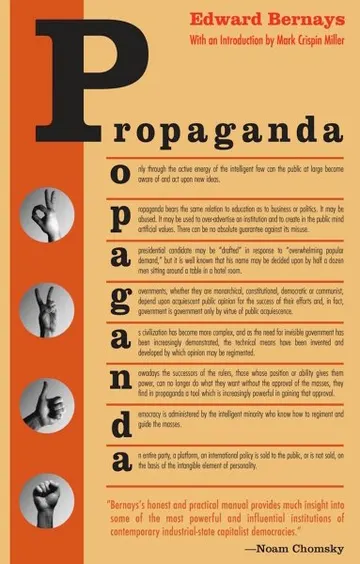
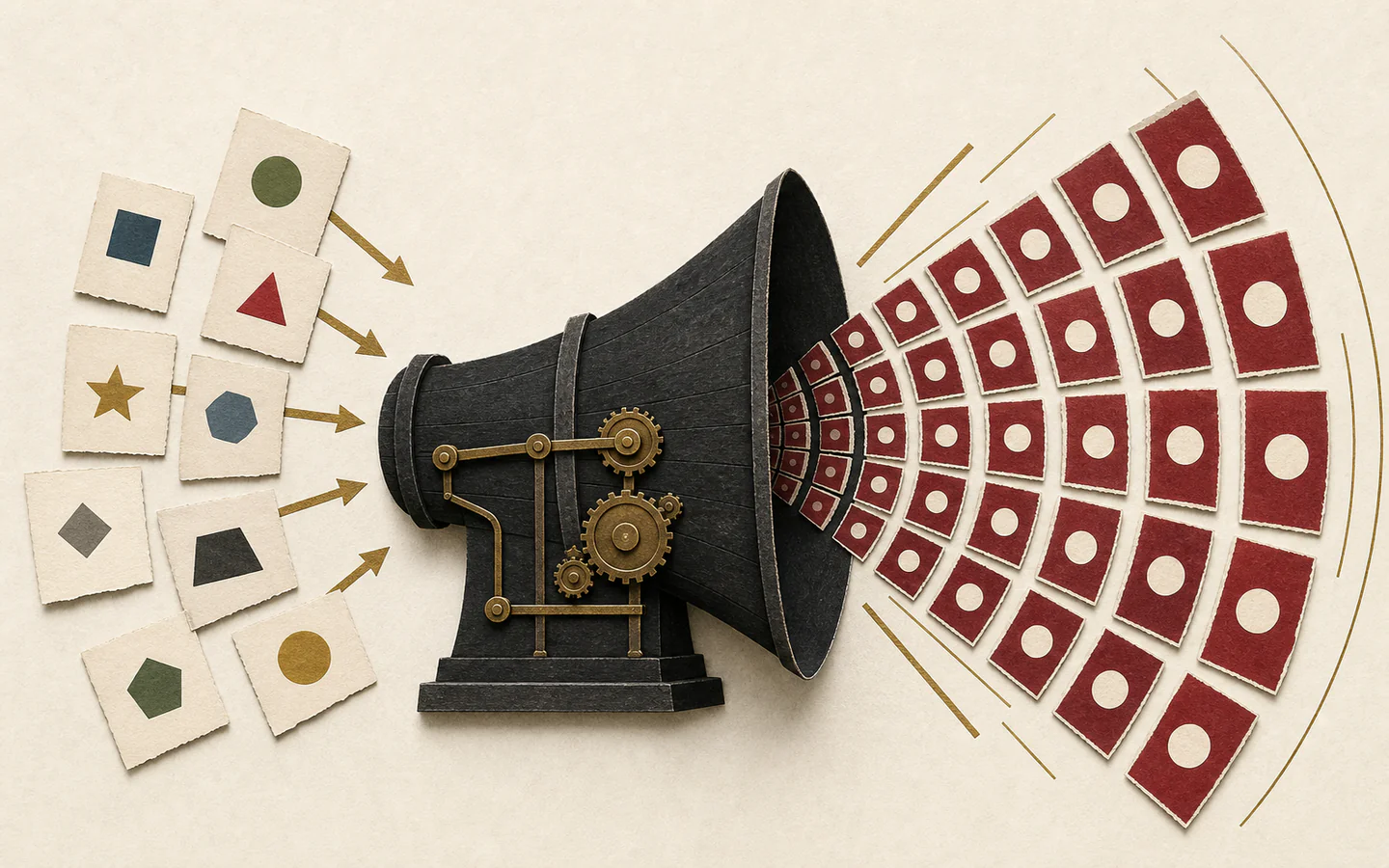
World War One taught governments that mass opinion could be engineered like any other war material. When it ended, the engineers went private, into advertising, public relations, and press agentry. The decade's two essential books describe the same machine from opposite ends: Walter Lippmann, the critic, in Liberty and the News (1920), and Edward Bernays, nephew of Sigmund Freud and inventor of the term public relations counsel, in Propaganda (1928). Read them together and modern media stops being confusing.
1928: the practitioner explains, cheerfully
Bernays' book opens with what may be the most quoted, least believed-to-be-real paragraph in media history. People assume it is a critic's caricature. It is a sales brochure:
Primary source 01 / 09
The conscious and intelligent manipulation of the organized habits and opinions of the masses is an important element in democratic society. Those who manipulate this unseen mechanism of society constitute an invisible government which is the true ruling power of our country.
Primary source 02 / 09
We are governed, our minds are molded, our tastes formed, our ideas suggested, largely by men we have never heard of.
His defense of the machine is the interesting part, because it is not stupid. Nobody has time to evaluate everything, so somebody must pre-filter. His description of that pre-filtering is agenda-setting, described from the control room, four decades before the theory:
Primary source 03 / 09
We have voluntarily agreed to let an invisible government sift the data and high-spot the outstanding issues so that our field of choice shall be narrowed to practical proportions.
Primary source 04 / 09
Whatever of social importance is done to-day, whether in politics, finance, manufacture, agriculture, charity, education, or other fields, must be done with the help of propaganda. Propaganda is the executive arm of the invisible government.
And his verdict on what mass literacy had actually produced is the meanest sentence in the book, aimed squarely at the newspaper reader who feels informed:
Primary source 05 / 09
Universal literacy was supposed to educate the common man to control his environment. Once he could read and write he would have a mind fit to rule. So ran the democratic doctrine. But instead of a mind, universal literacy has given him rubber stamps, rubber stamps inked with advertising slogans, with editorials, with published scientific data, with the trivialities of the tabloids and the platitudes of history, but quite innocent of original thought.
1920: the critic sounds the alarm
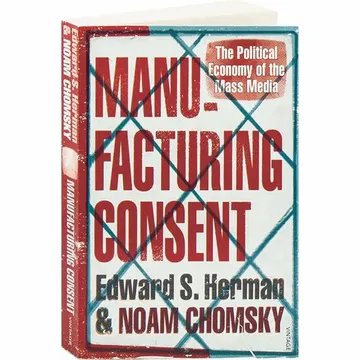
Eight years earlier, Lippmann had watched the same machinery from the press box and named the stakes. The phrase everyone attributes to Chomsky's 1988 book title is here, in 1920, with the alarm still attached:
Primary source 06 / 09
they are wondering whether government by consent can survive in a time when the manufacture of consent is an unregulated private enterprise. For in an exact sense the present crisis of western democracy is a crisis in journalism.
Primary source 07 / 09
There can be no liberty for a community which lacks the information by which to detect lies.
Primary source 08 / 09
Now, men who have lost their grip upon the relevant facts of their environment are the inevitable victims of agitation and propaganda. The quack, the charlatan, the jingo, and the terrorist, can flourish only where the audience is deprived of independent access to information.
His conclusion puts the protection of news quality at the center of everything else a democracy wants to do:
Primary source 09 / 09
No wonder, too, that the protection of the sources of its opinion is the basic problem of democracy. Everything else depends upon it. Without protection against propaganda, without standards of evidence, without criteria of emphasis, the living substance of all popular decision is exposed to every prejudice and to infinite exploitation.
The machine never left
Everything since is scale. The invisible-government toolkit Bernays sold to corporations became the modern ecosystem of PR firms, comms shops, think-tank messaging, and platform optimization; there are several communications professionals for every working journalist in America, and much of what runs as news began life as somebody's placement. Standards of evidence and criteria of emphasis, Lippmann's exact prescription, are also a fair description of what a decent news product owes you now: show the sourcing, show what was emphasized and what was skipped, and show who benefits from the framing. When our brief names who pushed a story and what each camp left out, it is running Lippmann's program against Bernays' industry, daily.