The 1890s circulation war that turned sensation into a business model, maybe helped start a real war, and scared journalism into inventing ethics.
Unbiasable·Updated July 2026
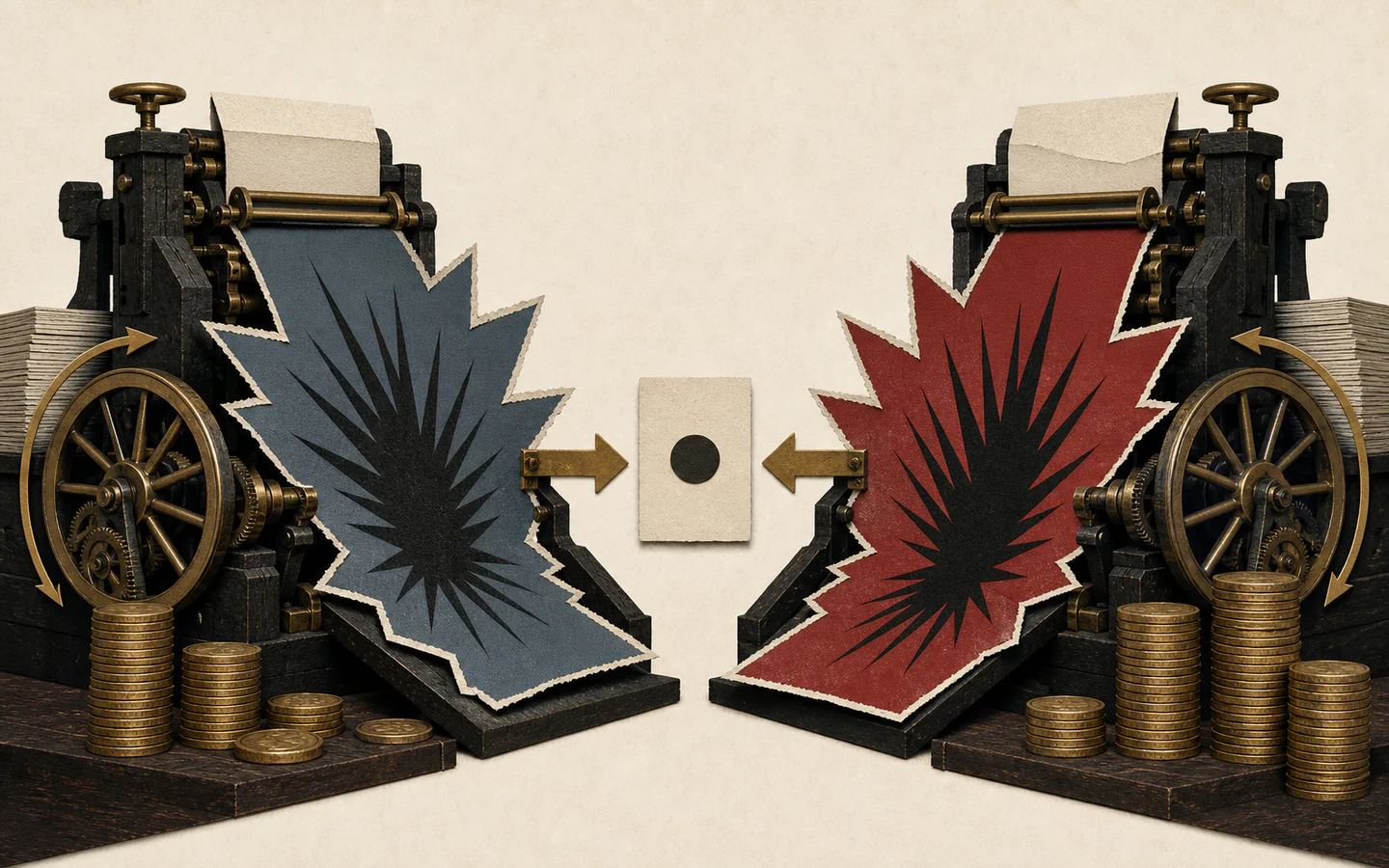
Editorial illustration: a circulation race turns a small event into oversized sensation because sensation sells.Illustration: Unbiasable.
01
What was yellow journalism?
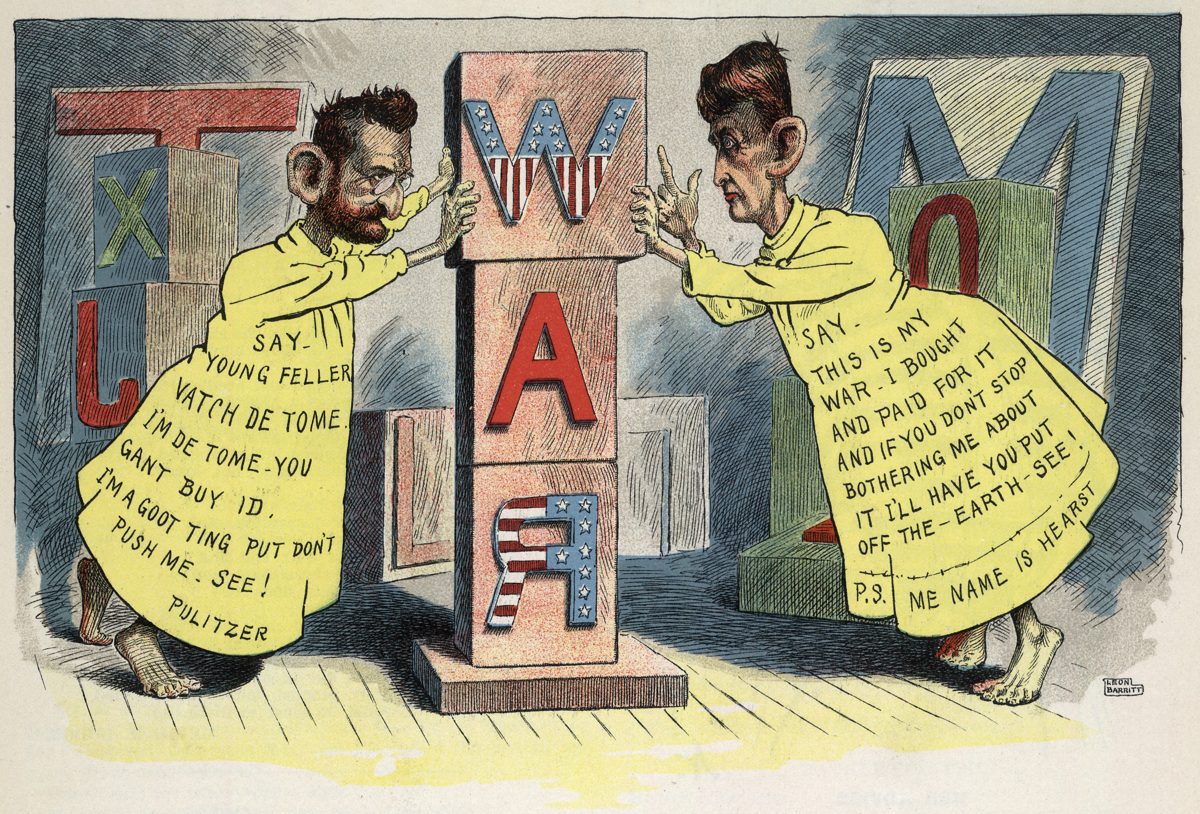
Yellow journalism was the sensational, circulation-first style perfected in the 1890s by two New York papers locked in a price war: William Randolph Hearst's Journal and Joseph Pulitzer's World. Screaming headlines, artists' impressions passed off as reportage, crusades, stunts, and a discovery that still runs the attention economy: outrage sells better than accuracy, and it sells daily. The name came from a comic-strip character, the Yellow Kid, that the two papers fought over.
Pulitzer and Hearst as the Yellow Kids, building the war out of toy blocks. Leon Barritt's cartoon for Vim magazine, June 1898. Public domain, via Wikimedia Commons.
02
February 1898: the Maine explodes, the presses decide
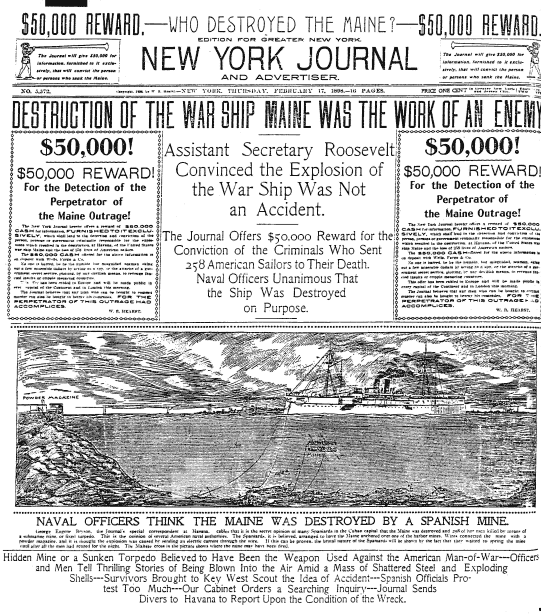
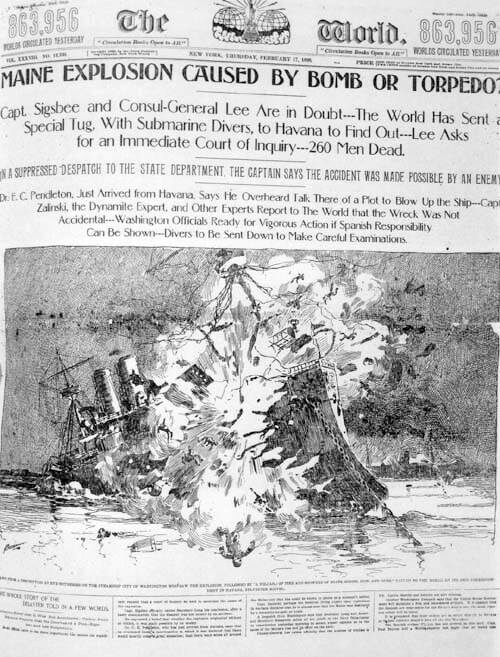
On the night of February 15, 1898, the battleship USS Maine blew up in Havana harbor, killing some 260 American sailors. Nobody knew why. Within thirty-six hours, both papers had decided anyway. Look at the actual front pages of February 17:
Hearst's Journal, February 17, 1898: the destruction declared the work of an enemy, a $50,000 reward offered, an artist's rendering of a mine supplied. The naval inquiry had not begun. Public domain, via Wikimedia Commons. Pulitzer's World, same morning: the explosion attributed to a bomb or torpedo, on no established evidence. The question mark did a lot of work in 1898. Public domain, via Wikimedia Commons.
Ten weeks later the United States was at war with Spain. Historians still argue about how much the papers caused versus surfed the war fever, and the cause of the explosion remains disputed to this day. What is not disputed: the verdict ran on the front page before the evidence existed. That is the yellow method, and it did not retire in 1898.
03
The most famous quote in journalism history
You have heard the story. Hearst sends the artist Frederic Remington to Cuba before the war; Remington cables that nothing is happening; Hearst cables back the most damning sentence a publisher ever wrote. The tale has exactly one source: a 1901 memoir by the Journal's own correspondent James Creelman, who told it as praise of his boss's foresight. Here is that passage, from the book itself:
Primary source 01 / 04
Everything is quiet. There is no trouble here. There will be no war. I wish to return.
Frederic Remington (as quoted by James Creelman)the telegram as Creelman's memoir renders it; no original has ever surfacedOn the Great Highway, 1901 · p. 177
Primary source 02 / 04
Please remain. You furnish the pictures, and I'll furnish the war.
William Randolph Hearst (as quoted by James Creelman)the reply as Creelman's memoir renders itOn the Great Highway, 1901 · p. 178
Sit with the irony. The canonical proof-text of press manipulation is itself an unverified story that spread because it was too good to check. Bias about bias. It is the reason every quote in this guide links to an archived original, and the reason the daily brief's quote gate exists.
04
1923: the hangover, codified
The yellow decades made publishers rich and journalism embarrassed. When the American Society of Newspaper Editors formed, its first major act was a written code, the Canons of Journalism, adopted in 1923. It is the industry formally promising to stop doing what the previous chapter describes, and its language built the temple of objectivity American journalism has claimed to worship since:
Primary source 03 / 04
The primary function of newspapers is to communicate to the human race what its members do, feel and think. Journalism, therefore, demands of its practitioners the widest range of intelligence, or knowledge, and of experience, as well as natural and trained powers of observation and reasoning.
Sound practice makes clear distinction between news reports and expressions of opinion. News reports should be free from opinion or bias of any kind.
American Society of Newspaper EditorsCanons of Journalism, 1923 · Canon V, Impartiality
Free from opinion or bias of any kind. Whether that is a noble aspiration or a structural impossibility is the argument of this entire guide. The same year the canons were adopted, Lippmann had already published the case that pure unbiased perception does not exist. American journalism has been living inside that contradiction for a century, and the next chapter, the Fairness Doctrine, is what happened when the government tried to enforce one side of it.
Further reading
The books on it
Paid links. If you buy a book through these links, Bookshop.org pays us a small commission and sends a share of the sale to independent bookstores.
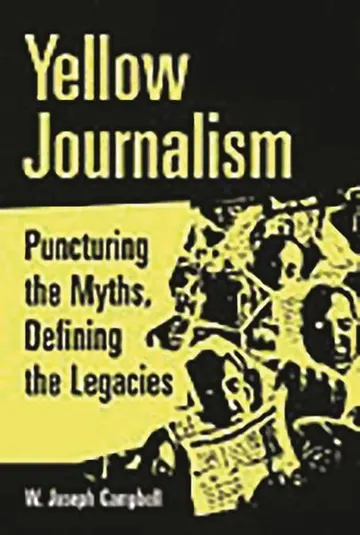
Journalism historian W. Joseph Campbell examines the Pulitzer and Hearst papers of the 1890s, defines what yellow journalism was, and tests claims about its influence.
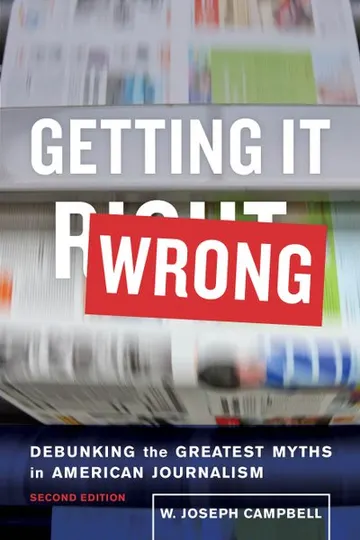
Campbell checks famous press legends against the record, including Hearst's supposed order to furnish the war with Cuba, and finds several of them false.
The press was born partisanAmerican journalism did not decline from a golden age of neutrality. There was no golden age. The founding press was open, funded, fighting partisanship, and everyone knew it.
The Fairness DoctrineFor thirty-eight years, American broadcasters were legally required to air contrasting views on public controversies. Here is the rule, the ruling that blessed it, and the order that killed it.
Confirmation biasOnce you believe something, your mind quietly hires all incoming evidence to work for the belief. This is the oldest documented bug in human thinking.
Frequently asked
What is yellow journalism in simple terms?
Sensational, exaggerated, circulation-driven news, named for the 1890s war between Hearst's New York Journal and Pulitzer's New York World. Its signature move: print the most exciting available version of events first and let the facts catch up later, if ever.
Did yellow journalism cause the Spanish-American War?
It fanned war fever, and the Maine front pages show verdicts printed before evidence existed. But historians generally treat the papers as an accelerant rather than the cause; the war had political and economic drivers well beyond New York's newsstands.
Did Hearst really say he would furnish the war?
Almost certainly not. The story rests on a single 1901 memoir by Hearst's own correspondent, written as a compliment. Hearst denied it, the telegrams never surfaced, and the leading scholarly study calls the exchange exceedingly unlikely. The full receipts are on this page.
What ended yellow journalism?
It evolved more than it ended. Its excesses pushed the industry to professionalize: journalism schools, and in 1923 the ASNE Canons of Journalism, the first national ethics code, which declared that news reports should be free from opinion or bias of any kind.
The primary sources
The documents this chapter quotes. Read them yourself.