What was the Fairness Doctrine?
From 1949 to 1987, the Federal Communications Commission required broadcast licensees to do two things: cover important public controversies, and give airtime to contrasting views on them. Not equal time, not a ban on opinion, but an enforceable duty of balance, grounded in the fact that the public owns the airwaves and merely lends them to broadcasters. It is the only time in American history the government formally regulated bias, which makes its paper trail the spine of this whole act.
1949: the rule, in the Commission's words
The doctrine's founding document is a 1949 FCC report on whether broadcasters could editorialize. Its core sentence is a theory of whose freedom the First Amendment protects on the airwaves, and it is not the broadcaster's:
Primary source 01 / 06
It is this right of the public to be informed, rather than any right on the part of the Government, any broadcast licensee or any individual member of the public to broadcast his own particular views on any matter, which is the foundation stone of the American system of broadcasting.
Primary source 02 / 06
the paramount right of the public in a free society to be informed and to have presented to it for acceptance or rejection the different attitudes and viewpoints concerning these vital and often controversial issues which are held by the various groups which make up the community.
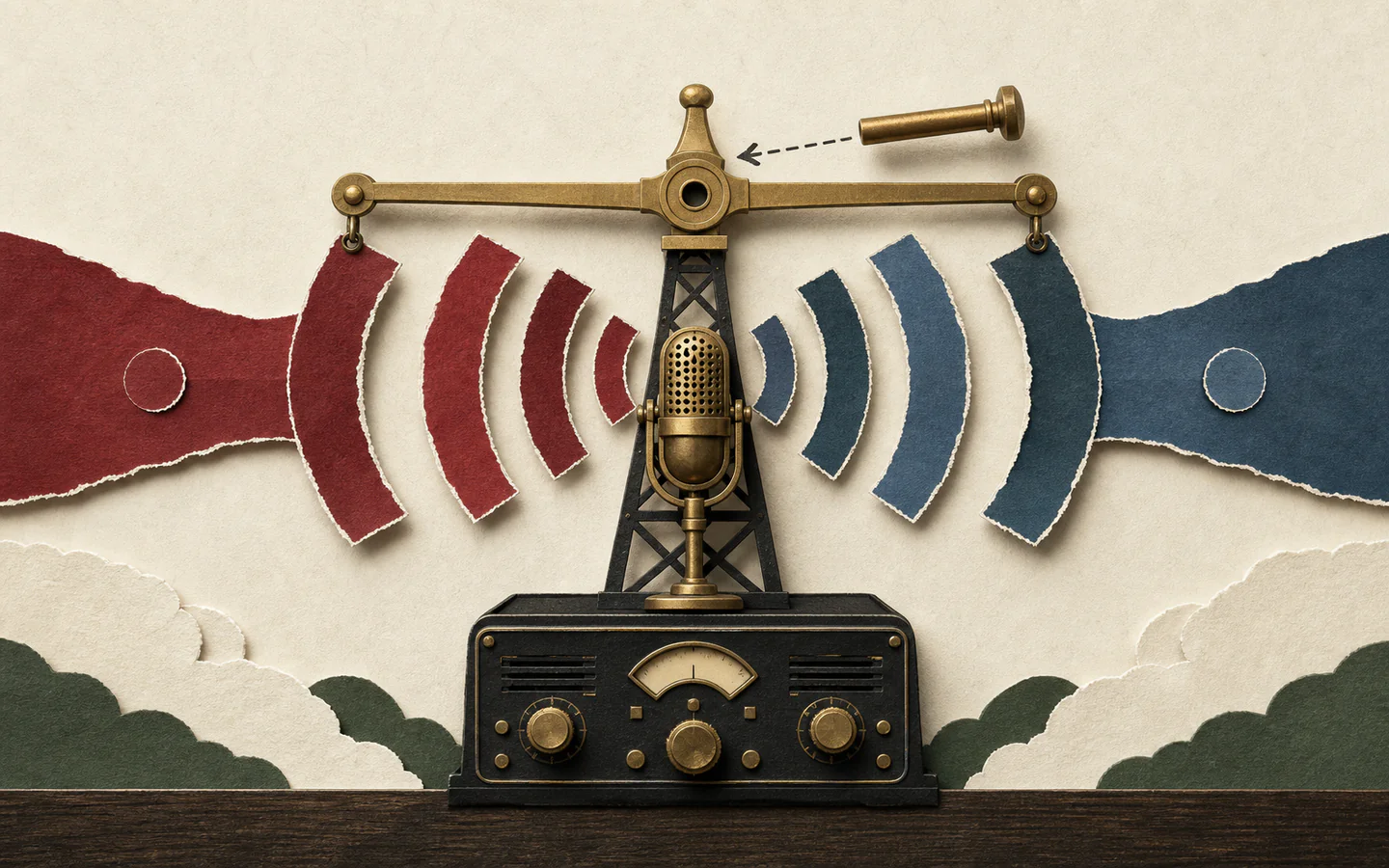
For acceptance or rejection. The 1949 Commission did not promise unbiased broadcasters. It promised the audience the full range of views, and trusted the citizen to judge. Different attitudes and viewpoints, presented side by side, was the government's official theory of an informed public. If that design sounds familiar, it should; it is this newsletter's architecture, minus the federal enforcement.
1969: the Supreme Court blesses it
A Pennsylvania radio station carried a preacher's on-air attack on a journalist and refused him reply time. The case, Red Lion Broadcasting v. FCC, reached a unanimous Supreme Court, which upheld the doctrine and produced the two most quoted sentences in broadcast law:
Primary source 03 / 06
It is the right of the viewers and listeners, not the right of the broadcasters, which is paramount.
Primary source 04 / 06
It is the purpose of the First Amendment to preserve an uninhibited marketplace of ideas in which truth will ultimately prevail, rather than to countenance monopolization of that market, whether it be by the Government itself or a private licensee.
The Court's logic leaned on scarcity: broadcast spectrum was finite, so whoever held a license held a government-granted megaphone and owed the public balance in return. Hold that premise. Cable, then the internet, would spend the next fifty years dissolving it.
1987: the FCC kills its own rule
By the Reagan-era FCC, the doctrine's critics had the majority and a different theory: a rule meant to widen debate was, in practice, narrowing it, because stations avoided controversy rather than trigger reply obligations. In the Syracuse Peace Council case, the Commission repealed the doctrine outright. The D.C. Circuit's opinion affirming the repeal preserves the FCC's own words:
Primary source 05 / 06
the fairness doctrine chills speech and is not narrowly tailored to achieve a substantial government interest.
Primary source 06 / 06
that the fairness doctrine contravenes the First Amendment and thereby disserves the public interest.
Read the arc: 1949, fairness is the foundation stone of broadcasting. 1969, a unanimous Supreme Court agrees. 1987, the same agency declares the same rule unconstitutional chilling of speech. Both positions were argued sincerely from the same amendment. The First Amendment does not tell you whether mandated balance protects speech or violates it; Americans have read it both ways within one lifetime.
What the repeal unleashed
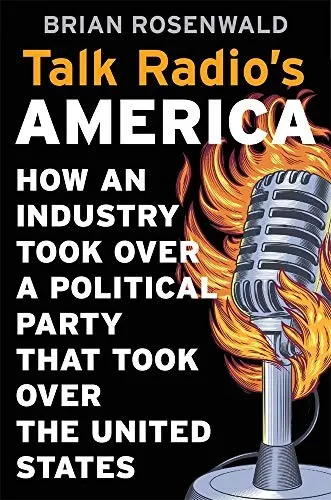
The timing is the part every history of modern media points at. The doctrine died in August 1987. In 1988, Rush Limbaugh's show went national, and openly one-sided political talk radio became the fastest-growing format in the country, something the reply-time obligation had made commercially unattractive for four decades. Cable news followed in the 1990s with round-the-clock opinion no doctrine had ever covered. Whether you read that sequence as liberation or as the beginning of the partisan re-sorting is itself a framing choice. What is documented: the last legal mechanism forcing American audiences to hear the other side disappeared in 1987, and it has been a market decision ever since. Trust in the news has been falling for most of the years since. Correlation is not causation, and the sorting has many parents. But if you want mandated balance back, you now know exactly what it looked like, and if you do not, you know why it died. Either way, hearing the other side is now a choice you have to make on purpose.