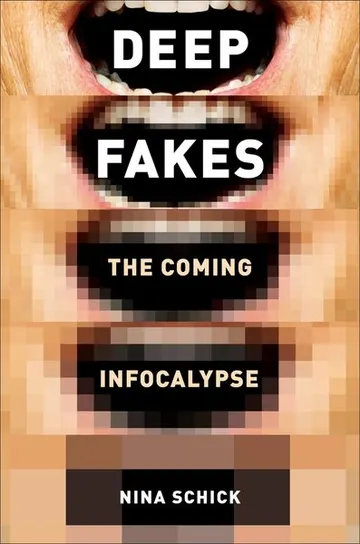

What is the liar's dividend?
The liar's dividend is the benefit a dishonest person gains as the public learns that audio and video can be faked. Once anyone might be a forgery, a guilty party can wave real evidence away as a deepfake. The law professors Robert Chesney and Danielle Citron named it in the California Law Review in 2019. The technology that creates the doubt has since become ordinary, and a second technology, machines that generate fluent text and images on demand, has made the record harder still to trust. Chesney and Citron defined the term by its perverse incentive:
Primary source 01 / 05
Hence what we call the liar's dividend: this dividend flows, perversely, in proportion to success in educating the public about the dangers of deep fakes.
The dividend does not need a single convincing fake. It only needs fakery to be plausible. Once people know a video could be forged, the accused can deny a genuine one:
Primary source 02 / 05
some will try to escape accountability for their actions by denouncing authentic video and audio as deep fakes.
The result is a public trained to doubt its own eyes, which eats away at the shared record that a distrustful audience was already losing:
Primary source 03 / 05
a skeptical public will be primed to doubt the authenticity of real audio and video evidence.
The machine that means nothing
Synthetic text raises a paired problem. A large language model can produce prose that reads as authoritative while having no idea what it is saying. In 2021 the computational linguists Emily Bender and Timnit Gebru, with two co-authors, gave that machine its lasting name. Their paper argued that fluency fools us because we supply the meaning ourselves:
Primary source 04 / 05
an LM is a system for haphazardly stitching together sequences of linguistic forms it has observed in its vast training data, according to probabilistic information about how they combine, but without any reference to meaning: a stochastic parrot.
The danger is not that the model lies on purpose. It has no purpose. It holds no model of the world and no reader in mind:
Primary source 05 / 05
Text generated by an LM is not grounded in communicative intent, any model of the world, or any model of the reader's state of mind.
Put the two machines together and the record is squeezed from both sides. One floods it with plausible fabrications, the other lets every real document be dismissed as one of them. The attention economy supplies the motive to spread whichever version travels furthest.
What still holds
The defense is not a better detector, because the liar's dividend grows exactly as people learn that detection is possible. The defense is provenance: who published this, when, and whether it traces to a source that stakes its name on it. That is the habit the rest of this guide asks for. Compare coverage, follow a citation back to its origin, and trust the document you can trace over the clip you cannot. A fake loses its power the moment you can show where the real one came from.