
One of the ten worldviews
Centrism
Centrism is the politics of the middle: moderate positions, pragmatism over ideology, and faith that stability and compromise beat sweeping change. In the press it shows up as nonpartisan reporting that prizes process and balance, the stance critics call the "view from nowhere."
What is centrism?
Centrism is the range of positions between left and right, marked by moderate policy, pragmatism, and a low attachment to any single ideology. As a media posture, the closely related "nonpartisan" stance treats politics as institutional management to be reported even-handedly rather than a contest to take sides in.
There is no Stanford Encyclopedia entry for centrism, because it is less a doctrine than a disposition. It is best understood as the band of positions that sit between the left and the right, defined by moderation rather than by a program of its own. Its more ambitious form, "radical centrism," pairs an appetite for serious institutional reform with a belief that real solutions need pragmatism, not just ideology.
The nonpartisan journalism that anchors this lens, wire services and public broadcasters, aims to report what happened without an ideological frame. The press scholar Jay Rosen calls this the "view from nowhere": a bid for trust that "advertises the viewlessness of the news producer," and can slide into false balance, giving "both sides" equal weight regardless of the evidence. Defenders answer that objectivity is a method of verification, not a claim to have no perspective.
What holds the lens together
- Moderation. Positions cluster near the middle, and the extremes of both sides are treated as the problem.
- Pragmatism over ideology. Judge policies by whether they work, not by whether they fit a theory.
- Process and stability. Procedure, institutional continuity, and orderly compromise are valued for their own sake.
- Both parties as legitimate. Conflict is something to be managed between two legitimate actors, not a fight with a single right answer.
- Nonpartisan reporting. The journalistic ideal of reporting facts without taking sides. The poll and the horse race over the verdict.
- Skepticism of grand plans. Sweeping change is treated as risky, and the burden falls on whoever wants to disrupt.
Where it comes from
The words "left," "right," and "center" come from where deputies sat in France’s revolutionary assembly after 1789; those who backed neither the radicals nor the reactionaries sat in between. Centrism rose and fell with the fortunes of moderate liberalism over the next two centuries, and lost ground worldwide after the 2008 financial crisis as populism grew.
"Radical centrism" was named the "radical middle" by the writer Renata Adler in 1969 and popularized by books in the early 2000s like Ted Halstead and Michael Lind’s The Radical Center. Its borrowed motto, "idealism without illusions," is actually a John F. Kennedy line.
The journalistic side has its own history. The objectivity norm took hold as American papers commercialized in the 1800s and professionalized in the 1920s, with Walter Lippmann as its great advocate. The "view from nowhere" critique, from Jay Rosen, dates to the 2000s. In Pew’s June 2026 political typology, the empirical face of the center is the disengaged "Tuned-Out Middle."
Key thinkers
- Walter Lippmann. Public Opinion (1922); the case for journalistic objectivity.
- Michael Schudson. Discovering the News (1978); a history of the objectivity norm.
- Jay Rosen. Coined the "view from nowhere" critique of false neutrality.
- Ted Halstead and Michael Lind. The Radical Center (2001).
- Anthony Giddens. The Third Way (1998); the centrist center-left synthesis.
The main camps inside it
- The "mushy middle". Splitting the difference and triangulating between the parties, the version radical centrists reject.
- Radical centrism. Pro-reform and anti-ideological: big changes, judged by pragmatism rather than tribe.
- The Third Way. The 1990s center-left blend of market economics and social policy (Clinton, Blair).
- Nonpartisan journalism. Objectivity as a method (Lippmann, Schudson) versus the transparency Rosen proposes instead: "here’s where I’m coming from."
Common misconceptions
- “Independents are a huge centrist bloc.” Pew finds that while many Americans call themselves independent, the large majority lean to a party and vote like partisans. The truly unaligned are a small share, marked more by disengagement than by considered moderation.
- “Centrism is just the midpoint, the absence of views.” Its defenders treat it as a real disposition of caution, reform, and pragmatism, and radical centrists explicitly reject simply splitting the difference.
- “Objective journalism means having no viewpoint.” The critique is that performing "viewlessness" is itself a stance. Historically, objectivity meant a method of verification, not the absence of perspective.
- “Balance equals fairness.” Giving two sides equal weight regardless of the evidence, "false balance," can mislead as much as open bias.
How it differs from neighboring worldviews
- vs Liberal Mainstream. Both respect institutions and are often produced by the same professional class. The difference: liberalism carries an affirmative reform agenda, while the center reports the contest and prizes stability rather than taking a side.
- vs Establishment / Center-Right. Both prize institutions and prudence over populist disruption. The difference: the center reports the contest from no position, while the center-right argues an affirmative case for free markets, fiscal restraint, and a hawkish foreign policy.
How Unbiasable reads the Center / Nonpartisan lens
In the brief, the center and nonpartisan lens reports what officials say and do, leans on polls and the horse race, and treats institutional stability as the default good. It rarely names winners or villains.
We analyze wire services and public broadcasters like Reuters, the Associated Press, BBC News, and The Hill for it. It is the straightest available account of what happened, which is exactly why our daily "Today’s Five" is built from this objective tier, and also why critics say it can flatten real differences into "both sides."
See it in practice in the daily briefs, or step back to all ten worldviews side by side.
The outlets we read for this lens
Center / Nonpartisan coverage in the brief comes from these outlets. Each link explains why we file the outlet here and what to expect from its framing.
- Associated Press. Spare, verifiable reporting, attribution over characterization, and a deliberate absence of a theory about what good governance looks like.
- Reuters. Market-aware, internationally framed straight news, and careful sourcing rather than editorial conclusions.
- PBS NewsHour. Long-form interviews, deliberate balance between parties, and a steady, low-temperature tone.
- BBC News. Globally framed coverage, impartiality as house policy, and process and institutions treated as the baseline.
- The Hill. Process and horse-race coverage, balanced sourcing from both parties, and a focus on the mechanics of power.
- Bloomberg. Expect fiscal policy, the Federal Reserve, and regulation covered ahead of the culture war, sourcing from officials and market participants, and restraint in tone. What moves markets gets covered first; what only moves voters can wait.
Further reading
Both camps, and the critique
Paid links. If you buy a book through these links, Bookshop.org pays us a small commission and sends a share of the sale to independent bookstores.
-
Makes the case
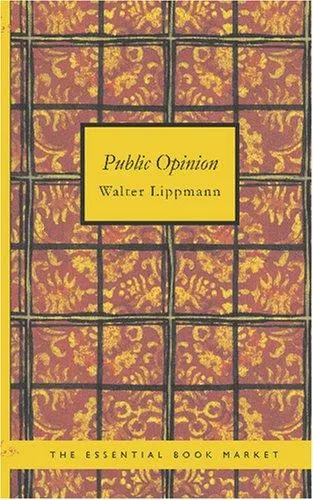
Public Opinion (opens Bookshop.org)
Walter Lippmann · 1922
Journalist Walter Lippmann argues that citizens act on simplified pictures of events they cannot see, and that disciplined, fact-based reporting is needed to correct them.
-
Makes the case
The Elements of Journalism (opens Bookshop.org)
Bill Kovach and Tom Rosenstiel · 2001
Kovach and Rosenstiel, drawing on interviews with working journalists, set out nine principles, including a discipline of verification and independence from those covered, as the basis of trustworthy news.
-
The critique
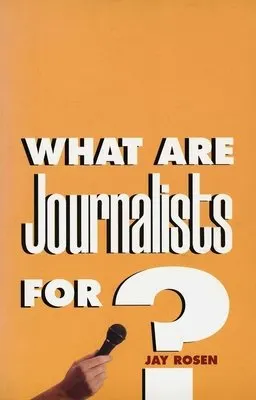
What Are Journalists For? (opens Bookshop.org)
Jay Rosen · 1999
NYU press scholar Jay Rosen argues that detached, neutral reporting leaves citizens disengaged, and makes the case for public journalism that helps communities deliberate on their problems.
Frequently asked
What is centrism in simple terms?
A politics of the middle: moderate positions, pragmatism over ideology, and a preference for stability and compromise over sweeping change.
Is centrism an ideology?
Not really. It is better understood as a disposition, or a position between left and right, than as a doctrine with a fixed program, which is why there is no single "centrist" theory.
What is radical centrism?
A version of centrism that wants serious institutional reform but pursued through pragmatism rather than left or right ideology. Its motto, "idealism without illusions," comes from John F. Kennedy.
What is the "view from nowhere"?
Press scholar Jay Rosen’s term for journalism that performs having no viewpoint as a bid for trust. He argues it can hide a stance and tip into false balance.
What is false balance?
Giving opposing sides equal weight regardless of the evidence, so a well-supported claim and a weak one look equal. It is also called "bothsidesism."
Are most independents actually centrists?
Mostly no. Pew finds the large majority of self-described independents lean toward a party and vote like partisans; the genuinely unaligned are few and tend to be disengaged.
Does objective journalism mean having no opinion?
Its defenders say objectivity is a method of checking facts, not the absence of perspective. Critics say claiming to have no view is itself a view.
What is the difference between centrism and being liberal?
Liberals hold an affirmative center-left agenda; centrists are defined by moderation and non-alignment, valuing process and stability over any single program.
References and further reading
- The View from Nowhere: Questions and Answers · Jay Rosen, PressThink
- Political Independents: Who They Are, What They Think · Pew Research Center
- Beyond Red vs. Blue: The 2026 Political Typology · Pew Research Center
External sources are provided for verification. Unbiasable is independent and not affiliated with them.
Every side, every morning
Centrism is one view of the room. See all ten.
One short brief lays the same news across ten worldviews, in each camp’s own words. Free every morning.
Free to start. No spin. No yelling.
$5/month, cancel anytime. Secure on Stripe, and nothing is ever paywalled.
One-time, secure on Stripe. No account.