How 7 of the ten camps framed it, in their own words, then everyone on the
record beneath that
— March 26, 2026 to September 29, 2026.
Each camp section is that camp's own outlets writing. The people below are grouped by
who spoke, not by camp: an outlet can quote anyone, so the outlet it ran in tells you
who carried the words, never whose politics they are.
7/10camps on the record
the record here17 camp reads42 quotes18 people
Who leaned in hardest
Bars scale by reads per outlet, so a big roster never out-shouts a small one.
Communist / Far-Left7 reads · 3 outlets
Democratic Socialist4 reads · 3 outlets
Liberal Mainstream1 read · 1 outlet
Center / Nonpartisan1 read · 1 outlet
MAGA / Populist Right1 read · 1 outlet
Identity1 read · 1 outlet
Tech / AI2 reads · 2 outlets
Establishment / Center-Rightnothing on the record
Libertariannothing on the record
Religious Rightnothing on the record
Communist / Far-Left 7 reads · 3 outlets
"Fain is one of the biggest supporters of Trump's trade war measures, claiming that the layoff of workers in Canada and other countries benefits workers in the US." The far left is the only camp that filed the trade war as a labor story about union leadership rather than a trade story, reporting that placards for US-Canadian worker solidarity were prominent at the Detroit parade while the UAW president did not mention the tariffs or the threat to annex Canada in his speech. It also reported the UAW's July white paper calling for a tariff-enforced revamp of the USMCA.
Unexpected alignment: The White House and the far left both described the UAW leadership as aligned with the tariff program, one as evidence the policy is working and one as evidence the union has abandoned its members.
The far left did not write about the crash at all; it wrote about the week, calling it "part of an ongoing industrial slaughterhouse in America," and put the Miami deaths in a list with five workers killed on the job over roughly 40 hours: Bradley Clouse in Kentucky, Ramiro Aaron Sanchez in El Paso, Robert Scott Pannell in Mississippi and Carl Williams III in Texas. It is the only camp that named any of them.
"We are on strike in order to be able to fill our cups up to pour into our clients." The socialist left covers the legal-services sector from the labor side instead, reporting that more than 500 public defender workers are on strike or job actions across New York, Michigan and Texas, and that one attorney faces criminal contempt proceedings for refusing to cross a picket line. It is the only camp connecting the funding squeeze to the working conditions of the lawyers themselves.
WSWS turned to the shop floor, reporting workers forced to labor in "smoke filled factories" and blasting UAW President Shawn Fain's statement as "groveling" for failing to halt production.
WSWS argued the story is one of labor and impunity, reporting the administration "shields Taylor Farms and Taco Bell" and that the parasite "flourishes wherever sanitation is denied" to farmworkers "in Guanajuato and in Salinas alike."
"The development of AI data centers creates harm and destruction." CounterPunch is the only camp to follow the supply chain out of the country, tying data-center construction to 3TG mineral extraction in the DRC and to the OpenAI and Palantir contracts with ICE and the military, and reporting that Southwest Michigan residents have filed a class-action suit over 24/7 noise. Dean Baker's separate piece argues an AI sovereign wealth fund would simply hand Trump a new patronage machine.
"Nothing remotely adequate has been done." WSWS framed the heat as evidence of governmental indifference to worker safety, cataloguing accounts from CSX railroad, USPS, and factory workers who described unsafe indoor temperatures and management refusals to accommodate. WSWS noted federal OSHA still has no completed heat-specific workplace standard, a rule first proposed by NIOSH in 1972.
"Immigrant delivery workers have long alleged that DoorDash has shortchanged them out of their hard-earned wages," Truthout wrote, and the camp's distinctive move was to credit the workers' own organizing rather than the city, quoting Workers' Justice Project director Ligia Guallpa that "for too long, DoorDash treated workers as disposable, stealing their wages and deactivating them." More Perfect Union pressed the point that the industry's warnings were wrong, saying "these companies claimed that raising worker wages would somehow hurt consumers. And as it turns out, that wasn't true." Hasan Piker called the result "the democratic socialist difference" and paired it with the mayor's landlord campaign.
"drive up household bills, pollute groundwater and raise local temperatures." The socialist left went at the jobs argument directly, reporting that Meta is testing a robotic arm and cable-swapping systems that one employee said could cover up to 80 percent of some staffers' workloads, and printing a worker's line that "We thought those of us performing the physical tasks were safe for a while, but not anymore."
"Workers deserve it all." Jacobin centered the labor-organizing theory of the wins, quoting Valdez that "the labor movement isn't going to be built because we pass legislation" but "because workers take power into their own hands," and profiling Mamdani's tenant-union initiative.
: The TSA callout wave is a "brown-bag strike" — a de facto wildcat action by workers exploiting the plausible deniability of calling in sick, analogous to public-sector strikes of the 1960s-70s that won federal workers collective bargaining rights. The framing centers worker agency: TSA agents are not merely victims of Congress; they are making a political choice with real consequences. Federal law prohibiting public-sector strikes is named as an injustice rather than a constraint. The shutdown is a labor story that liberal media keeps framing as a political one.
"blindly trusted it." USA Today centers the labor-law stakes, quoting an employment lawyer that "the legal question won't be whether an employer used AI but whether it blindly trusted it," and situating the Meta suit alongside a Workday class action.
"The settlement marks another chapter in an ongoing battle between so-called gig economy platforms and municipal leaders," the BBC wrote, and it is the only outlet in any camp that explained the mechanism at the centre of the money, reporting that $83 million turns on idle time and that "traditionally, apps only paid drivers during active deliveries but New York's rules require compensation for all time logged into the app." It gave DoorDash's explanation at length, including the company's claim that complex 2023 minimum-wage rules, software glitches and multi-stop routes caused the errors. PBS carried the settlement in its news wrap with the company's apology.
"Unpaid subcontractors." Breitbart's lead is not the ceremony but the financial dispute. The populist frame is that the celebrity event obscures the workers who built it and weren't paid. This is the most concrete populist critique of the occasion.
theGrio reported the settlement through what it changes going forward, writing that it "represents both compensation for past violations and a new mechanism for monitoring the companies that employ them." It is the only outlet in any camp that told readers plainly they do not need to do anything, reporting that workers do not have to file a claim and that personalized notices go out in late October. It printed the mayor's line that a wage is owed "not tomorrow, not after a lawsuit, but on time and in full."
"We Must Act Now." The accountability wing foregrounds the economists' warning of "large-scale job displacement" and reports NYC hospitals replacing utilization nurses with Palantir-linked AI software, a concrete case of the displacement the letter warns about.
"We all hate this obviously." 404 Media documents what Amazon calls a battery conservation feature that drivers experience as unsafe in summer heat. The piece uses drivers' own forum language alongside Amazon's corporate response to show the gap between the company's characterization and the workers' daily experience. The framing: a software update that makes work more physically dangerous is deployed without worker input and defended with technical language that obscures the labor impact.
“$131.5 million: the largest labor settlement in NYC’s history — and the largest resulting from any law I authored (so far). Props to @NYCMayor , @JulieSuLabor , @saalevine , and the great team at @helloDCWP on delivering this historic win for delivery workers, who were cheated out of pay they earned by DoorDash. When we passed the Minimum Pay Rate law in 2021, inspired by the organizing of @workersjusticep , we knew it would take diligent, creative, aggressive enforcement. The Mamdani Administration is showing powerfully what it looks like to govern on behalf of workers.”
“New York City should set the standard for what a pro-worker government looks like, including for the public servants who make our institutions work. I was proud to support @NYCCouncilUnion during my time on Council, and I’m just as proud to stand with them as they bargain for a fair contract. It’s a badge of honor that we had union representation on some of my previous campaigns and in the Comptroller’s office. All workers deserves a voice on the job, including those who help our elected officials best serve their communities. Join ALE today at noon at City Hall.”
“I've long been an ally of @1199SEIU and its mighty members, who serve as frontline caregivers all across NYC's healthcare system. 1199 is a crucial force in the fight for workers, for healthcare & for justice. Eager to team up alongside them to champion these battles in the halls of Congress. It's way past time we established healthcare as a human right.”
“71% of Americans support labor unions but, due to illegal union-busting by corporations like Amazon & Starbucks, only 10% of workers belong to one. That must change. We must pass the PRO Act & make it easier for workers to exercise their constitutional right to form unions.”
“Nearly 400 Justice Resource Institute mental health & social workers in Mass. are unionizing for fair wages, benefits & safe working conditions. JRI is waging an aggressive union busting campaign against them. That is disgraceful. I stand proudly with these workers.”
“Amazon made more than $92 billion in the first half of this year but uses legal loopholes to deny workers their constitutional right to a union. I applaud @NYCMayor for supporting legislation holding Amazon accountable for this corporate greed & protecting its drivers.”
“Great to spend time with workers at ABF Freight in Dayton, right after their day shift ended. I’ll fight every day for the hard-working men & women in our state, and I’m honored to receive the endorsement from the Ohio Conference of Teamsters.”
on Ramaswamy touting a Teamsters endorsement in his Ohio campaign
“Grateful for the endorsement of the Central Midwest Regional Council of Carpenters, the largest trade union representing carpenters & millwrights in Ohio. They know who’s actually going to improve lives for their members.”
on winning endorsement from Ohio's largest carpenters and millwrights union
“A fourth-generation UAW union member in Lorain County asked me about what he should tell his fellow members in Ohio to join us. Here’s what I told him: vote for who you think is going to make your family’s life better & I’m confident that’s going to be us.”
on Ramaswamy courting a Lorain County UAW member's vote in Ohio's race
“is redefining and reorienting the classist politics that we currently have away from the capital-owning class, owning both the means of production and virtually every facet of power and redistributing it in a democratic fashion back to the largest class, the working class.”
“Could you stop making pipe bombs in your basement, and send me your Communist manifesto. I have to see if you are making this up or reading from something insane.”
on mocking accusations against him after the Graham Platner campaign's collapse
Abdul El-SayedMichigan Democratic Senate nominee2 on this issue
“Number two, we need to stand up to themonopolies and oligopolies that are picking our pockets. Number three, we need to stand up to increase wages, and I mean standing with unions like the UAW and the nurses who endorsed us.”
on his platform against monopolies and for higher wages in the Maine Senate race
“We’re going to take on corporate greed together, rebuild an economy that works for working people, strengthen collective bargaining and ensure that the future of manufacturing in Michigan is built by union workers,”
on UAW endorsing El-Sayed in Michigan's Senate Democratic primary
“It’s Black Women’s Equal Pay Day, and we know in this country, unfortunately, Black women tend to be undervalued, underresourced, and expected to do more with less,”
on the pay gap facing Black women marked by Equal Pay Day
Bill CassidyRepublican senator and physician who chairs the Senate health committee1 on this issue
“I am concerned that IAM Union member dues are financing efforts to change U.S. policy related to the Cuban regime, a State Sponsor of Terror, instead of supporting American workers’ priorities,”
on concerns that IAM union dues fund efforts to shift US policy toward Cuba
“Sunday morning of Labor Day weekend: Still nothing on the White House website about Labor Day. One might think Trump and his administration could care less about working men and women.”
“So, there's a Prince & the Pauper switcheroo-style story with Seth Rogan & Aziz Ansari where they skewer Amazon and the gig economy & it opens with Keke Palmer trying to organize a workplace & it's on Amazon Prime?”
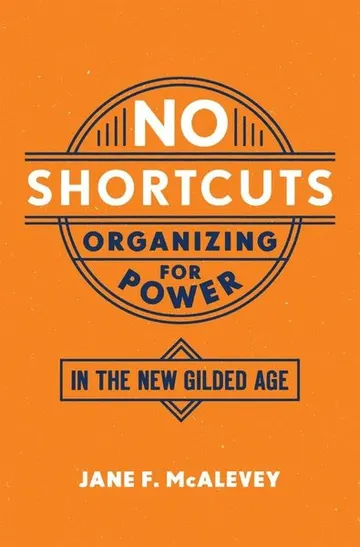
Veteran union organizer Jane McAlevey argues that unions rebuild power through deep, worker-led organizing in workplaces and neighborhoods, and faults unions that lean on lobbying.
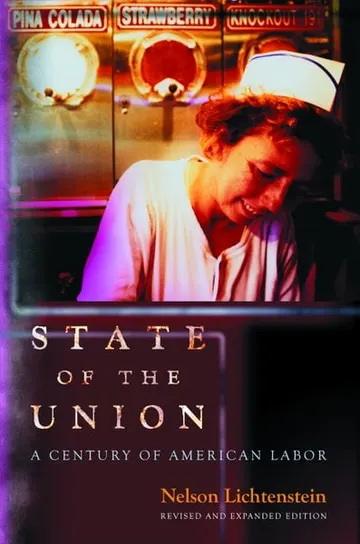
Historian Nelson Lichtenstein traces the rise of American unions in the New Deal and their decline from the 1970s, focusing on law, politics and employer resistance.
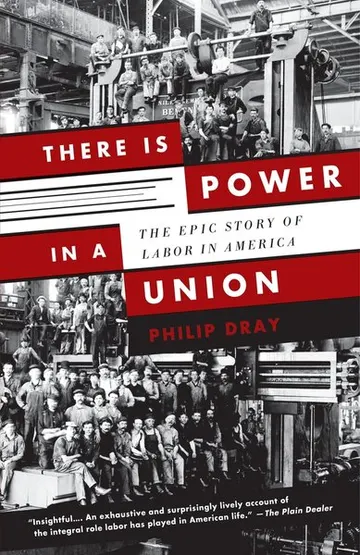
Journalist Philip Dray narrates American labor history from the 1770s to the 21st century through strikes, organizers and the employers and courts that opposed them.
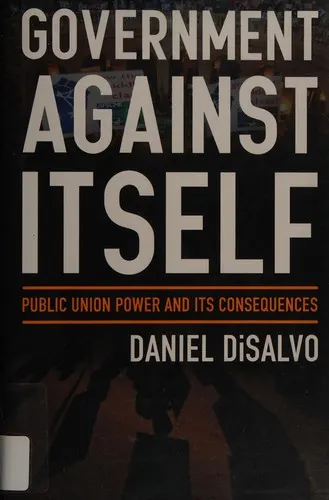
Political scientist Daniel DiSalvo argues that public-sector unions use their influence over the officials they bargain with to raise costs and resist reform.
Find it at Bookshop.org
About this file
Everything here was shipped by the daily brief and verified before it appeared: each
quote was checked character for character against the source it is linked to. This
file separates two things a reader should never have to untangle: how each camp framed the
issue, taken from that camp's own outlets, and who is on the record, grouped by the person
who spoke. An outlet can quote anyone, so a quote it printed is the speaker's, not the
camp's. Checkable claims
are tracked to resolution on the claim ledger, and the
day-by-day story files live in the story tracker.