
"the utter indifference of the imperialist powers to the plight of the poor and oppressed victims." The far left is the only camp that measured a wealthy government's response against the scale of the disaster and made the arithmetic the story, breaking the Australian pledge into its two line items and noting that at least 41 Australians are among the missing.
Camp by camp · Updated October 1, 2026
Disasters & emergencies
How 9 of the ten camps framed it, in their own words, then everyone on the record beneath that — June 21, 2026 to September 28, 2026. Each camp section is that camp's own outlets writing. The people below are grouped by who spoke, not by camp: an outlet can quote anyone, so the outlet it ran in tells you who carried the words, never whose politics they are.
9/10 camps on the record
the record here 82 camp reads 44 quotes 13 people 4 checkable claims 3 running stories
Communist / Far-Left 6 reads · 3 outlets
Democratic Socialist 2 reads · 2 outlets
Liberal Mainstream 16 reads · 7 outlets
Center / Nonpartisan 15 reads · 3 outlets
Establishment / Center-Right 6 reads · 2 outlets
MAGA / Populist Right 9 reads · 6 outlets
Religious Right 8 reads · 3 outlets
Identity 15 reads · 3 outlets
Tech / AI 5 reads · 3 outlets
Libertarian nothing on the record
Communist / Far-Left
The scale of the destruction "cannot be explained by geology or weather alone," the far left wrote, calling it "the product of climate change, decades of state neglect and the subordination of public safety to profit and the budgetary demands of capitalism." It is the only camp that priced the aid against military budgets, calculating that Australia's $5 million pledge equals what its government spends on the military every 44 minutes, and that Australian aid was 0.19 percent of gross national income in 2024. It is also the only outlet to report that the same river flooded twice in 14 months, quoting ICIMOD's Saswata Sanyal.
World Socialist Web Site Aug 29 that day's brief ›
also cited World Socialist Web Site
"instructions to continue classes as thousands of students and workers were displaced" is the far left's charge against the University of Nevada, and it is the only camp that turned the fire into a labor story. The WSWS reported that Washoe County schools closed while the university ordered more than 24,000 students and staff to report for the first day of fall classes, quoted a Reno subreddit commenter that "one-third of my department is out today," and gave the only account of the electrical damage, including two de-energized high-voltage transmission lines.
Far-left writers read the slow response and the collapsed building stock as the predictable consequence of a US-installed regime presiding over a state hollowed out by sanctions. WSWS earlier this week called the catastrophe "a crime of US imperialism" and pointed to the Trump administration's January operation that removed Maduro. The frame inverts the disaster: the proximate cause is geological, the political cause is the century-long Monroe-Doctrine logic.
CounterPunch / Black Agenda Report context Jun 29 that day's brief ›
also cited World Socialist Web Site
"The deaths in Venezuela Wednesday night did not have to happen." WSWS argues the disaster is a direct consequence of US sanctions, which have prevented Venezuela from importing "machinery, spare parts, medicine, food, agricultural supplies and other essential goods," citing the 2021 UN Special Rapporteur finding. The piece is the only one to explicitly tie the death toll to specific US policy decisions, including the January 2026 abduction of President Maduro.
"Free-fire zones for logistics", WSWS is the only outlet to forensically reconstruct the regulatory history (2020 Cal/OSHA citations, 2021 federal OSHA citations, 2023 EPA fine, the 2024 solar-panel fire), naming the political-economic structure that put a chemical fire in the lungs of Boyle Heights. The piece names Gavin Newsom and Karen Bass as responsible parties.
WSWS Jun 23 that day's brief ›
also cited World Socialist Web Site
Democratic Socialist
"Extreme heat grips more than 180 million Americans." Hasan Piker connected the heat wave to broader failures of grid infrastructure and to Republican messaging (mockery of Mamdani's 78-degree AC suggestion, which he noted matches Department of Energy federal guidance).
"Don't we run that country?" The Intercept's framing is unusually sharp: it argues that Trump's stated claim of US control of Venezuela now creates an "obligation that exceeds friendship" to provide unconditional aid, citing both Venezuelan-American organizations and Just Foreign Policy demanding release of frozen Venezuelan oil revenues. The piece treats the earthquakes as a moment that reveals the moral cost of the US "vassal state" framework.
The Intercept Jun 26 that day's brief ›
Liberal Mainstream
"still barreling forward at 130 miles per hour" is how the mainstream left rendered the aircraft at the runway's end, and CNN alone reconstructed the path yard by yard, from the chain-link fence with razor wire to the parking lot "where Tesla robotaxis were stationed." It was also the camp that pressed hardest on the missing arrestor beds, quoting former inspector general Mary Schiavo that for an airport as congested as Miami, not having the system "is a little surprising."
CNN Sep 8 that day's brief ›
"The crash is the latest in a series of high-profile aircraft accidents in the United States," the mainstream left wrote, and this camp built its coverage around the sequence: the UPS crash in Louisville in November 2025 that killed 14, and the January 2025 midair collision near Reagan National that killed 67. It also led on the holiday travel disruption, reporting inbound delays of about six and a half hours.
USA Today Sep 7 that day's brief ›
The mainstream left built its coverage out of survivors, and CNN alone reached four of them, including Wieke De Boer, who used her foot to hold down her tent as water poured in, and a couple who watched from a helicopter as the bridges they had crossed 15 minutes earlier washed away. Both outlets in this camp led the practical consequence for readers rather than the geology, printing the closure list and the Labor Day weekend restrictions in full.
CNN Aug 31 that day's brief ›
also cited USA Today
"a reality check for governments driving a boom in dams, tunnels, highways, railways and bridges across the Himalayas." The mainstream left turned the disaster into an infrastructure story, and CNN is the only outlet in any camp that put numbers on what is being built in the same terrain, reporting China's $168 billion megadam under construction on the Yarlung Tsangpo and India's 11,200-megawatt project downstream. It also printed the caveat plainly, that there is no indication the disaster was linked to manmade development.
CNN Aug 30 that day's brief ›
"the region is bracing for a possible secondary flooding due to ongoing rainfall." The Catholic press made money the subject, reporting that disaster alerts "came too late" for those near the source and quoting the Caritas emergency coordinator saying long-term relief "will require a lot of money, which we don't have at the moment." It is the only camp that named a specific unmet need, 400 destroyed homes in one small town.
"desperately searching for their loved ones" is the mainstream left's frame, and it built the story almost entirely from one family's phone calls, printing an uncle's line that the numbers he was given "didn't even work." It reported the missing come from 31 countries and that more than 700 foreign nationals are unaccounted for across Nepal and China.
CNN Aug 28 that day's brief ›
"Horrifying surveillance video circulating online" is where the mainstream left began, and this camp led with survivors rather than causes. USA Today printed a 68-year-old survivor describing losing his wife: "I tried to grab my wife's hand and take her to the terrace. But she was swept away by the mud." MSNBC's account described "thundering water the color of wet cement" and led on the pilgrims travelling to Mount Kailash.
USA Today Aug 27 that day's brief ›
also cited MSNBC
"fueled by hot, dry weather" is the mainstream left's causal phrasing, and it is the only camp that reported the fire agencies' own explanation, that the US Forest Service attributed this season's intensity to "an abnormally dry and warm winter." USA Today filed the fires alongside a forecast of 114-degree temperatures, extreme heat warnings in Kansas and Missouri, and up to 12 inches of rain in Appalachia, and reported that Europe faces its fifth heat wave of the year. Its coverage names the conditions and stops there.
USA Today Aug 10 that day's brief ›
also cited USA Today
8 more reads from this camp, in the daily briefs.
Center / Nonpartisan
Investigators spent Monday determining "whether the plane touched down too late to stop safely," the wire tier reported, and it built the day's story around that single question, quoting aviation safety expert Steve Arroyo that the typical landing zone is the first 3,000 feet of runway and that a jet beyond it should have gone around. The BBC covered the same news conference but led on Homendy's sequencing, printing her line that "The investigation and access to the aircraft, as well as evidence, can wait" while victims were recovered. PBS brought in its own aviation correspondent to describe an unstabilized approach.
Associated Press Sep 8 that day's brief ›
also cited Associated PressBBC NewsBBC NewsYouTube: PBS NewsHour
Passengers at the airport told the BBC they were "frustrated by the lack of information coming from officials," and the wire tier is the only camp that stayed at the scene long enough to gather witnesses, including a woman describing an odour she had never smelled before and a student pilot describing mangled vehicles. AP pursued the flight-safety question no one else asked, putting two aviation experts on the record about whether the jet touched down inside the first 3,000 feet of runway, and reporting that Miami has none of the arresting beds the FAA credits with saving at least 497 lives at more than 120 other airports.
BBC News Sep 7 that day's brief ›
also cited BBC NewsAssociated Press
"Visiting the Grand Canyon — a crown jewel of the national park system — can be particularly dangerous in the summer because of the risk of flash flooding that accompanies the monsoon, or rainy season." The wire tier is the only camp that turned the flood into a budget story, reaching Utah State's Jack Schmidt, who asked of the pipeline, "Heaven help us if the whole thing down there at the bottom has to be reconstructed. Where are they going to get the money?" The BBC recorded the revision of the missing count from more than 20 down to about 15 and printed the fullest survivor account, from Nikki Baggs, who said "The whole thing was terrifying."
Associated Press Aug 31 that day's brief ›
also cited BBC News
Families are "still holding out hope — however dim," the wire tier wrote, and AP is the only outlet in this set that built its coverage entirely out of the relatives, printing Mukti Patel catching herself mid-sentence about her missing father and sister: "I shouldn't talk in past tense yet." It also reported the specific detail that the missing were staying in a hotel that was swept away, and that a tour group's entire party of 47 is unaccounted for. The BBC went to a Tennessee spiritual organization that lost contact with 77 people.
Associated Press Aug 29 that day's brief ›
also cited BBC News
"pleading for people to provide updates" is how the wire tier described the American families, and AP is the only outlet that reported the composition of the missing: pilgrims bound for Mount Kailash, a Cincinnati man who planned the trip for two years, a Long Island retiree who drives Uber for fun. PBS turned to a hydrologist who described a "gigantic chunk of the mountainside" that melted its own ice as it fell.
Associated Press Aug 28 that day's brief ›
also cited YouTube: PBS NewsHourYouTube: Forbes Breaking News
"it is too soon to pinpoint its role in this specific event" is the wire tier's discipline on climate, stated in the same paragraph where it reported that warming is driving faster glacier melt in the Hindu Kush Himalaya. The BBC is the only outlet in this set that corrected the earthquake story in real time, printing the USGS revision that "the seismic energy was instead generated by a landslide." PBS ran a separate explainer converting the slippage into an energy figure, the equivalent of detonating 950 tons of TNT.
BBC News Aug 27 that day's brief ›
also cited YouTube: PBS NewsHour
The fire "spread perilously close to dense neighborhoods," the wire tier wrote, and this camp built its coverage from evacuees rather than officials. AP found Crystal Hallock, who lost a home to fire for the second time in under a decade, and the BBC reached a Peavine Mountain resident who had bought a water truck in advance and used it to save his house. Both noted that Burning Man organizers asked attendees not to take hotel rooms from evacuees.
Associated Press Aug 25 that day's brief ›
also cited BBC NewsBBC NewsPBS NewsHour
"left some residents keeping a wary eye out for possible evacuation orders while others already forced to flee their homes waited to see what would be left on their return" is the wire tier's framing, and it is the only camp that reported the fires through the people standing outside the perimeter. AP quoted a Nine Mile Falls resident of 65 years saying "We didn't think about anything but grabbing our animals and leaving," and reported that Malden, Washington, which lost its fire station, post office and city hall to fire in 2020, was told to conserve water for fire trucks. Neither AP piece used the word climate.
Associated Press Aug 10 that day's brief ›
also cited Associated Press
7 more reads from this camp, in the daily briefs.
Establishment / Center-Right
The plane "swiped several vehicles and trapped people inside who had to be extricated," the institutional right wrote in the shortest account any camp published, three sentences that named Amazon.com in the first line and the fire chief in the second. It reported the toll and the corporate owner and stopped there.
The populist right traced "the path of destruction left by the Boeing 767" through the fence lines and the wrecked vehicles, quoting Homendy at greater length than any other camp. It closed on the regulatory question, reporting that investigators will examine the airport's lack of an arresting system and that Homendy called that a key part of the inquiry.
The institutional right filed the crash almost entirely through official statements, running the sheriff's press conference, the transportation secretary's promise of inspectors, and the county mayor's condolences with no aviation context and no reference to any prior accident. Its two pieces are the only ones in the set that quote the fire department's operational account at length while stating plainly that "It is unclear what caused the incident and how many injuries have occurred."
Washington Examiner Sep 7 that day's brief ›
also cited Washington Examiner
The populist right published the Associated Press dispatch in full and added nothing to it, including the pipeline cost and the meteorologist's rainfall figures. It is the only camp on the right that covered the flood at all in this set.
The populist right ran the Associated Press dispatch in full and added nothing of its own, headline included. In a corpus where this camp rewrote nearly every other story, the fire is the one it left to the wire.
The institutional right ran the Associated Press copy without alteration, so its only editorial act was the headline, which omits the arrest and the arson charge that the same wire reported the same day. Its own reporting today went to a different fire story, the order halting border-wall well drilling in drought-hit New Mexico.
MAGA / Populist Right
The populist right's two most prominent pieces are about who may stand at the memorial, reporting families "demanding that New York City Mayor Zohran Mamdani does not attend Friday's September 11, 2001, memorial ceremony" and a petition that passed 100,000 signatures. The lens is split on the documents: Fox reported the release straight, writing that the records "call into question public claims that the air around Ground Zero was safe to breathe following the 9/11 attacks" and walking through the Stuyvesant asbestos reading, while the Washington Examiner devoted its piece to defending the president's account against fact checks.
One America News Network Sep 9 that day's brief ›
also cited One America News NetworkFox NewsWashington Examiner
Breitbart reached for precedent rather than context, closing on the February 2019 Amazon Air crash into Trinity Bay and the line that "The FAA at the time declared that the crash stemmed from pilot error," which is the only place in any camp's coverage where a cause is asserted.
Breitbart News Sep 7 that day's brief ›
also cited One America News Network
"Authorities in Nepal have generally rejected offers of search and rescue teams from other countries." The populist right filed the disaster straight with no American politics in it, and it is the only outlet in this set that reported which specific capabilities Nepal requested, which offers it declined, and that China sent workers by helicopter from Tibet.
"Chinese dictator Xi Jinping" is the label the populist right chose for the leader ordering rescue, and all three pieces put the American angle first. Breitbart led on the obliterated Gyirong Port, China's primary trade port with Nepal; OAN and the Daily Wire both led with the number of missing Americans and printed Rubio's statement in full. Two of the three attributed the collapse to torrential rain rather than to the glacier.
Breitbart News Aug 27 that day's brief ›
also cited One America News NetworkThe Daily Wire
"Images and video from the disaster zone show the incredible devastation that the fires have already left in their wake." The populist right covered the fire as a disaster with no cause, quoting the Democratic mayor and the Democratic governor at length and closing on a Republican congressman's line that "this is not Republicans and Democrats you're seeing before you." The word climate does not appear in the piece.
U.S. response leadership. OAN emphasized the scale of American aid ($300 million, 300 first responders) and characterized it as one of the largest U.S. disaster responses of the century. The frame foregrounded American generosity without engaging with sanctions context or deportee deaths.
OAN Jun 30 that day's brief ›
also cited One America News Network
"This extraordinary discovery has served as a symbol of hope." The Daily Wire's coverage of the disaster is centered on the dog rescue video, with Trump's offer of US aid framed as the central political fact. The MAGA right is not anti-aid here but is also not interested in the broader political implications of expanded US military presence.
Daily Wire Jun 28 that day's brief ›
also cited The Daily Wire - Breaking News, Videos & Podcasts
Foregrounds Trump's pledge with extensive direct quote: "The U.S.A. stands ready, willing, and able to help!" Frames Rodríguez's thanks as validation of the post-Maduro relationship.
One America News Jun 25 that day's brief ›
also cited One America News Network
1 more read from this camp, in the daily briefs.
Religious Right
"Of six churches previously recorded at Timure, two were reportedly swept away," the evangelical press reported, and this camp is the only one that covered the disaster through congregations and relief networks, describing assessment teams travelling toward the affected areas on mountain bikes and reporting that more than 40 percent of roads in the area are destroyed or badly damaged. CBN led with the second-flood risk and the American families holding candlelight vigils, and disclosed its own parent organization's relief mobilization.
The Christian Post Aug 29 that day's brief ›
also cited CBN News
"a catastrophic scene as people raced to escape the deadly torrent of water and earth" is the evangelical broadcaster's framing, and this camp is the only one that reported what happened to local churches, saying two were lost, one washed away entirely and one buried to the roofline. Its interview segment described relief workers already distributing food and blankets and warned that waterborne disease follows.
CBN News Aug 28 that day's brief ›
also cited YouTube: CBN News
"A fast-moving wildfire is closing in on homes outside Reno" is the evangelical broadcaster's framing, and this camp reported the fire almost entirely through the voices of people fleeing it. CBN's piece is built from five evacuee quotes and one county official, with no mention of climate, utilities or school policy.
CBN News Aug 25 that day's brief ›
The evangelical broadcaster ran Associated Press copy without adding reporting of its own, and its only editorial act was the headline, which puts the arson arrest and the destruction in the same breath. The wire text it carried is the most detailed account of the residents' losses available today, including the couple who lost a home of 22 years and the neighbor who propped a hose to save the house next door.
CBN News Aug 5 that day's brief ›
"It's not just happening in Washington state. Wildfires are burning across the West with dozens in the Pacific Northwest alone, fed by drought and high winds." The evangelical broadcaster widened the frame to the whole country, pairing the western fires with flash flooding in North Carolina, and attributed the conditions to drought and wind without naming a cause behind them.
CBN News Aug 4 that day's brief ›
The only Religious Right outlet on the story ran the Associated Press dispatch unaltered, with no moral, theological or political framing added and no original reporting.
CBN News Aug 3 that day's brief ›
"Families were facing unimaginable loss and uncertainty." The Christian Post centers Operation Blessing's deployment, framing the response as a faith-driven mission distinct from government action. The political backdrop is largely absent.
Christian Post Jun 26 that day's brief ›
also cited The Christian Post
Pairs the disaster with Christian ministries' mobilization for relief, framing the response as humanitarian compassion across political lines. The unexpected alignment: La Opinión's diaspora-focused practical guidance and the Christian Post's ministry-mobilization framing both treat the quake as an event whose meaning is in the response, not in the geopolitics around it. The collective blind spot: little coverage examines what aid-delivery dynamics look like when the United States is now effectively the patron of the recipient government, having installed it five months ago, a structurally unprecedented post-disaster scenario.
Christian Post Jun 25 that day's brief ›
also cited The Christian Post
Identity
The Arab network put the company's name in its headline and led on its statement, then reported the FAA and NTSB roles as procedural facts, without the American networks' framing of a national aviation safety trend. Its second file is thirty seconds of footage and a caption.
Al Jazeera Sep 7 that day's brief ›
also cited Al Jazeera
"The flood swept large boulders, metal structures and other debris into the Colorado River." The Arab press led on the physical change to the canyon rather than the rescue, and it is the only outlet here that reported rafting trips on the Colorado have been halted. Its earlier bulletin ran the higher figure of more than 20 missing before the park service revised it.
Al Jazeera Aug 31 that day's brief ›
also cited Al Jazeera
"with people trapped on rooftops and balconies." The Arab press ran the footage rather than the analysis, building the item around a single surviving house surrounded by moving water and letting the images carry the toll.
Al Jazeera Aug 30 that day's brief ›
"experts caution of danger from a newly formed lake" is the Arab press's frame, and it is the only outlet that pressed a glaciologist on what is actually holding the new dam, quoting the University of Colorado's Alton Byers saying there is "not much holding it" and that the barrier is loose debris that cascaded into place two days earlier. It also reported that Nepal requested specialist tunnel-rescue help from India and China after initially declining assistance.
Al Jazeera Aug 29 that day's brief ›
"China has dispatched hundreds of military personnel to the border town of Gyirong in Tibet" is the Arab network's angle, and it is the only outlet in this set that reported from Beijing on the Chinese side of the border rather than from Kathmandu or Washington.
Al Jazeera Aug 28 that day's brief ›
"popular with trekkers and pilgrims travelling between Lhasa in Tibet and the Nepalese capital, Kathmandu" is how the Arab press placed the disaster, and it is the only outlet that carried a running live blog, a full explainer, and a rescue report at once. Al Jazeera is also the only outlet that broke the missing down by nationality on both sides of the border and reported the Chinese warning that a still-dammed lake upstream in Gyirong poses further risk.
Al Jazeera Aug 27 that day's brief ›
also cited Al JazeeraAl Jazeera
"Canadian officials say more than 20,000 residents have been evacuated from the towns of Summerland and Peachland in the Okanagan region" is how the Arab press covered it, filing the Canadian evacuation as an international story on its own terms rather than as an American one. It is the only non-North American outlet in this cluster.
Al Jazeera Aug 10 that day's brief ›
"What have they done? Nothing!" Al Jazeera's reporting from inside Caracas centers ordinary Venezuelans furious at a government that, in the words of the International Crisis Group's Phil Gunson, is responding "anything from totally non-existent to, at best, completely inadequate." The frame puts the Rodriguez government on trial, foregrounds the absence of the military (which was heavily deployed during the 2024 election crisis but is largely absent from the rescue) and quotes Mairet Perez: "It's absurd. They have been so slow like always."
Al Jazeera / La Opinión Jun 29 that day's brief ›
also cited Al Jazeera Breaking News, World News and Video from Al JazeeraAl Jazeera Breaking News, World News and Video from Al Jazeera
7 more reads from this camp, in the daily briefs.
Tech / AI
The technology press made the branding the story, noting that video from the scene "clearly shows the Amazon logo on the plane's tail," and it was the only outlet to publish Amazon's full statement as a direct comment to its own reporters rather than as a press release.
The Verge Sep 7 that day's brief ›
"As the region warms, its ice is becoming increasingly unstable, raising the risk of catastrophic flooding" is the tech-and-climate read, and WIRED is the only outlet that put the event in a series, reporting that Nepal's glaciers lost nearly a quarter of their area between 1970 and 2010 and that two glacial lake outburst floods hit the country last year. It quoted a Canadian geologist estimating a 2,000-foot-wide piece of ice fell almost 4,000 feet.
WIRED Aug 27 that day's brief ›
Futurism reported that the administration cut the NOAA GeoXO program, whose atmospheric-composition instrument could have provided "near-real-time, location-specific data on smoke levels."
Futurism Jul 18 that day's brief ›
The doublet phenomenon. WIRED's coverage is engineering-frame: the unusual pattern of two large quakes 39 seconds apart produced building damage that single quakes of equal magnitude would not have caused, because the first quake weakened structures and the second toppled them. This is the only covered outlet treating the geological event as the central story rather than the political response. Convergence: WSWS (Communist) and Al Jazeera (Identity/Palestinian-Arab) agree the rescue is being mismanaged, though for different reasons; the WSWS critique is of US military presence, the Al Jazeera critique is of Venezuelan government control. Both diagnose a failure to mobilize civilian rescuers. Collective blind spot: every covered lens treated the doublet quake as either a humanitarian event or a geopolitical event; only WIRED treated it as a structural-engineering event with implications for building codes in seismic regions.
WIRED Jun 28 that day's brief ›
"It is likely that the first earthquake caused a segment of the fault to rupture and transferred the stress to another fault." WIRED's piece is entirely scientific: an explanation of the rare seismic-doublet phenomenon, drawing comparisons to Turkey 2023, with no political content at all. The framing implicitly suggests the deaths are an act of geology, not policy.
WIRED Jun 26 that day's brief ›
Nothing on the record
One camp has published no framing we could verify on this issue. Absence is part of the record, so it is printed here rather than left out.
LibertarianThe stories behind it
Claims on the books
Open CNN Aug 31
“All park concessions will halt overnight stays starting Monday.”
Open Associated Press Aug 6
“The fires ... have destroyed about 850 buildings and forced the evacuation of around 67,000 people”
Open Associated Press Aug 6
“Temperatures were expected to climb from the 80s the past two days into the upper 90s (36-37 degrees Celsius), with less humidity, late this week.”
Open Lineage Jun 23
“We can confirm that no measurable ammonia concentrations have been recorded in the community since the fire began”
On the record
Grouped by who said it. The outlet named under each quote is who carried the words.
Franklin Graham 23 on this issue
“Two years ago today Hurricane Helene brought unimaginable destruction to western NC and surrounding areas. I couldn’t be more thankful for the 35,000 volunteers who answered the call to mud out flooded houses, remove debris, and help hurting families in Jesus’ Name. Since then, @SamaritansPurse has provided new homes, vehicles, bridges, driveways, furniture, repaired churches, and more. There’s still much work ahead, but we thank God for each person we are able to help and for all those who have prayed, given, and partnered with us.”
Sep 28 on @Franklin_Graham
“Severe late-season monsoon storms inundated parts of the Navajo Nation in northwestern New Mexico last week. Homes were flooded, roadways washed away, and tragically, three people were killed. Three generations of a Navajo community were heading home from picking up supplies for”
Sep 26 on @Franklin_Graham
“Watch as our @SamaritansPurse teams work with partners in Nepal to distribute relief items to families devastated by the catastrophic flooding there…”
on Samaritan's Purse distributing relief after catastrophic flooding in Nepal
Sep 15 on @Franklin_Graham
Donald Trump US President 4 on this issue
“Trump said there were 50 or 60 Americans in the area but added that a full accounting hasn’t been completed.”
Aug 28 via Associated Press
“We are holding Canada responsible for the fact that they are not properly maintaining their Forests, and Brush therein, and the United States is being unnecessarily invaded by filthy, polluted, and unhealthy air, the quality of which is dangerous, and totally unacceptable!”
Jul 19 via Breitbart News
“I just spoke with Congressman Tom Tiffany (who has my Complete and Total Endorsement for Governor!), and informed him that the Great State of Wisconsin has been approved to be given $22.6 Million Dollars in its Disaster Declaration Request, for Severe Storms, Tornadoes, and Flooding,”
on $846 million in disaster aid approved for GOP states amid claims of favoritism
Jul 8 via Truthout
Maria Cantwell U.S. Senator 3 on this issue
“We are still at the highest risk in the nation and appreciate being the highest resourced,”
on wildfire risk and firefighting resources near Spokane
Aug 6 via Associated Press
“We are not out of danger”
on dry weather forecast that could worsen the Spokane area fires
Aug 3 via Associated Press
“The next couple of days will be challenging.”
on wildfires near Spokane that burned 600 structures and forced 60,000 evacuations
Aug 3 via CBN News
Vivek Ramaswamy 3 on this issue
“Headed to East Palestine tomorrow, to meet with many of the local residents whom I’ve spoken with in recent weeks. Very sad to hear what they’ve gone through, after the train derailment & chemical spill in 2023. It’s become yet another forgotten tragedy. Ohio deserves a fighter”
Sep 11 on @VivekGRamaswamy
“This is a must. The people of East Palestine can’t be forgotten, I’ll be visiting soon.”
Aug 29 on @VivekGRamaswamy
“It’s ridiculous that the national media & politicians turned East Palestine into a convenient talking point for a while, only to forget about local residents when they were screwed over by a class action settlement that served the attorneys but not the people. Heading to East”
on the East Palestine train derailment settlement benefiting lawyers over residents
Aug 28 on @VivekGRamaswamy
Zohran Mamdani New York City Mayor 3 on this issue
“The very least our city owes the families, survivors and first responders whose lives were forever changed by the horrific terror attack of Sept. 11 is transparency and accountability”
on releasing 170,000 pages of withheld ground zero air quality documents
Sep 11 via Truthdig
“People got sick because the leaders they trusted lied and told them they were safe to breathe in toxic air,”
Sep 9 via Fox News
“We're staring down what could be the second hottest day in New York City history in over a decade — and City government is taking historic measures to keep all New Yorkers indoors, cool and safe,”
on New York City's heat emergency plan ahead of near-record temperatures
Jun 30 via USA Today
Bernie Sanders US Senator, I-VT 1 on this issue
“The U.S. is the richest and most advanced nation on earth. We are spending huge amounts on AI to bomb Iran and destroy infrastructure. Yet after nearly 2 weeks, we can't restore electricity to Gary, IN, a low-income Black city? Unacceptable. Let’s get our priorities straight.”
Aug 25 on @SenSanders
Christine Todd Whitman EPA Administrator at the time of 9/11 1 on this issue
“did the very best we could at the time with the knowledge we had”
Sep 9 via BBC News
Cori Bush former Congresswoman and candidate 1 on this issue
“The Politivist team is on the ground, providing supplies, checking on families, and showing up for those who've been left behind,”
Jul 26 via Fox News
Jon Stewart TV host and 9/11 survivor advocate 1 on this issue
“So to be fair to them, they only buried that information for 25 years,”
Sep 9 via BBC News
Mark Carney Canadian Prime Minister 1 on this issue
“My thoughts are with everyone whose life has been upended by the wildfires in British Columbia. The Bradley Creek wildfire alone has forced thousands of people to evacuate their homes in the past few days,”
Aug 7 via ICT News
Maxwell Frost 1 on this issue
“Today my bill, the Post Disaster Protection Act, passed unanimously out of committee, bringing it one step closer to the House floor! If FEMA gets 90 days to review an appeal, disaster survivors deserve 90 days to make their case. Let’s get this across the finish line.”
Sep 16 on @RepMaxwellFrost
Tony Evers Wisconsin governor 1 on this issue
“We have been receiving calls of damage with a lot of trees down, power lines down,”
on storm damage across Wisconsin including fallen trees and power outages
Jul 28 via Associated Press
Tony Perkins Family Research Council President 1 on this issue
“"We rely too much on cell towers... [AM] and ham radios are really the only two absolutely viable ways to get emergency information out." @RepKeithSelf”
on AM and ham radio as backup emergency communication when cell towers fail
Sep 16 on @tperkins
Books on Disasters & emergencies
Read across the aisle
Paid links. If you buy a book through these links, Bookshop.org pays us a small commission and sends a share of the sale to independent bookstores.
-
Argues from the left
The Shock Doctrine (opens Bookshop.org)
Naomi Klein · 2007
Naomi Klein argues that governments and corporations use crises such as Hurricane Katrina and the Iraq war to push through privatization and market policies.
-
Background
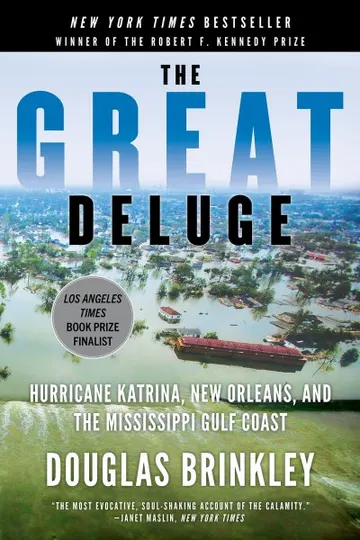
The Great Deluge (opens Bookshop.org)
Douglas Brinkley · 2006
Historian Douglas Brinkley reconstructs the 2005 hurricane and the failures at every level of government, drawing on interviews with residents, rescuers and officials.
-
Background
Five Days at Memorial (opens Bookshop.org)
Sheri Fink · 2013
Physician and reporter Sheri Fink reconstructs what happened at a flooded New Orleans hospital after Katrina, including the deaths of patients and the investigation that followed.
-
Argues from the right
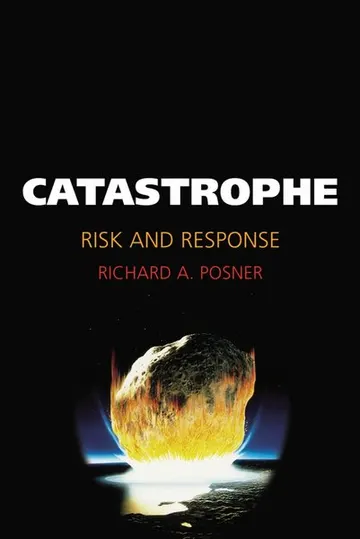
Catastrophe (opens Bookshop.org)
Richard A. Posner · 2004
Judge and law-and-economics scholar Richard Posner applies cost-benefit reasoning to low-probability catastrophes such as pandemics and asteroids, arguing that government underprepares for them.


About this file
Everything here was shipped by the daily brief and verified before it appeared: each quote was checked character for character against the source it is linked to. This file separates two things a reader should never have to untangle: how each camp framed the issue, taken from that camp's own outlets, and who is on the record, grouped by the person who spoke. An outlet can quote anyone, so a quote it printed is the speaker's, not the camp's. Checkable claims are tracked to resolution on the claim ledger, and the day-by-day story files live in the story tracker.
One issue, on the record
See who actually took a position.
The daily brief records the arguments around an issue in each actor’s own verified words. Free.
Free to start. No spin. No yelling.
$5/month, cancel anytime. Secure on Stripe, and nothing is ever paywalled.
One-time, secure on Stripe. No account.