How 10 of the ten camps framed it, in their own words, then everyone on the
record beneath that
— June 20, 2026 to November 16, 2026.
Each camp section is that camp's own outlets writing. The people below are grouped by
who spoke, not by camp: an outlet can quote anyone, so the outlet it ran in tells you
who carried the words, never whose politics they are.
10/10camps on the record
the record here42 camp reads77 quotes34 people7 checkable claims
Who leaned in hardest
Bars scale by reads per outlet, so a big roster never out-shouts a small one.
Communist / Far-Left4 reads · 1 outlet
Democratic Socialist3 reads · 2 outlets
Liberal Mainstream6 reads · 5 outlets
Center / Nonpartisan4 reads · 2 outlets
Establishment / Center-Right4 reads · 2 outlets
Libertarian2 reads · 2 outlets
MAGA / Populist Right6 reads · 4 outlets
Religious Right5 reads · 3 outlets
Identity7 reads · 4 outlets
Tech / AI1 read · 1 outlet
Communist / Far-Left 4 reads · 1 outlet
"to launch a broadside against the administration from the right" is how the WSWS described Democrats' use of the scandal, counting about 40 minutes of Sunday-show time on Huang against six on the Iran war. It printed Himes's admission that "I don't think that we know" whether Alice Huang was an asset. Its second piece pictured Nvidia as a "giant spider" at the center of the AI boom's circular financing.
"preparation for direct military conflict" is how the WSWS described the purpose of the economic war it says Huang's removal strengthens. It cast Huang as the most prominent corporate opponent of decoupling, removed through leaks of classified intelligence. It asked, "Who leaked classified surveillance of a US citizen to the Times, and why now?"
"the fascist president" is the WSWS name for Trump, but its target was the Democrats who called him a supplicant. It listed Schumer's demands for $14 billion in Taiwan arms sales and cast the opposition as more hawkish than the White House. It was the only camp to attack Trump's critics from the left on China.
The WSWS aimed at the Democrats, calling their demands for more Taiwan arms "warmongering statements" that "condemn an administration that has been more aggressive against China than any of its predecessors." It listed tariff levels, tanker seizures and refinery sanctions as evidence, and named the CEOs and Chief Justice John Roberts on the dinner guest list.
"because he wants to make money" is Hasan Piker's explanation for Huang's push to loosen export controls, delivered amid jokes about the affairs. He floated and then disclaimed an Israeli-operation theory, saying he does not have the evidence for it.
"billionaire oligarchs oligarching," Kyle Kulinski called the state dinner guest list, reading off Musk, Bezos, Altman and Zuckerberg. He treated the summit as a class event where executives court a rising China. Policy terms went unmentioned.
Kyle Kulinski read the dinner guest list aloud and called it "billionaire oligarchs oligarching" while Americans struggle with prices. His focus was who sat at the table, not what the two governments agreed.
CNN argued Xi arrived with more leverage than before, so "style over substance may be enough for him." NPR said the summit brought "little in the way of grand bargains," and both outlets noted the White House ban on CNN, MS NOW and Politico kept the ceremonies off network TV.
"All the pomp and ceremony might appear unusual," NBC wrote, setting the welcome against Trump's past charges that China meddled in elections. NBC gave space to Republican senators who objected, while USA Today and CBS led with the menu, the guest list and the eagle. Brian Tyler Cohen opened his video by saying Trump welcomed Xi "presumably to ask for tips on how to become a more effective autocrat."
"There was one discordant note in the carefully orchestrated arrival ceremony," the Guardian wrote of Trump wincing at the flyover, and it noted the moment was left out of the White House's edited highlights. MSNBC and CBS reported the truce extension without comment, while the National Catholic Reporter framed the week around the Vatican as a possible broker of shared AI safeguards between the two powers.
"her flub on the debate stage could further fuel critics' claims that she is not ready for a full six-year term." The mainstream left treated the answer as a readiness question and supplied the missing context itself, explaining Taiwan's population, its trade role and the American policy of strategic ambiguity that Graham could not describe. It is the camp that reported her follow-up on the trail, where a voter asked how constituents could trust her on national security and she answered that everybody has a first day on the job.
Politico traced the order to money rather than to Pyongyang, reporting three people familiar with the discussions who tied it to the pace of Seoul's $350 billion investment pledge and to the Coupang fine, with "frustrations in one part of the relationship bleeding into his assessment of another." Reuters filed the same story as a structured explainer of burden-sharing, tariffs and troop numbers. PBS put two analysts on air who disagreed about whether the exercises deter anything.
MSNBC wrote that the president "went to bizarre lengths to cozy up to North Korea," and it is the camp most careful to note that the order may not be real, observing that the exercises began Monday as scheduled and that it remains unclear whether the post will affect the rest of the schedule. The Guardian pushed the same skepticism into the Oval Office, printing Trump's retort to a reporter who asked why Kim had not replied.
"produced no major breakthroughs," the AP story on PBS said, then quoted a Beijing analyst praising the new working groups as a way to make stability "more durable and institutionalized." Its Friday wrap called the visit "heavy on pageantry, light on policy announcements." It read the summit as crisis-management plumbing.
"all of that language does not paper over all of these issues we have been talking about," PBS's Nick Schifrin said after walking through trade, AI, Taiwan and Iran. The wire tier treated the visit as an agenda to be itemized and reported the Iran link to the stalled Taiwan arms sale. The BBC added a character read, saying Trump "has long made no secret of his admiration for strongman leaders around the world."
"China appears to have reneged on promises to buy more American agricultural products," the BBC wrote, setting the pageantry beside a ledger of what Beijing has not delivered since the May summit. Its companion pieces quoted a Council on Foreign Relations fellow calling the welcome one not afforded to any US ally, and PBS reported that experts "don't really think that this meeting is going to be so much about deliverables" as about the leaders' personal relationship.
"It was a moment that drew a stark contrast to Graham's brother, Lindsey." The wire tier is the only camp that filled in the substance of the question, describing the 2016 arbitration ruling invalidating Beijing's South China Sea claims and quoting a US Special Operations commander in Manila this week. It also reported Lindsey Graham's own 2022 delegation to Taipei, making the comparison specific rather than sentimental.
"his administration failed to intervene" is the Bulwark's charge, putting Trump's prior briefing at the center. The Dispatch framed Huang as "one of the tech industry's most important advocates for loosening restrictions on chip exports to China." Both treated export policy, not the affair, as the stakes.
"The president of the United States of America looked weak and insecure," Bill Kristol wrote, reading the tarmac greeting as homage and adding that "Our petty presidential bully is cowed by the big-boy bullies of the real world." The Dispatch ran a similar column on the red carpet. The Washington Examiner split from both, reporting that the dinner "capped a long, but friendly, day of meetings and celebrations."
"who the actual Alpha is in that particular relationship" is how The Bulwark's video summed up the flyover, arguing Trump's one-on-one dealmaking left him visibly outmatched. The Washington Examiner led its own report on the wince, and a Hoover Institution panelist said, "I don't think President Trump has any specific deliverables he's trying to get out of the summit."
"It is difficult to imagine a more thorough misunderstanding of the purpose of a military exercise—or an alliance." Retired Lt. Gen. Mark Hertling made the argument from logistics rather than politics, describing what it took to move an armored brigade 5,000 miles and arguing that interoperability has to be practiced or it does not exist. He also noted that the 2018 suspension of these drills produced no denuclearization.
"many are hoping one critical issue won’t be left off: human rights," the Free Press wrote, and it handed its pages to Pastor Ezra Jin to name the eight Zion Church colleagues still jailed. It was the only camp to treat the summit mainly as a prisoner negotiation.
Antiwar.com wrote that the announcement "could create room for renewed diplomacy between the US and North Korea," and it is the only camp that framed the order as aligning with the elected South Korean government's own agenda, noting President Lee Jae-myung proposed direct talks with Pyongyang the day before Trump's post.
"Jensen Huang lost his AI empire to a geopolitical fling," the Blaze wrote, before moving to succession. Breitbart ran six pieces built around Republican senators, Kennedy and Banks, pressing Lutnick and Bessent to testify, with the scrutiny pointed at the Commerce Department rather than the president. The Daily Wire framed the hearings around whether a businesswoman "may have helped China obtain sensitive American technology."
"as much worldwide implications as a typical James Bond movie" is how The Blaze opened, then focused on shell-company chip buyers tied to Megaspeed. The Daily Wire led with Trump's defense of Huang as "an honorable guy" and did not question the president's prior briefing. Neither MAGA receipt criticized Trump.
The Daily Wire wrote that the two leaders "already have two more face-to-face meetings on the calendar" and quoted a Chinese scholar calling the pace unprecedented. Fox and OAN led with Xi praising the visit's "perfection" and Trump's "Friendship, Strength, and Success" post. The White House fact sheet claimed $30 billion in tariff concessions each way, Chinese coal purchases and a joint "super intelligence" dialogue; on The Blaze, Glenn Beck argued the visit was about Iran and gas prices.
"the opposite of what a lot of the domestic media is telling you," Breitbart quoted Peter Schweizer saying of the two leaders' power positions, and it devoted the piece to Xi's purges of generals and China's hidden economic data. Its ceremony coverage and OAN's dinner report were warm and descriptive, and Fox wrote up the menu, noting that red meat was missing.
Breitbart reported experts saying Trump's moves "put the United States in a stronger position in its strategic competition with China," listing the Greenland deal, critical minerals and grid-equipment rules. OAN wrote that Trump "broke standard protocol by personally greeting the Chinese delegation on the tarmac" out of respect, while Fox gave space to a senators' resolution cataloguing Communist Party killings.
"China is winning" -- Fox/O'Leary frames local data center resistance as a national security failure. The people blocking data centers are, by this logic, helping Beijing. The framing converts a local land-use fight into a great-power competition story. The implication: communities that resist should be overridden by federal or economic necessity.
"it is probably a honey trap" opens TAC's tradecraft explainer, which argued that such operations rely on long relationships rather than blackmail. It closed by noting State Department staff in China are barred from romantic ties with Chinese nationals.
"China is clearly playing to win" is CBN's closing line, after a report built on Chinese commercial espionage against U.S. chip technology. TAC's short item noted analysts see the ouster "as a setback for both the U.S. and China in the AI race."
"drawing political criticism at home" is how CBN summed up the reaction, noting Republicans who say the warm optics send the wrong message. The broadcast ended on the National Archives stop and Xi's "strategic stability" line. It stayed neutral between the White House and its hawkish critics.
"a narrow trade truce keeps things just above water," the paleoconservative outlet wrote, predicting that the higher-stakes issues would wait until after Trump leaves office. It was the only receipt to analyze whether Trump might trade the Taiwan arms sale for Chinese concessions, and it concluded that a grand bargain is unlikely. The Christian Post ran a week-in-review.
"The president’s engagement with Xi is delivering results," the paleoconservative outlet wrote, crediting Trump's ambiguity on Taiwan and a smaller advisory circle. The evangelical outlets split from it: CBN wrote that "economic deals should not drown out the voices of those still in prison for their faith," and the Christian Post covered a bipartisan senators' letter naming jailed pastors.
"is at the centre of international spying claims" is Al Jazeera's description of Alice Huang, in a report built on Megaspeed's statement that she left on Aug. 30, 2025. It gave Beijing's denial and Singapore's investigation equal weight.
"no habían sido demostradas judicialmente" is La Opinión's caveat on the spy suspicions, inside a report led by Bessent's demand for answers within ten days. Atlanta Black Star's earlier read, centered on Trump calling Huang a "fine man," stands.
Al Jazeera reported that a defense-linked Chinese university bought H200 chips "despite being on a US export blacklist," for 874,700 yuan. It was the only outlet to document a specific chip purchase, and it carried Sen. Kevin Cramer's call for Huang to step down.
The Black outlet covered the event through its seating and footage: "Outrage erupted once people noticed Ivanka seated in the front row," and it revisited China's trademark approvals for her brand. A second piece examined a viral clip of Trump's red-carpet walk.
"The stakes are even higher for Black Americans," theGrio wrote, framing the summit around beauty salons that import products and Black farmers selling soybeans below break-even. Atlanta Black Star covered the arrival as a body-language story about Trump's gloves and coat.
"Washington may hope that Beijing could use its influence over Tehran," Al Jazeera wrote, the only camp to put the Iran war near the top of the summit agenda. A second piece quoted analysts predicting few meaningful announcements and a focus on rebuilding trust.
Al Jazeera connected the Korea order back to the war it covers most closely, reporting that "Trump once again called into question US support for both South Korea and NATO allies that have refused to contribute to the Iran war." It also carried Seoul's response in full, including the presidential office's statement that the drills do not reflect an intention to attack North Korea.
"China benefits from this," David Sacks said, casting Huang's exit as a loss of American chip momentum to Huawei. TechCrunch reported a reinstatement petition signed by Elon Musk and Tim Sweeney demanding "due process, not mob justice," and the Verge mourned "Big Tech’s last true example of a visionary showman founder CEO."
“Mega Speed, based in Singapore, was really a front to divert chips to China.”
Open The New York TimesNov 13
“The president had been warned at least twice about Mr. Huang’s relationship with a Chinese citizen known as Alice Huang, whom intelligence agencies concluded had been recruited by China’s Ministry of State Security, The New York Times has reported.”
Open Donald TrumpNov 13
“Trump said on Sunday that Huang had "done an amazing job for our country" and that the Nvidia chief had told him he had no idea the Chinese woman he had an affair with was a spy.”
Open Guo JiakunNov 10
“The so-called Chinese spy allegation is unsubstantiated.”
Open Guo JiakunNov 9
“The allegations about Chinese spies are entirely groundless, speculative and intended to smear and malign China.”
Open White HouseSep 27
“Both sides will set up a communication mechanism for artificial intelligence-related incidents, to discuss related risks and benefits, with an AI-specific dialogue scheduled for November.”
Open PBS NewsHourSep 26
“The leaders agreed to meet twice again this year, once in China and later in Florida.”
“China invests in the real economy, focusing on raising wages, developing the country, and moving up the value chain in advanced manufacturing. The US enriches oligarchs by inflating stock market bubbles based on financial speculation and hype, and calls this "growth".”
“Unlike the US, China's goal is not to inflate stock market bubbles. China's goal is to develop the real economy and raise the living standards of the majority of the population. In the US, nearly 90% of stocks are owned by the richest 10% of the population. The US government serves the interests of these rich elites, and does not carry about the majority of working-class Americans. That's why everything in the hyper-financialized US economy revolves around inflating stock market bubbles, while the real economy has deindustrialized and atrophied for decades.”
on how China's economy compares with the US economy and who benefits
“At its 19th National Congress in 2017, the Communist Party of China officially changed its analysis of the "principal contradiction of Chinese society". Since the Reform and Opening Up era initiated by Deng Xiaoping, it had been the need to developing the productive forces and promote high levels of economic growth. Since 2017, the top goal is now to rectify "unbalanced development" and promote "balanced urban and rural development and equitable income distribution". In other words, the CPC's chief priority is to reduce inequality. And that is exactly what it is doing, in many ways. One of those is by forcing the rich and large corporations to pay significant taxes. https:// za.china-embassy.gov.cn/eng//zt/19thCP Cnationalcongress/201711/t20171101_7633990.htm …”
“us-china relationship hasn’t moved a bit from summit. two month extension on trade truce and some pandas. very little to see here other than the efforts to maintain near term stability.”
“What a sick joke. China Daily @ChinaDaily , an arm of the Chinese Communist Party’s Propaganda Department, says China has “empathy” for animals. China is a nightmare for animals. China has no federal animal welfare laws. Millions of dogs and cats in China are slowly boiled alive, blow torched alive, and steamed alive for hours at a time because the Chinese people believe the more pain these animals suffer, the better their meat will taste. One of my dogs was rescued from a Chinese meat market during COVID. She was emaciated. As I’ve been reporting, China-owned Smithfield Foods is actively lobbying the US Senate to pass the pro-CCP “Save Our Bacon Act” to overturn existing US state animal protection laws and force extreme cruelty and abuse on farm animals in our country. And don’t ever forget that China’s animal tests in a PLA-linked lab funded by Anthony Fauci created and unleashed the COVID bioweapon that killed over 1.2 million Americans.”
“It’s kind of weird seeing so many US elected officials be so giddy over Xi. He’s a communist… We have midterm elections in less than 2 months and so many people who say they are anti-communism sure enjoyed taking selfies in the presence of Xi with their glitz and glam. If”
“NEW: China’s State-Owned Weichai Just Took Over One Of The World’s Largest Yacht Builders, Threatening US Maritime Security Everyday, China becomes a greater threat to our national security. Will they ever be held accountable? @WeichaiOfficial”
Nikki Haleyformer South Carolina governor5 on this issue
“This We should not send our American students to China. Last month when he visited the White House, President Xi invited 100,000 Americans to study in China. This summer, China invited an American scholar to a conference, then arrested and jailed him. Keep our kids away from the Chinese Communist Party.”
“Today President Xi will attempt to give false hope of a more cooperative relationship with the US while continuing to fund Russia’s war against Ukraine, support Iran in the war against us, and continue cyber attacks on America. Presidents in the past have been naive when it comes to China. We have to learn from past mistakes with China and be clear eyed about their continued aggression against the US and our allies.”
“China is arming Russia with drone parts used to kill Ukrainians. China is arming Iran with satellite imagery to target U.S. military bases. Xi knows exactly what he's doing and should be held accountable.”
“What if the Trump administration took a page from the Reagan playbook and confronted China as an authoritarian adversary? Our rights come from God, not government. Reagan understood that this was communism's deepest vulnerability. The CCP has the same vulnerability today.”
““He was duly impressed.” @speakerjohnson on the state dinner with Chinese President Xi Jinping. “It's a show of American strength and might... Peace through strength.“”
““The president of the United States of America looked weak and insecure. The paramount leader of the People’s Republic of China looked strong and confident. But Trump was apparently happy with how it all went.””
on Trump's demeanor toward China's leader during their meeting
““Xi Jinping mov[ed] Chinese politics towards the Leninist left: more power for the Party. He also took a decision to move Chinese economic policy towards the Marxist left. China’s approach to national security policy mov[ed] towards the nationalist right.””
on Xi Jinping's shift toward party control and nationalist security policy
“The real story here should be: did Nvidia know their client, and was there a robust effort at Nvidia to make sure that there was no leakage and that they were selling to what were obviously pass-through shell companies?”
“President Xi hosted President Trump in China for a historic summit this summer, and President Trump is reciprocating his hospitality by welcoming the Chinese delegation for a reciprocal visit this week,”
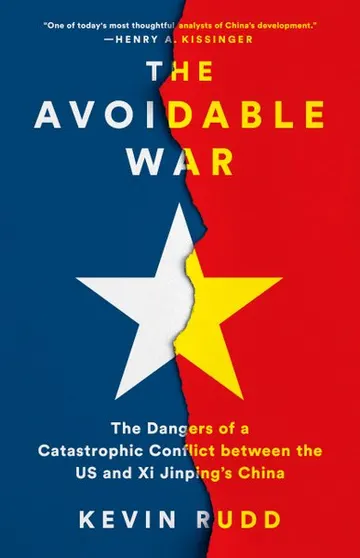
Former Australian Labor prime minister and Mandarin speaker Kevin Rudd argues that Washington and Beijing can avoid war through what he calls managed strategic competition.
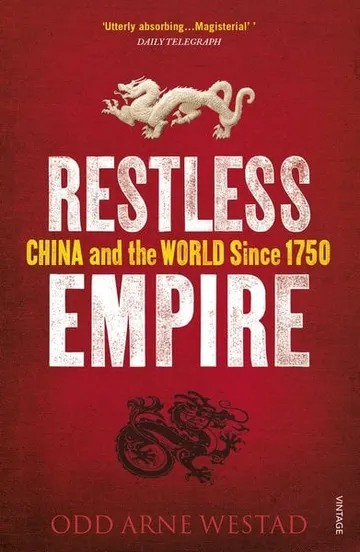
Historian Odd Arne Westad follows China's dealings with foreign powers over 250 years, from the Qing court through the Communist era, to explain present-day Chinese attitudes.
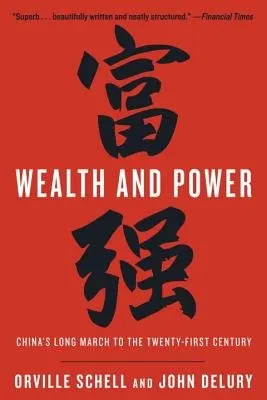
Schell and Delury profile a dozen Chinese thinkers and leaders, from Wei Yuan to Deng Xiaoping, who sought national strength after the 19th century humiliations.
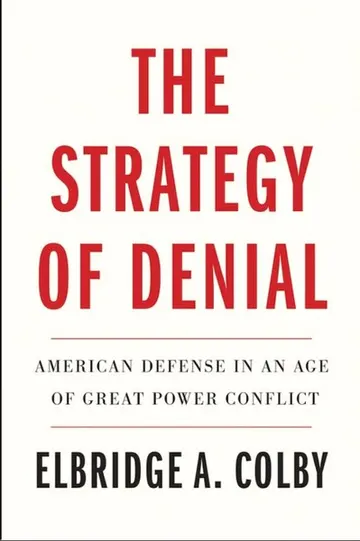
Former Pentagon official Elbridge Colby argues the US should concentrate its forces on denying China control of Asia, and accept limits on commitments elsewhere.
Find it at Bookshop.org
About this file
Everything here was shipped by the daily brief and verified before it appeared: each
quote was checked character for character against the source it is linked to. This
file separates two things a reader should never have to untangle: how each camp framed the
issue, taken from that camp's own outlets, and who is on the record, grouped by the person
who spoke. An outlet can quote anyone, so a quote it printed is the speaker's, not the
camp's. Checkable claims
are tracked to resolution on the claim ledger, and the
day-by-day story files live in the story tracker.