
One of the ten worldviews
The religious right
The religious right is the political movement of religious conservatives, evangelical Protestant and Catholic alike, who read public life through scripture and a traditional moral order and organize to advance socially conservative policy. It treats the culture war as a moral and spiritual one.
What is the religious right?
The religious right, also called the Christian right, is the US movement of theologically conservative believers who bring a religious moral framework into politics and organize to advance socially conservative policy. The First Amendment Encyclopedia defines it as "a political movement, prominent since the 1970s, that advocates social and political conservatism." Its center of gravity is white evangelical Protestantism, but it now spans conservative Catholics and traditionalists too.
Its largest bloc is evangelical, a tradition historians define by four marks (the "Bebbington quadrilateral"): conversionism (a "born again" experience), biblicism (the authority of scripture), crucicentrism (the centrality of Christ’s sacrifice), and activism. "Evangelical" is first a theological category, not a party label, which is why the political shorthand means white evangelicals; Black Protestants are often theologically evangelical but lean Democratic.
Around that core sit a more intellectual, often Catholic strand, the "post-liberal" conservatives of journals like First Things who argue that the state should actively defend the common good, and a paleoconservative, anti-war traditionalist strand (The American Conservative) skeptical of foreign intervention. What unites them is a politics read first through faith and moral order rather than through markets or institutions.
Core beliefs
- Religious moral authority. Scripture and natural law are the lens; events are read through moral and, for some, prophetic law.
- The sanctity of life. Opposition to abortion is the defining political cause across the movement.
- Religious liberty. Protecting the freedom to live and act on faith comes before other political goods, especially against secular mandates.
- Traditional family and sexuality. Support for traditional marriage and skepticism of expanding LGBTQ rights.
- The culture war as spiritual battle. Politics is treated as part of a deeper contest between faith and secularism.
- Religion in the public square. A conviction that faith belongs in public life, against a privatizing secularism, expressed from Christian Zionism to Catholic post-liberalism.
Where it comes from
After the 1925 Scopes "Monkey Trial" subjected conservative Protestants to ridicule, many withdrew from politics, the "Great Reversal." Re-engagement built from the 1942 National Association of Evangelicals and accelerated after the early-1960s school-prayer rulings and, historians like Randall Balmer argue, early-1970s federal pressure on segregated Christian schools.
Jerry Falwell’s Moral Majority (1979) helped mobilize evangelicals behind Reagan; Pat Robertson’s Christian Coalition (1989) became its successor. By the late 1980s white evangelicals were a core Republican constituency, and they remain the most reliably Republican religious group: 81 percent backed Trump in 2024, per Pew’s validated-voter study.
The Catholic and intellectual wing has a parallel lineage: Richard John Neuhaus founded First Things in 1990 to argue for religion in the public square, and a younger "post-liberal" generation (Patrick Deneen, Adrian Vermeule, Sohrab Ahmari) revived the case for an explicitly moral state. The paleoconservative strand (Pat Buchanan, The American Conservative) carried an older, anti-interventionist traditionalism.
Key thinkers
- Jerry Falwell Sr.. Founded the Moral Majority (1979); Liberty University.
- Pat Robertson. Founded the Christian Coalition; the CBN broadcaster.
- James Dobson. Focus on the Family; an influential evangelical family-values voice.
- Richard John Neuhaus. Founded First Things (1990); the case for religion in the public square.
- Patrick Deneen. Why Liberalism Failed (2018); the Catholic "post-liberal" critique.
- David Bebbington. Historian whose "quadrilateral" defines evangelicalism.
The main varieties
- Evangelical Protestant core. The largest bloc: white evangelicals, populist and broadcast-driven (CBN, Christianity Today, the Moral Majority lineage).
- Catholic post-liberalism. An intellectual, often Catholic strand (First Things, Deneen, Vermeule) that wants the state to uphold the common good.
- Paleoconservative / anti-war. A traditionalist, anti-interventionist strand (The American Conservative, Pat Buchanan) skeptical of foreign wars.
- Christian nationalism. A strand seeking a more explicitly Christian government, distinct from church-state-separationist believers.
- Christian Zionism. Support for Israel tied to end-times prophecy (e.g., John Hagee), strong in the evangelical wing.
Common misconceptions
- “The religious right is all evangelical Protestant.” Its largest bloc is evangelical, but it now includes a significant Catholic and "post-liberal" intellectual wing (First Things) and a paleo-traditionalist strand.
- “It speaks with one voice on foreign policy.” It does not. The evangelical wing is strongly pro-Israel and often hawkish; the Catholic post-liberal and paleo wings are far more restraint-minded, even anti-war.
- “"Evangelical" is simply a political or Republican label.” It is first a theological category (Bebbington’s four marks) that spans races and politics. The political shorthand specifically means white evangelicals.
- “The religious right is a shrinking fringe.” Evangelicals alone are roughly 23 percent of US adults, the largest Protestant tradition, and remain electorally central even as their share slowly declines.
How it differs from neighboring worldviews
- vs Establishment / Center-Right. Both sit on the right, but the religious right reads politics first through faith and moral order, while the center-right’s frame is economic and institutional, free markets, trade, and a hawkish foreign policy.
- vs MAGA / Populist Right. The religious right is a major bloc within the broader MAGA coalition, sharing its anti-establishment mood, but it reads politics first through faith and scripture rather than nation and economics.
How Unbiasable reads the Religious Right lens
In the brief, the religious-right lens keeps moral and spiritual stakes always in view. Religious liberty comes first, abortion is the defining issue, secularism is treated as an existential threat, and, for the evangelical wing, Israel is prophetically significant. Trump is often framed as a flawed instrument of God’s purpose.
We analyze outlets like CBN News and Christianity Today (evangelical), First Things (Catholic post-liberal), and The American Conservative (paleo) for it. Watch the internal split: the same war the evangelical hawks bless, the paleo and post-liberal wings may oppose.
See it in practice in the daily briefs, or step back to all ten worldviews side by side.
The outlets we read for this lens
Religious Right coverage in the brief comes from these outlets. Each link explains why we file the outlet here and what to expect from its framing.
- Christianity Today. Politics read through Christian moral order, religious liberty as a central concern, and a more searching tone than movement evangelical media.
- The Christian Post. Moral and spiritual stakes in every story, a pro-life frame, and the culture war treated as a spiritual battle.
- CBN News. Israel treated as prophetically significant, secularism framed as an existential threat, and a strongly providential read on politics.
- First Things. Moral and theological argument applied to politics, a defense of religious liberty, and prose pitched at a serious, churchgoing reader.
- The American Conservative. Skepticism of foreign intervention, concern for family and locality, and a critique of consumer capitalism from the right.
Further reading
The case, and the critique
Paid links. If you buy a book through these links, Bookshop.org pays us a small commission and sends a share of the sale to independent bookstores.
-
Makes the case
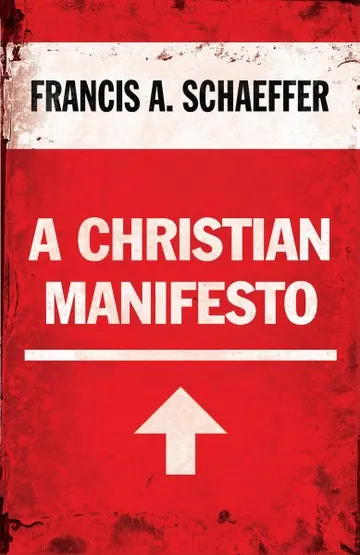
A Christian Manifesto (opens Bookshop.org)
Francis A. Schaeffer · 1981
Evangelical theologian Francis Schaeffer argues that secular humanism has displaced the Christian basis of American law, and urges believers to resist through civil, legal and political action.
-
Makes the case
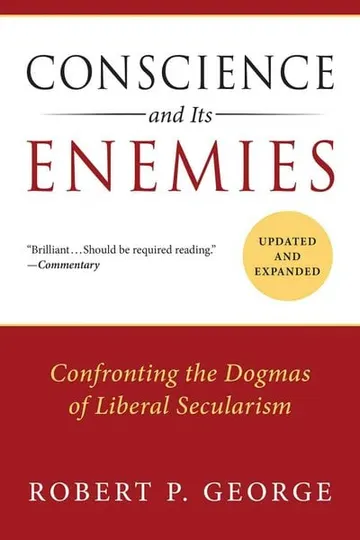
Conscience and Its Enemies (opens Bookshop.org)
Robert P. George · 2013
Princeton legal philosopher Robert George defends natural law reasoning on abortion, marriage and religious liberty, and argues that liberal secularism is itself a dogmatic position.
-
The critique
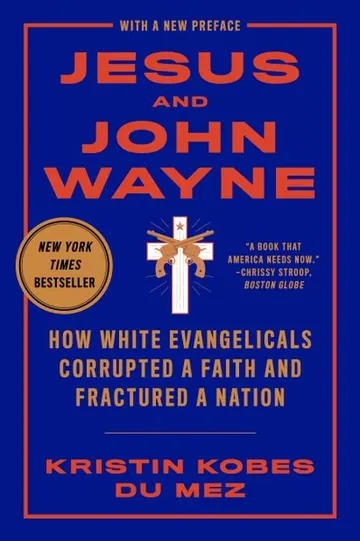
Jesus and John Wayne (opens Bookshop.org)
Kristin Kobes Du Mez · 2020
Historian Kristin Kobes Du Mez, herself from an evangelical background, argues that a cult of militant masculinity, more than doctrine, shaped white evangelical politics from Billy Graham to Donald Trump.
Frequently asked
What is the religious right?
The US movement of religious conservatives, evangelical Protestant and Catholic, who bring a faith-based moral framework into politics and organize for socially conservative policy on abortion, religious liberty, and the family.
What is the difference between the religious right and the Christian right?
They are largely the same movement; "Christian right" emphasizes its Protestant evangelical core, while "religious right" is the broader term that also takes in conservative Catholics and other traditionalist believers.
Is the religious right only evangelical?
No. Its largest bloc is white evangelical, but it now includes an influential Catholic, "post-liberal" intellectual wing (First Things) and a paleo-traditionalist, anti-war strand (The American Conservative).
What does the religious right believe?
Strong opposition to abortion, support for religious liberty and the traditional family, skepticism of expanding LGBTQ rights, and a conviction that faith belongs in public life, read through a biblical or natural-law lens.
Does the religious right agree on foreign policy?
No. The evangelical wing is strongly pro-Israel and often hawkish, sometimes for end-times reasons (Christian Zionism); the Catholic post-liberal and paleo wings are far more restraint-minded and anti-interventionist.
When did the religious right start?
It coalesced in the 1970s, with Jerry Falwell’s Moral Majority (1979) as a landmark, after decades in which conservative Protestants had largely withdrawn from politics. Its Catholic intellectual wing built up later, around First Things (1990).
What is Christian nationalism?
A strand seeking a more explicitly Christian government and national identity, distinct from religious conservatives who emphasize the separation of church and state.
References and further reading
- Religious Right · The First Amendment Encyclopedia (Middle Tennessee State University)
- Religious Landscape Study · Pew Research Center
- Moral Majority · EBSCO Research Starters
External sources are provided for verification. Unbiasable is independent and not affiliated with them.
Every side, every morning
The religious right is one view of the room. See all ten.
One short brief lays the same news across ten worldviews, in each camp’s own words. Free every morning.
Free to start. No spin. No yelling.
$5/month, cancel anytime. Secure on Stripe, and nothing is ever paywalled.
One-time, secure on Stripe. No account.