“If the conflict leaves Hormuz under the permanent control of Iran – or the United States – it could spell the beginning of the end of free passage on the open seas, a concept that has underpinned global trade for centuries.”
The story US bombs Iran for a fourth day, drops the 20% Hormuz toll, reimposes blockade
How many of the 10 sides covered this story today?
ICE kills a second man in a week, then halts most vehicle stops nationwide
Reveal the count
8 of 10 · Far Left, Dem Soc, Liberal, Center, Center-Right, MAGA, Religious, Identity
Logged Jun 21 · What did the record show?
“The United States of America undertakes that immediately upon the signing of this MOU... U.S. Department of Treasury will issue waivers for the export of Iranian crude oil, petroleum products, and derivatives, and all associated services, including banking transactions, insurances, transportation, etc.”the memorandum of understanding (MOU) · NBC News
Reveal the verdict
Borne outresolved in 24 days
Treasury actually issued the 60-day oil waiver shortly after the MOU was signed, though it was later revoked on July 7.
What actually happened to Ro Khanna in the West Bank
They clash
“An unaccountable force that is backed by US taxpayers gets to do this to an American congressperson. What would that force do to the average Palestinian, which by the way is of course illegal because the Israeli occupation of the West Bank is illegal?”
“Ro Khanna sneaks into Israel without notifying any authorities. While there's an active war going on, mind you. He boldly wanders straight into a restricted military zone, gets stopped and questioned, and now this man is crying victim.”
The split The wire tier calls him a president "searching for unorthodox ways out of a difficult position"; the socialist left calls the threats to bridges and power plants "a war crime under international law"; the populist right publishes Trump's own promise to "knock out all of their power plants" as strategy.
A father was shot through his windshield in front of his daughter; his last words were "I tried to stop."
The split DHS says the officer fired "fearing for public safety"; the socialist left calls ICE an "immigration Gestapo"; the populist right quotes agents that "Numbers are going down, we can't do st".
The Senate's loudest war hawk died a day after his last trip to Kyiv, and Trump told the FBI to stop looking into it.
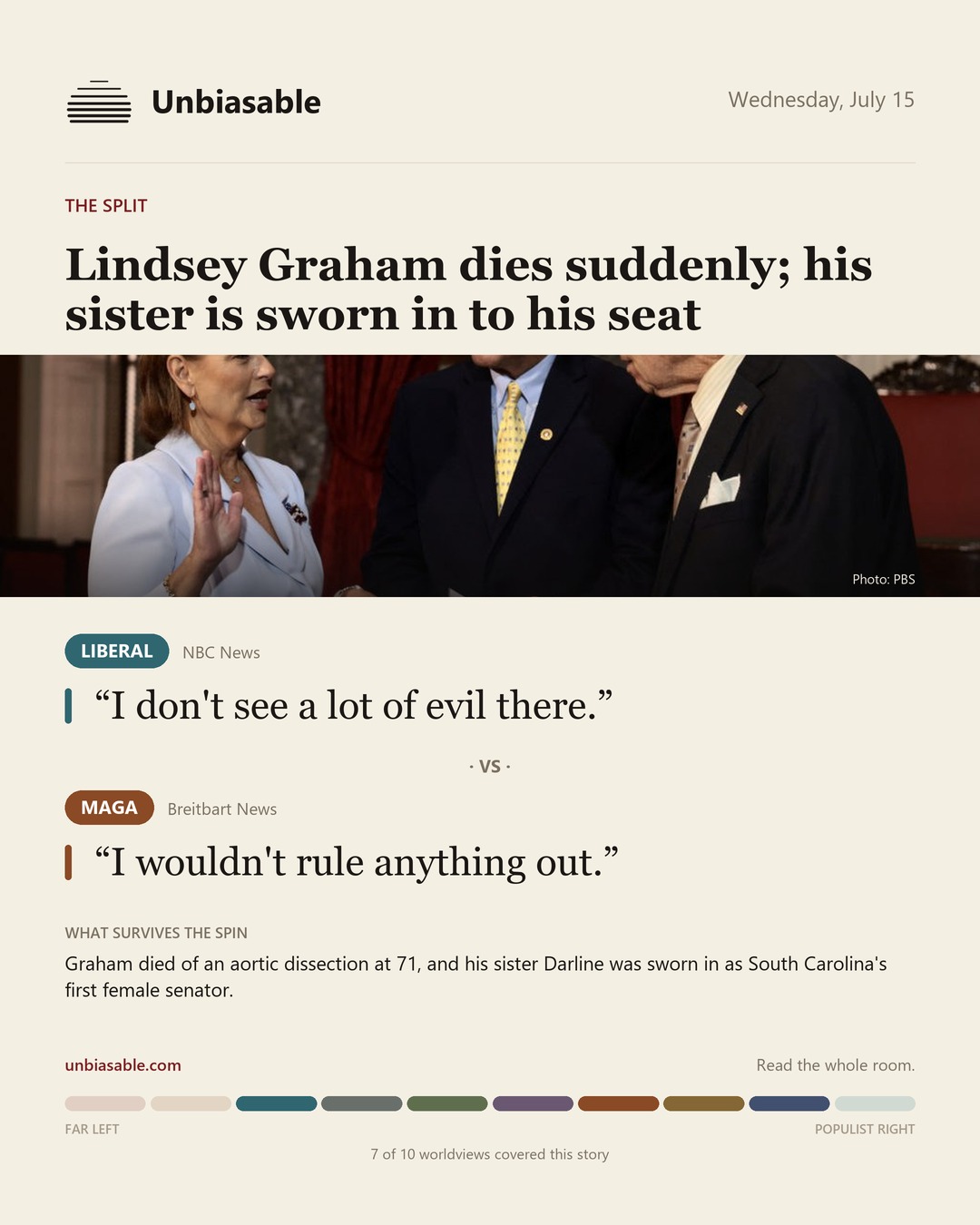
The split The Bulwark calls Graham's Trump bargain a "Faustian Tragedy"; the Guardian calls his record "a legacy of destruction"; MAGA's Hawley says "I wouldn't rule anything out" on foul play.
A US congressman was blocked at gunpoint, and the fight over the video has become a fight over the word "apartheid."
The split Hasan Piker's read of Khanna's account is that "It is apartheid"; National Review says Khanna "sensationalizes being stopped by IDF" and pulled a. - The through-line: Khanna, a sitting US congressman, was blocked and detained in the West Bank by armed settlers and Israeli soldiers, an account the Israeli government disputes.
A convention in Bangor will pick a nominee in 15 days, and the Biddeford killing just made Susan Collins the story again.
The split The left quotes Maine voters that ICE "needs to be abolished" and faults Collins's funding vote; the populist right frames Platner's withdrawal as the consequence of tech firms having "buried scandal after scandal".
After 52 years, Congress is trying the exact experiment it repealed in under a year the last time.
The split Backers say Americans want to "ditch the switch"; critics say Congress is "reviving a failed experiment from the 1970s" that was repealed in months.
The first statewide data-center ban lands the same week 200 economists say "act now" on AI's economic shock.
The split Hochul says "progress shouldn't arrive with a higher utility bill"; TYT's Cenk Uygur warns of "an enormous amount of unemployment"; abundance economist Noah Smith says steering AI is "basically impossible" and the job-loss "isn't visible in the macro data yet".
Stories: what happened, what was argued, and who said it
Day 42US bombs Iran for a fourth day, drops the 20% Hormuz toll, reimposes blockadesince Mar 23Full timeline ›
US bombs Iran for a fourth day, drops the 20% Hormuz toll, reimposes blockade
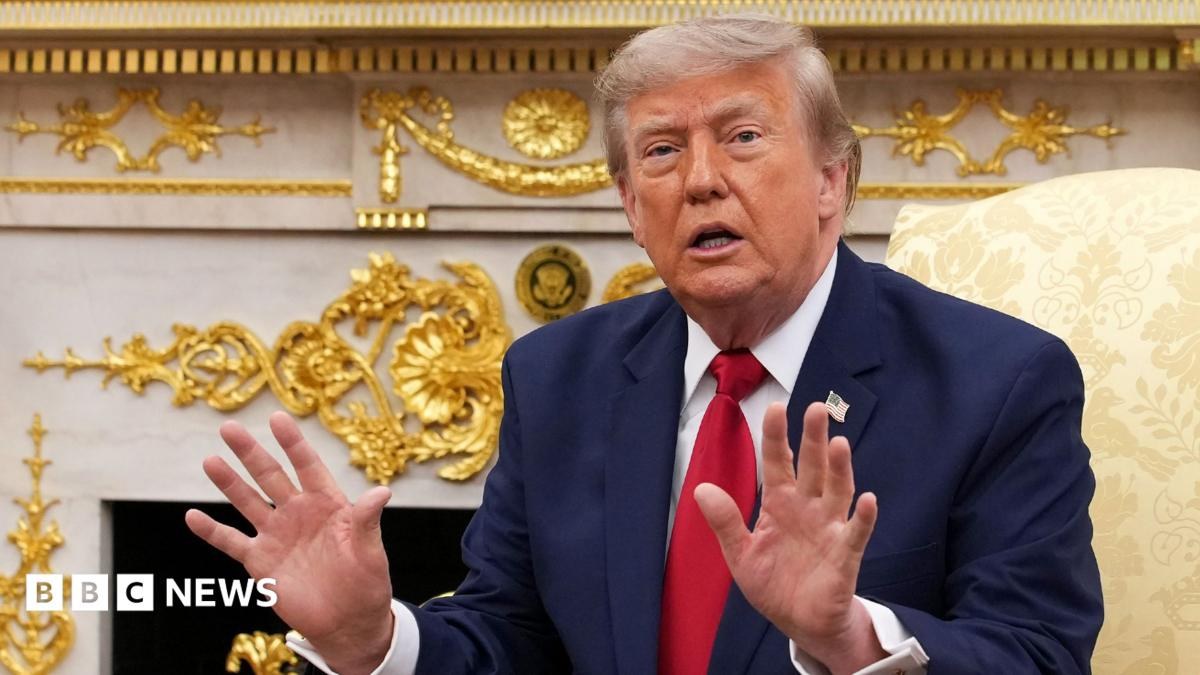
US President Donald Trump in the Oval Office of the White House on July 14, 2026 in Washington, DC.Photo: BBC News
Today · Jul 15
Trump spent 24 hours as self-declared "guardian" of the strait charging rent, then quietly became its bomber again.
Unexpected alignmentthe socialist WSWS and the anti-war libertarian Antiwar.com reach the same verdict from opposite premises, both calling the reimposed blockade and threat to civilian infrastructure a failed war of choice.
Missing from all 91 sources we read todayany concrete US off-ramp or a verifiable independent casualty count inside Iran.
9 source groups in today’s record
The facts9 points
01CENTCOM said US forces struck Iranian targets for a fourth consecutive day, hitting military sites near the Strait of Hormuz and Iranian coastal areas. (The Hill)
02The US naval blockade of Iranian ports was reimposed, with a US official saying "no ship will leave, and no ship will enter." (CNBC)
03Trump said he would replace his proposed 20% "Reimbursement Fee" on Strait of Hormuz cargo with "Trade and Investment Deals" from Gulf states. (U.S. News)
Show 6 more factsShow fewer
04Jordan's military said it intercepted three ballistic missiles fired from Iranian territory; Kuwait and Bahrain also reported intercepting missiles and drones. (Khaleej Times)
05Iranian cruise missiles struck the UAE-linked tankers Mombasa and Al Bahiyah, killing one Indian crew member and wounding eight others (six Indian, two Ukrainian nationals). (The Hill)
06US annual inflation (CPI) fell to 3.5% in June from 4.2% in May, with energy and gasoline price increases slowing sharply as the earlier ceasefire eased fuel costs. (CNBC)
07Brent crude rose to roughly $87 a barrel, up about 4-5% in 24 hours, as strikes resumed and the outlook for the Strait of Hormuz darkened. (Al Jazeera)
08The Senate voted 50-46 against advancing the roughly $1.15 trillion National Defense Authorization Act, short of the 60 votes needed, after Democrats objected to the Iran war and expanded Israel cooperation provisions. (Al Jazeera)
09DISPUTED: Iran's government spokesperson Fatemeh Mohajerani said more than 30 people have been killed "in recent days" and more than 260 wounded in the latest US strikes, per the Health Ministry; earlier in the week the Health Ministry reported different, lower tallies (14 killed/78 injured on July 8-9, then 17 killed/115 injured), and these figures have not been independently verified. (APA)sources conflict
ContextBrent crude has now risen for three straight sessions to roughly $87/barrel amid the strikes, after the earlier June 17 ceasefire had briefly cooled energy prices before collapsing this week. (CNBC)
How outlets handled it9 source groups · original passages and links▾
Where each side stood today
Far Left“The deliberate destruction of civilian infrastructure is a war crime under international law.”2 sources
“The deliberate destruction of civilian infrastructure is a war crime under international law.”World Socialist Web Site · condemning the threatened strikes on power plants and bridges as unlawful
WSWS is the only camp to name the threatened bridges and power plants as war crimes in the same breath, and reads the escalation as proof Trump "has achieved none of the war's objectives." CounterPunch adds the market thesis nobody else states: "Iran lost the war and is winning the settlement." [27][8]
“The president can’t just wish away months of war he said would last only four to six weeks”unnamed congressional aide, quoted by Truthout · disputes Trump's claim that a new War Powers clock started, given the war has run far longer than promised
“If Trump does restart the war, I think you’ll see people in court right away saying Congress has passed War Powers. Both houses have declared the war is illegal”Sen. Tim Kaine (D-Virginia), quoted by Truthout · threatens litigation and cites congressional votes declaring the war illegal under the War Powers Act
The left focuses on the constitutional breach, reporting Trump's July 10 letter to Congress as an attempt to restart the War Powers clock on a war that "never actually ended," and noting nearly 8 in 10 Americans want it over. [68][57]
“A world of monetized chokepoints is likely to be more inflationary, more fragmented and more militarized,”Michelle Brouhard and Emmanuel Belostrino, senior Rystad Energy analysts, quoted by CNN · warning that normalizing tolls at chokepoints like Hormuz would reshape global trade for the worse
“Forget the legal arguments, insurers will settle this first,”Nigel Green, CEO of deVere Group, quoted by CNN · arguing sanctions-wary insurers, not maritime law, will actually block ships from paying Iran's fees
The mainstream camp treats the strait as a precedent problem, warning a monetized chokepoint would be "more inflationary, more fragmented and more militarized." MSNBC's read is that Trump "lacks the basic rationality required to bring this foolish war to an end." [85][105]
“This has turned into a war of attrition, and wars of attrition tend to go on for a long, long period of time.”Rosemary Kelanic, Director of the Middle East program at Defense Priorities, quoted by BBC News · arguing the conflict has no realistic end date, just prolonged stalemate
“That's existing international law. That's the way it is in international waterways all over the world, and that's the way we expect it here.”Marco Rubio, US Secretary of State, quoted by BBC News · his own prior objection to shipping tolls, which Trump then briefly copied and reversed
The wire tier reads the toll reversal as weakness, noting Trump abandoned the fee within 24 hours and that his own secretary of state had days earlier said "No country is allowed to charge tolls or fees on an international waterway." PBS and BBC keep the ledger the traders watch: Brent up, gas prices climbing again, and a fifth of world…
“in response to the aggression carried out this afternoon by the child-killing US army”Iran's Islamic Revolutionary Guard Corps (IRGC), quoted by News From Antiwar.com · IRGC frames its Bahrain/Kuwait base strikes as retaliation for US aggression
“as long as US mischief continues in the region, not a single drop of oil or gas will be exported from the region”Iran's Islamic Revolutionary Guard Corps (IRGC), quoted by News From Antiwar.com · IRGC threatens to choke regional energy exports if US strikes continue
the language of a protection racket. Antiwar.com reports the blockade and strikes as pure escalation, tracking the fourth straight day of bombing and Iran's warning that "not a single drop of oil or gas will be exported from the region." [293][298]
MAGARelays Trump vowing to escalate to power plants and bridges until Iran negotiates1 source
Breitbart NewsJul 15
“We’re going to knock out all of their power plants. We’re going to knock out all of their bridges, unless they get to the table and negotiate.”President Donald Trump, quoted by Breitbart News · threatens Iran's energy and transit infrastructure as an ultimatum to force negotiations
“continue until I say that’s enough”President Donald Trump, quoted by Breitbart News · asserts unilateral control over when the campaign ends, with no other stated condition
"We're going to knock out all of their power plants.
“we're controlling the Straits; we're putting the blockade back, and it's a blockade not for anybody but Iran”President Trump, quoted by CBN News · Trump insists the reimposed blockade targets only Iran despite controlling the whole strait
“Because they're stone-cold, crazy. They are crazy”President Trump, quoted by CBN News · Trump dismisses Iran's leadership as incapable of serious negotiation
“Regional energy exports are either shared by all, or denied to all”Iran's Islamic Revolutionary Guard Corps (IRGC), quoted by Al Jazeera · IRGC threatens to close every export corridor benefiting the US and its allies if strikes continue
“I'll save the energy targets for last, but ultimately we'll hit energy targets”President Trump, quoted by Al Jazeera · Trump signals the next escalation step would be striking Iran's energy infrastructure
Al Jazeera centers Iran's own framing and casualty claims, quoting Iran's UN envoy and the IRGC vow that "Regional energy exports are either shared by all, or denied to all," and detailing strikes on Iran's southern coast. [512][510]
Day 7ICE kills a second man in a week, then halts most vehicle stops nationwidesince Jul 9Full timeline ›
ICE kills a second man in a week, then halts most vehicle stops nationwide
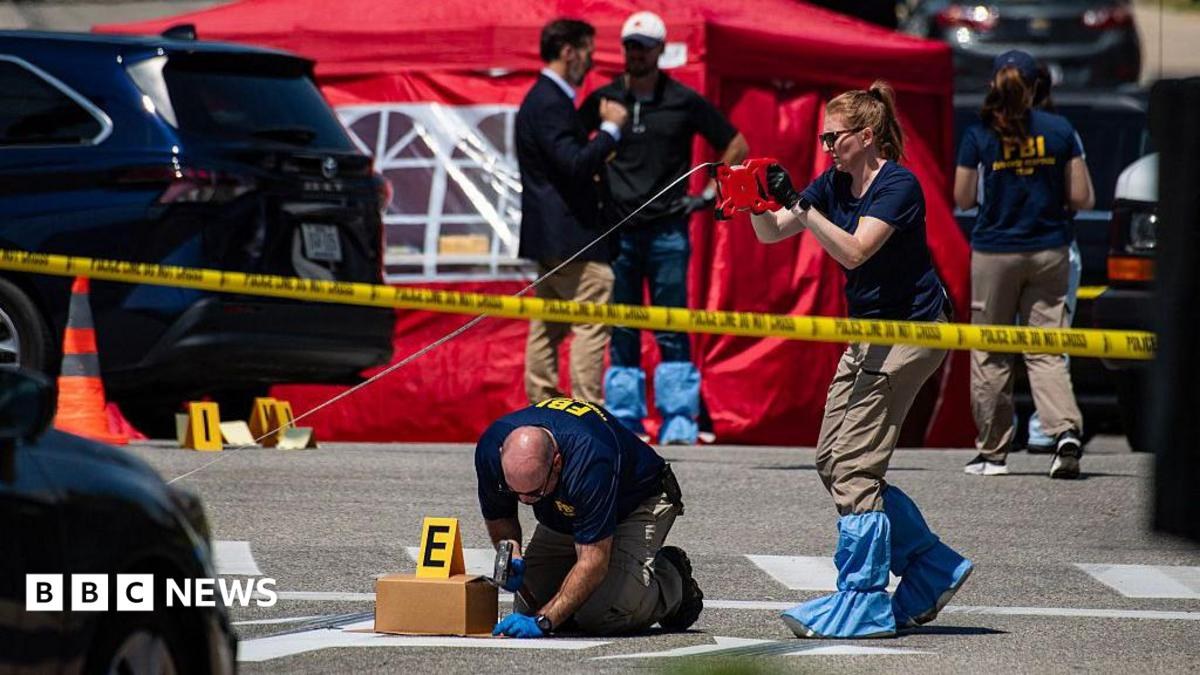
An image showing a pair of investigators behind caution tape surveying the scene of a shooting in Maine, where a 26-year-old man was shot and killed by an ICE agent. Behind them are an orange cone…Photo: BBC News
Today · Jul 15
A father was shot through his windshield in front of his daughter; his last words were "I tried to stop."
Unexpected alignmentthe Atlantic's anti-populist reporting and the socialist WSWS agree on the mechanism, that quota pressure plus undertrained recruits and no pursuit policy produced the killing.
Missing from all 91 sources we read todayany independent body-camera footage, because none exists.
8 source groups in today’s recordNo relevant coverage found from Tech
The facts10 points
01An ICE officer shot and killed Johan Sebastián Durán Guerrero, a 26-year-old Colombian national, at the intersection of Pool and Hill streets in Biddeford, Maine, around 7 a.m. Monday, July 13, 2026 (Portland Press Herald).
02DHS said officers were conducting surveillance tied to a "final order of removal" for a different person, and that the officer fired after the vehicle Guerrero was driving "attempted to flee the scene," citing fear for public safety (CNN).
03Homeland Security Secretary Markwayne Mullin said Guerrero was not the target of the operation (Forbes).
Show 7 more factsShow fewer
04Guerrero had work authorization and a Social Security number, according to reporting citing immigrant-rights sources; he was a father (Washington Post).
05DHS said the officers involved had not been issued body-worn cameras, attributing the gap to funding disruptions from recent government shutdowns (CNN).
06The officer had been hired by ICE earlier this year after previously serving as a Department of Veterans Affairs Police officer since 2017 (CBS News).
07A witness, Daniel Boucher, said he heard Guerrero say "I tried to stop" before he died (WGME).
08Six days earlier, on July 7, 2026, an ICE officer fatally shot Lorenzo Salgado Araujo, a 52-year-old Mexican national, in Houston; the Harris County medical examiner ruled the death a homicide, and DHS said officers were pursuing a different target when the officer fired after Salgado Araujo allegedly tried to ram him with his vehicle (CNN).
09Following the two shootings, Homeland Security Secretary Mullin directed ICE Enforcement and Removal Operations to suspend most vehicle stops nationwide, except for cases involving serious criminal targets or judicial warrants, while officers receive additional vehicle-stop training (CBS News).
10The Maine Attorney General's Office and the DHS Office of Inspector General in Boston are investigating the Biddeford shooting (WABI).
ContextThis is at least the 11th fatal shooting involving ICE agents since President Trump's second inauguration began in January 2025, according to Sen. Angus King's office (PBS NewsHour).
How outlets handled it8 source groups · original passages and links▾
Where each side stood today
Far LeftPortrays killing as deliberate state policy, blames Democrats' complicity in cover-up1 source
“It is a public declaration that federal agents may gun down anyone, anywhere, for supposedly trying to drive away—an assertion of the right to murder.”World Socialist Web Site · arguing ICE's revised justification for the shooting amounts to a claimed license to kill
“I wouldn’t even call this a bump in the road. This will be a short term review, so ICE feels comfortable.”Tom Homan, White House Border Czar, quoted by World Socialist Web Site · dismissing the vehicle-stop pause as trivial despite two deaths in a week
WSWS builds its account from neighbors, quoting the dying man's "I tried to stop," and is the only outlet to place the killing in a national count and tie it to a "$45 billion detention buildout" and the military occupation of American cities. [30]
“Now those flags fly from Maseratis outside country clubs, waved by billionaires aggrieved that someone might raise their tax rate from 36% to 38.5%.”MSNBC · arguing anti-government 'Don't Tread on Me' politics has curdled into elite tax grievance
“This isn’t rogue behavior. The pressure comes from the top, from those who have made this their life’s work.”MSNBC · asserting the killings stem from Trump administration policy, not individual agent error
Joe Scarborough's camp reads the killings as the predictable result of arrest quotas, invoking "Don't Tread on Me" against a party that once opposed Ruby Ridge and Waco. CNN and NPR report the body-camera failures and the pause on vehicle stops.
“weaponized his vehicle in an attempt to run over an ICE law enforcement officer,”DHS, quoted by Politics | The Atlantic · DHS's unverified justification for the earlier Houston shooting, with no video or body-camera footage to confirm it
The anti-populist right supplies the operational scoop: the shooter was a new hire, officers received "relatively little training in how to conduct vehicle stops safely," and there is no "vehicle-pursuit policy setting limits on the use of force." The Bulwark frames it as the arithmetic of noncompliance turned deadly against fathers.
“vehicle attacks are up 3400 percent”Tom Homan, White House Border Czar, quoted by PBS News Hour · justifying the nationwide pause on ICE vehicle stops as agent safety, not accountability
“They arrested over 200 people; 19 of them had criminal records. That means 90 percent didn't.”Sen. Angus King (I-ME), quoted by PBS News Hour · disputing ICE's claim it targets the worst of the worst using Maine's own arrest numbers
The wire tier prints the DHS account and the eyewitness account side by side, then reports the officers had no body cameras and that Sen. Angus King says "the whole premise of this operation is phony," noting a Maine surge arrested 200 people of whom "19 of them had criminal records." [229][244][235]
“Numbers are going down, we can't do s**t.”unnamed ICE/DHS agency source, quoted by Blaze Media · an agent's frustration that halting vehicle stops is cutting into arrest totals
“We haven't seen evidence”Sen. Angus King (I-ME), quoted by Blaze Media · King, briefed by DHS, says there's no proof yet the officer who killed Guerrero actually feared for his safety
The populist right reports the pause through the frustration of agents, citing a claimed "more than 1,300% increase in assaults on its officers" and framing the halt as a temporary retraining measure, not an admission of wrongdoing. Breitbart pivots to Mexico "sending lawyers to block ICE deportations." [358][368]
“weaponized his vehicle [against] law enforcement.”DHS, quoted by The American Conservative · DHS's contested claim used to justify the fatal shooting of Joan Sebastian Guerrero
“shouldn’t have been there in the first place.”Sen. Angus King (I-ME), quoted by The American Conservative · King argues the ICE operation itself, not just the shooting, was the underlying problem
The paleoconservative right runs a spare account, reporting DHS's claim that the driver "weaponized his vehicle" alongside the fact that Guerrero "does not appear to have had a removal order" and that the officer was placed on leave. [467]
The Senate's loudest war hawk died a day after his last trip to Kyiv, and Trump told the FBI to stop looking into it.
Unexpected alignmentthe anti-Trump Bulwark and MAGA's Glenn Beck both push back against the online celebration of Graham's death.
Missing from all 91 sources we read todayany evidence supporting the foul-play theories some Republicans floated.
7 source groups in today’s recordNo relevant coverage found from CommunistTech
The facts8 points
01Sen. Lindsey Graham, R-S.C., 71, died Saturday, July 11, 2026; the medical examiner's preliminary finding cited "aortic dissection due to arteriosclerotic cardiovascular disease" (CBS News).
02Graham had visited Kyiv and met Ukrainian President Volodymyr Zelenskyy the day before his death (NBC News).
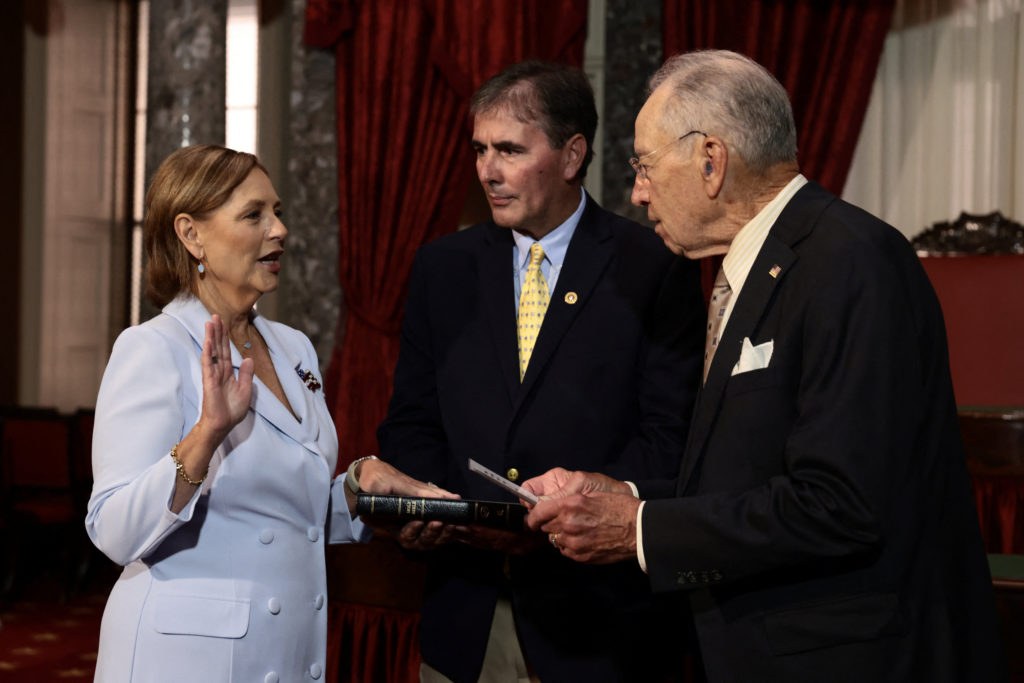
03South Carolina Gov. Henry McMaster appointed Graham's sister, Darline Graham Nordone, to fill the seat; she was sworn in Tuesday, July 14, 2026, by Sen. Chuck Grassley, becoming the first woman to represent South Carolina in the U.S. Senate (CBS News).
Show 5 more factsShow fewer
04Nordone will serve the remainder of Graham's term, which expires in January; a special primary is set for August 11, with a general election in November to fill the six-year term (PBS NewsHour).
05After their parents died about 15 months apart in the mid-1970s, Graham, then 22, became legal guardian of Nordone at age 13 and later adopted her so she could receive his military benefits (WRAL/AP).
06Two law enforcement sources said FBI agents continued examining Graham's death "out of an abundance of caution," with no evidence of foul play as of Saturday night (NBC News).
07President Trump said the FBI is "wasting their time" if agents are pursuing "conspiracy theories" about Graham's death (CBS News).
08A bipartisan group of senators unveiled the "Sanctioning Russia Act of 2026," with 26 initial co-sponsors evenly split between parties, urging its passage in Graham's honor; it would impose mandatory sanctions on Russian officials and 100% tariffs on the top five importers of Russian oil and gas (NBC News).
ContextGraham's fatal trip was his 10th visit to Kyiv since Russia's 2022 invasion, having first traveled there with Sen. Richard Blumenthal in July 2022 (CNN).
How outlets handled it7 source groups · original passages and links▾
Where each side stood today
Liberal“what Graham did ended up being more adrenaline than genuine belief.”6 sources
“I don’t see a lot of evil there”Donald Trump, President, quoted by NBC News · dismissing suspicions of foul play despite FBI agents searching Graham's home
“Just to answer the conspiracy theory, I’d love to say yes, but I think he — he had some problems,”Donald Trump, President, quoted by NBC News · rejecting the theory Russia poisoned Graham over his push for tougher Putin sanctions
The wire tier reports the cause of death flatly, quotes Trump saying the aortic condition is "almost undetectable," and notes agents were at the home "out of an abundance of caution" with "no new evidence" of foul play. [132][123]
“He called me like about 40 minutes later and he said, ‘Did I really say that? I can’t believe it,’ and he took it back,”Donald Trump, President, quoted by MSNBC · recounting how fast Graham reversed his Jan. 6 criticism of Trump
“what Graham did ended up being more adrenaline than genuine belief.”MSNBC (Chris Hayes) · casting Graham's brief Jan. 6 break with Trump as insincere and short-lived
MSNBC frames Graham as the man who saw the "continuity" from Bush-era war-hawkery to Trumpism sooner than most. The Guardian is harsher, cataloguing "a legacy of destruction" and his line that Israel should "flatten Gaza." [109][171]
“Death robbed him of the final prize for which he had sold his integrity.”The Bulwark · arguing Graham's decades of Trump deference were finally about to pay off in reelection when he died
“These were points at which he could have protected America and the world by turning away from Donald Trump.”The Bulwark · arguing Graham had repeated chances to break from Trump and chose not to
The anti-populist right reads Graham as a cautionary tale of capitulation to Trump, while a second Bulwark piece honors him as Ukraine's "unlikely champion" whose sanctions bill Kyiv now mourns. [260][265]
MAGAAmplifies Hawley's call to investigate possible Russian foul play in Graham's death3 sources
Breitbart NewsJul 15
“I think it is only wise and smart to look at every angle here. I absolutely think there should be a full toxicology report, autopsy — the whole thing.”Sen. Josh Hawley (R-MO), quoted by Breitbart News · arguing investigators should run a full toxicology report and autopsy rather than accept the official account
“He had a lot of enemies in the world, so I wouldn’t rule anything out.”Sen. Josh Hawley (R-MO), quoted by Breitbart News · citing Graham's foreign adversaries as reason to suspect foul play in his death
The populist right splits between Glenn Beck's plea to "Stop celebrating death, America" and Sen. Josh Hawley entertaining Russian foul play given Graham's Ukraine advocacy.
“I know there’s all sorts of conspiracy theories going along, and I think the FBI is wasting their time if they’re doing it.”President Donald Trump, quoted by One America News Network · dismissing FBI involvement in foul-play speculation around Graham's death
“Sounds unfortunate, but there’s not much you can do about it. If you look at his father died of the same thing at about the same age, so there was not much. They say it’s almost undetectable.”President Donald Trump, quoted by One America News Network · explaining the fatal aortic dissection as an undetectable, hereditary condition
OAN foregrounds Trump batting down "conspiracy theories," reporting he "watched all the medical reports" and that the tear was "almost undetectable," treating the death as natural. [408][400]
IdentityFrames Graham's legacy through his support for Catawba Nation sovereignty and gaming rights1 source
ICTJul 15
“His support and willingness to work alongside us were instrumental in helping secure the path that ultimately allowed the Catawba Nation to establish gaming in North Carolina – an achievement that has created jobs, strengthened our economy, and provided opportunities that will benefit generations of Catawba citizens.”Catawba Nation Chief Brian Harris, quoted by ICT · crediting Graham's support for securing the tribe's gaming compact and its economic payoff
Native outlets read Graham through the Catawba Nation, quoting Chief Brian Harris that he was "one of those partners" who helped the tribe secure gaming, alongside notes on his foreign-policy hawkishness. [538]
The day before his hearing, a federal judge said Trump's own lawyers used the courts to launder a $1.8 billion favor.
Unexpected alignmentlibertarian Reason and progressive Truthdig reach the same conclusion for different reasons, that the IRS "settlement" and the Comey case are corrupt and disqualifying.
Missing from all 91 sources we read todayany accounting of whether the anti-weaponization fund's protections still shield Trump's taxes despite the ruling.
7 source groups in today’s recordNo relevant coverage found from CommunistReligious Right
The facts8 points
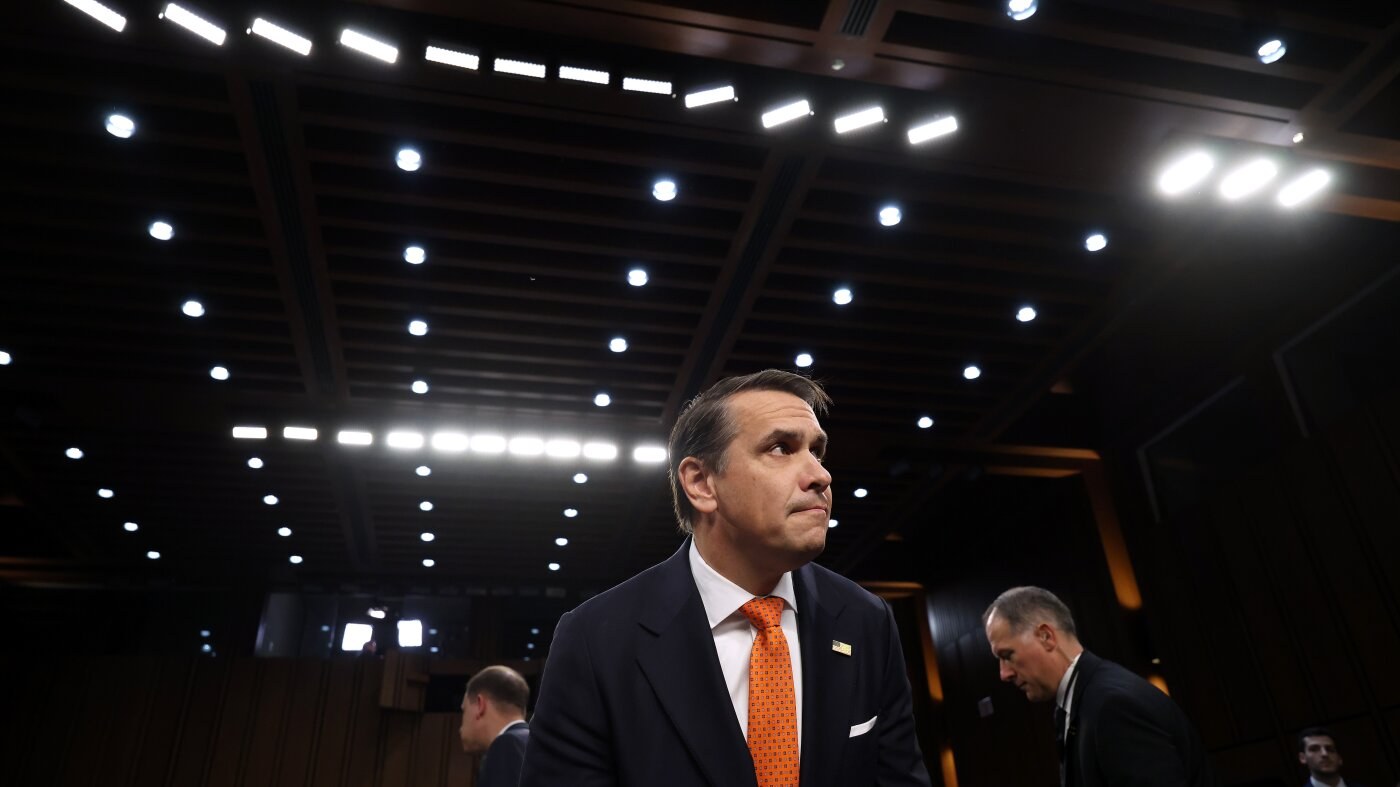
01Todd Blanche's Senate Judiciary Committee confirmation hearing for attorney general began at 9 a.m. EDT Wednesday, July 15, 2026, and continues Thursday, July 16 (PBS News).
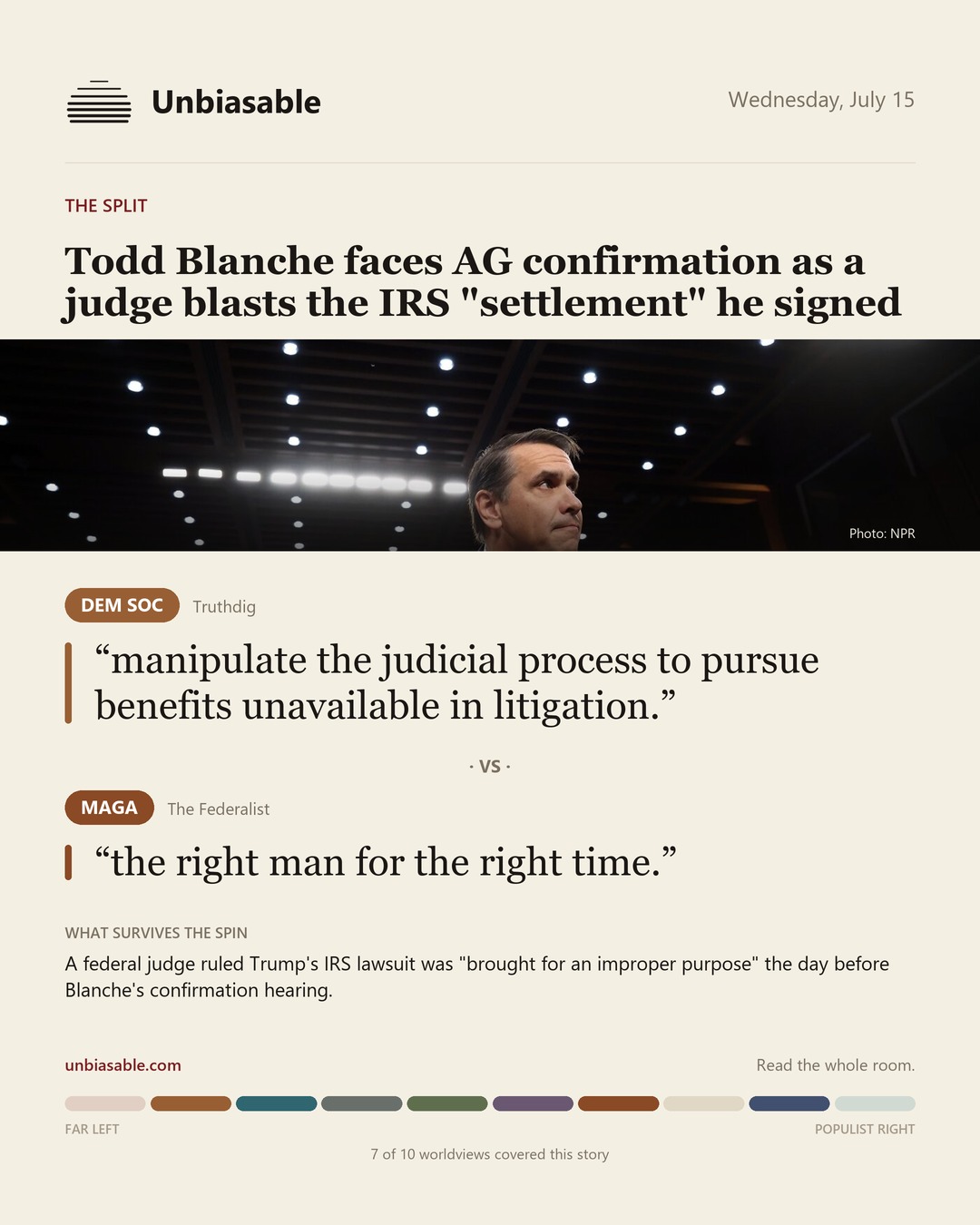
02U.S. District Judge Kathleen Williams ruled Monday, July 13, 2026, that Trump's lawsuit against the IRS was "brought for an improper purpose," finding the parties "worked in tandem and were never actually adverse" (PBS News).
03The suit, concluded in May 2026, produced a settlement that created a $1.776 billion "anti-weaponization" fund and directed the IRS to permanently end audits and inquiries into Trump and his family; Blanche has since said DOJ is "not moving forward" with the fund (NOTUS).
Show 5 more factsShow fewer
04Williams barred DOJ, the IRS and Trump from citing or using the settlement in any judicial, administrative or regulatory proceeding (CBS News).
05Williams referred Trump attorney Alejandro Brito to the Florida Bar for potential discipline and limited a second attorney, Daniel Epstein, from practicing in the Southern District of Florida; she also directed a copy of her order sent to the New York and D.C. bars, of which Blanche and Associate Attorney General Stanley Woodward are respectively members (PBS News; NOTUS).
06More than 1,200 former DOJ employees, organized by the alumni group Justice Connection, signed a letter urging the Senate to reject Blanche's nomination (HuffPost).
07Separately, 77 former DOJ officials signed a letter urging the Senate to confirm Blanche (The Federalist).
08The Senate Judiciary Committee is split 12-10 Republicans to Democrats; a single Republican defection would produce a tie that blocks the nomination from advancing, with Sens. John Cornyn and Thom Tillis both publicly undecided (NOTUS).
How outlets handled it7 source groups · original passages and links▾
“manipulate the judicial process to pursue benefits unavailable in litigation.”Judge Kathleen Williams, U.S. District Court for the Southern District of Florida, quoted by Truthdig · ruling Trump used the presidency itself to rig a legal outcome he couldn't have won on the merits
“No sitting President has ever sued federal agencies completely subject to his control for monetary benefits, or any benefits that inure to him, his family, and associates.”Judge Kathleen Williams, U.S. District Court for the Southern District of Florida, quoted by Truthdig · asserting the settlement was legally unprecedented self-dealing by a president suing agencies he controls
Truthdig centers Judge Williams's finding that Trump "acted in bad faith," reporting the settlement "forever absolved" the Trumps from tax enforcement. [54]
“earmark billions of dollars from American taxpayers to redress grievances not defined in the law.”Federal judge overseeing the IRS settlement case (unnamed in this article), quoted by NPR · ruling the $1.8 billion anti-weaponization fund had no legal basis, the crux of GOP senators' objection to Blanche
“Regrettably, over the past year, he has disregarded that call and erased that line, placing loyalty to President Trump above all else and damaging the independence and credibility of the department in ways that will have ramifications for decades,”Sen. Dick Durbin (D-Ill.), top Democrat on Senate Judiciary Committee, quoted by NPR · arguing Blanche abandoned DOJ independence for personal loyalty to Trump with long-term institutional damage
The wire tier tallies the votes, reporting GOP senators Tillis and Cornyn have concerns over the "anti-weaponization fund" and noting a judge "blasted the Justice Department over the settlement." [133][162]
“brought for an improper purpose — to gain the imprimatur of judicial legitimacy for a ‘settlement’ that had no viable basis in law or fact.”Federal judge overseeing Trump's IRS lawsuit (unnamed in this article), quoted by MSNBC · ruling the settlement Blanche signed was engineered to launder a legally baseless deal with court approval
“This is Blanche acting to benefit Trump personally, not in the interests of the American public.”MSNBC op-ed authors, former SDNY federal prosecutors · the authors' central charge: Blanche used DOJ power to secure Trump personal financial and legal benefits
Former SDNY colleagues argue Blanche "turned his back on" the department's principles, and the Guardian catalogues his indictments of Comey over a "seashell display" and the Maxwell prison transfer. [95][167]
The anti-populist right previews the hearing around Epstein survivors in the room and the same $1.8 billion fund, treating Blanche as a test of whether Senate Republicans find their spines. [262]
“a 'settlement' that had no viable basis in law or fact.”Judge Kathleen Williams, Southern District of Florida, quoted by Reason · her ruling found the Trump-IRS lawsuit was a sham case both sides secretly controlled, undercutting the legitimacy of Blanche's settlement
“I'm guessing I'll be in line,”James Comey, former FBI Director, quoted by Reason · needling the $1.8 billion fund Blanche created for 'lawfare' victims as self-serving payout to Trump allies
Reason is the sharpest right-of-center critic, calling the Comey case "laughable" and the IRS deal "a grossly unethical product of self-dealing," and concluding either "would be enough to disqualify him." [304][323]
“the right man for the right time”letter signed by 77 former DOJ officials, quoted by The Federalist · their case to Senate Judiciary leaders that Blanche's record qualifies him for confirmation as AG
It’s standard leftist fare, twisting the rule of law into “corruption” and confusing accountability and justice with weaponization.The Federalist · dismissing the 1,200-plus DOJ staff opposing Blanche's confirmation as partisan rather than substantive
The populist right stacks endorsements, citing 77 former DOJ officials, "670,000 sworn officers," and Trump's own post that "every Republican Senator should vote to CONFIRM Todd Blanche, ASAP!" [435][404][384][401]
“The Court declines to adopt or accept the credulous exercise of divorcing President Trump’s current job title from an understanding of what happened here.”Judge Kathleen M. Williams, quoted by theGrio · rejecting the DOJ's framing of the case as an ordinary settlement, arguing Trump used the presidency to self-deal
“In sum, the facts before this Court demonstrate there was never adverseness between the Parties; there was never a case or controversy; and there was never a question as to who would prevail.”Judge Kathleen M. Williams, quoted by theGrio · concluding the Trump-DOJ settlement was a staged proceeding, not real litigation, used to manufacture legal cover for the deal
theGrio reports Black advocates' objection that the "anti-weaponization fund" rewards Jan. 6 defendants while ignoring reparations claims, alongside Williams's ruling.
A US congressman was blocked at gunpoint, and the fight over the video has become a fight over the word "apartheid."
Unexpected alignmentnone; the camps split cleanly.
Missing from all 91 sources we read todayindependent verification of the closed-military-zone status and whether it had expired, a fact left to competing accounts.
3 source groups in today’s recordNo relevant coverage found from CommunistReligious RightTech
The facts9 points
01Rep. Ro Khanna (D-Calif.) says he was detained by armed Israeli settlers and later Israeli soldiers near Khirbet Zanuta in the southern West Bank (PBS News).
02Khanna says masked settlers armed with M4-style rifles surrounded his van and blocked the group from leaving (NBC News).
03A New York Times photographer was present and witnessed the incident (PBS News).
Show 6 more factsShow fewer
04The Israeli military (IDF) said it received a report of Israeli civilians blocking foreign nationals and media, dispatched troops, dispersed the civilians, and reopened the road, and said its soldiers did not take part in blocking the road (NBC News).
05Khanna disputes the IDF's account, saying soldiers initially sided with the settlers and that the group was released only after the U.S. Embassy and Israeli officials intervened (PBS News).
06Israeli Prime Minister Benjamin Netanyahu responded to Khanna's account, saying "We are a nation of laws" (NBC News).
07Rep. Thomas Massie (R-Ky.) and Khanna are co-sponsors of an amendment to H.R. 8595 that would cut $3.3 billion in Foreign Military Financing for Israel, part of a 10-year, $38 billion memorandum of understanding signed in 2016; the amendment would not affect the $500 million in annual Iron Dome/missile-defense funding (Responsible Statecraft).
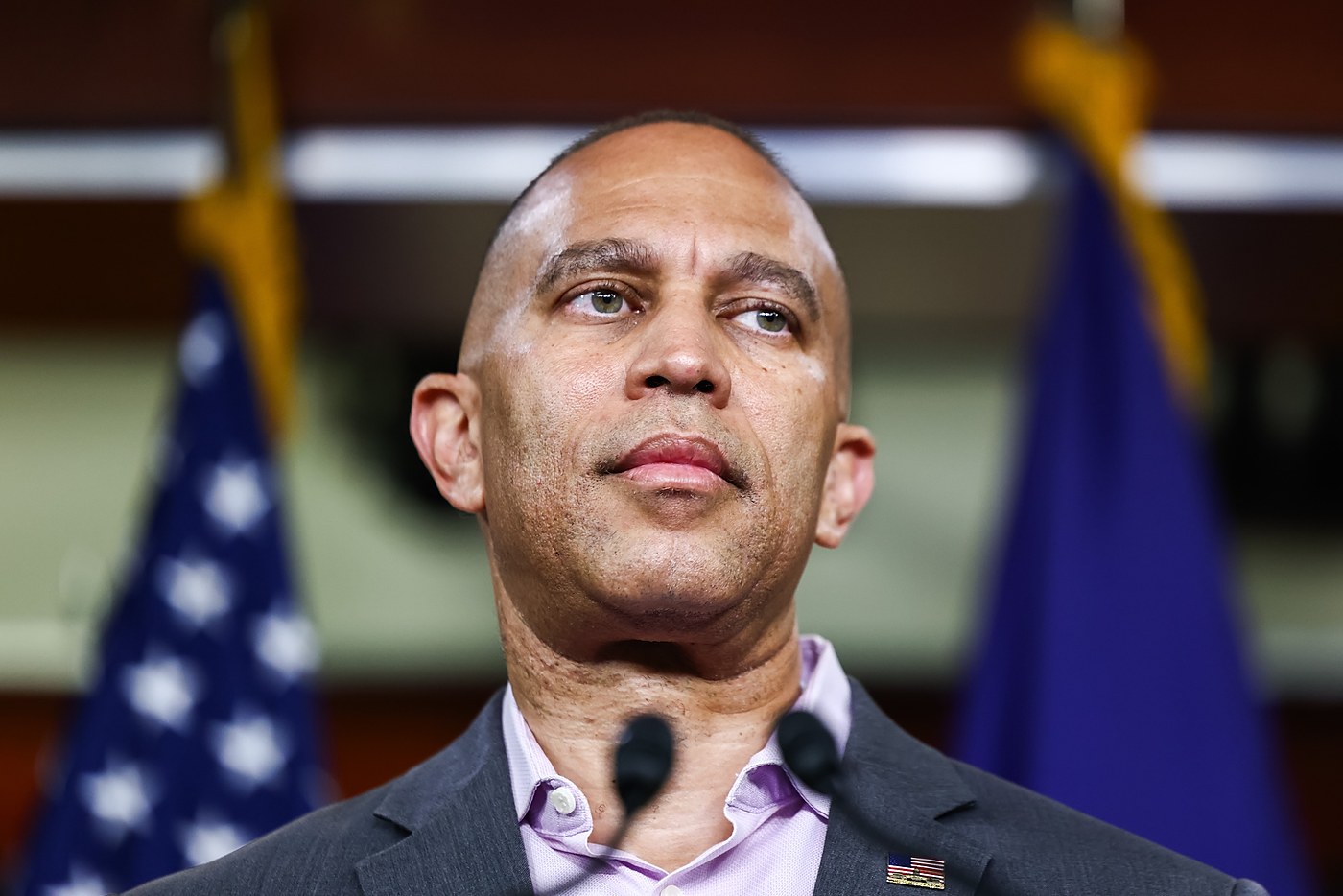
08House Minority Leader Hakeem Jeffries told Democrats he personally opposes the amendment but is not whipping members to vote against it, saying "there are good faith reasons that will result in Members voting in a variety of different ways" (JTA).
09The amendment is expected to reach a House floor vote on Wednesday, July 16, 2026 (JTA).
How outlets handled it3 source groups · original passages and links▾
Where each side stood today
Democratic SocialistPlatforms Khanna's own account of settler detention as apartheid2 sources
HasanAbiJul 15
“They were violent settlers who surrounded our van brandishing M4s, kicking the tires of the van, blockading our van in, taunting us, laughing at us, videotaping us.”Ro Khanna, U.S. congressman, quoted by HasanAbi · describes armed settlers surrounding and blockading his van during the West Bank visit
“It is apartheid. It is inhumane. It is cruel.”Ro Khanna, U.S. congressman, quoted by HasanAbi · his summary verdict on West Bank conditions after witnessing settler-Palestinian disparities
Hosting Khanna directly, Hasan Piker's read is that "an unaccountable force that is backed by US taxpayers" did to a congressman what it does daily to Palestinians, with Khanna urging viewers to "put aside your ideology" and "look at the facts on the ground." Truthout ties it to the aid fight. [72][71][63]
“now this man is crying victim”National Review · dismisses Khanna's detention account as manufactured grievance rather than a genuine incident
“On Shabbat, Ro Khanna's team drove off the road, which likely looks suspicious, and the first response team there was activated to investigate it.”National Review · offers an alternative theory that the stop was a routine security response, not deliberate targeting
Reason treats the incident skeptically and as a live debate, while a companion piece argues the broader push for an "embargo on Israel Is Vague and Confused," distinguishing a government arms embargo from a civilian trade ban. [309][311]
A convention in Bangor will pick a nominee in 15 days, and the Biddeford killing just made Susan Collins the story again.
Unexpected alignmentnone; each camp reads the collapse through its own prior.
Missing from all 91 sources we read todayany polling on whether a replacement nominee can hold Platner's 150,000-voter coalition.
4 source groups in today’s recordNo relevant coverage found from Religious RightTech
The facts9 points
01Graham Platner, who won Maine's June Democratic Senate primary, filed formal withdrawal paperwork July 10, 2026, after a former girlfriend publicly accused him of sexual assault, which he denies (NPR).
02The Maine Democratic Party will hold a nominating convention at 9 a.m. Saturday, July 25, at the Cross Insurance Center in Bangor to select Platner's replacement (WABI).
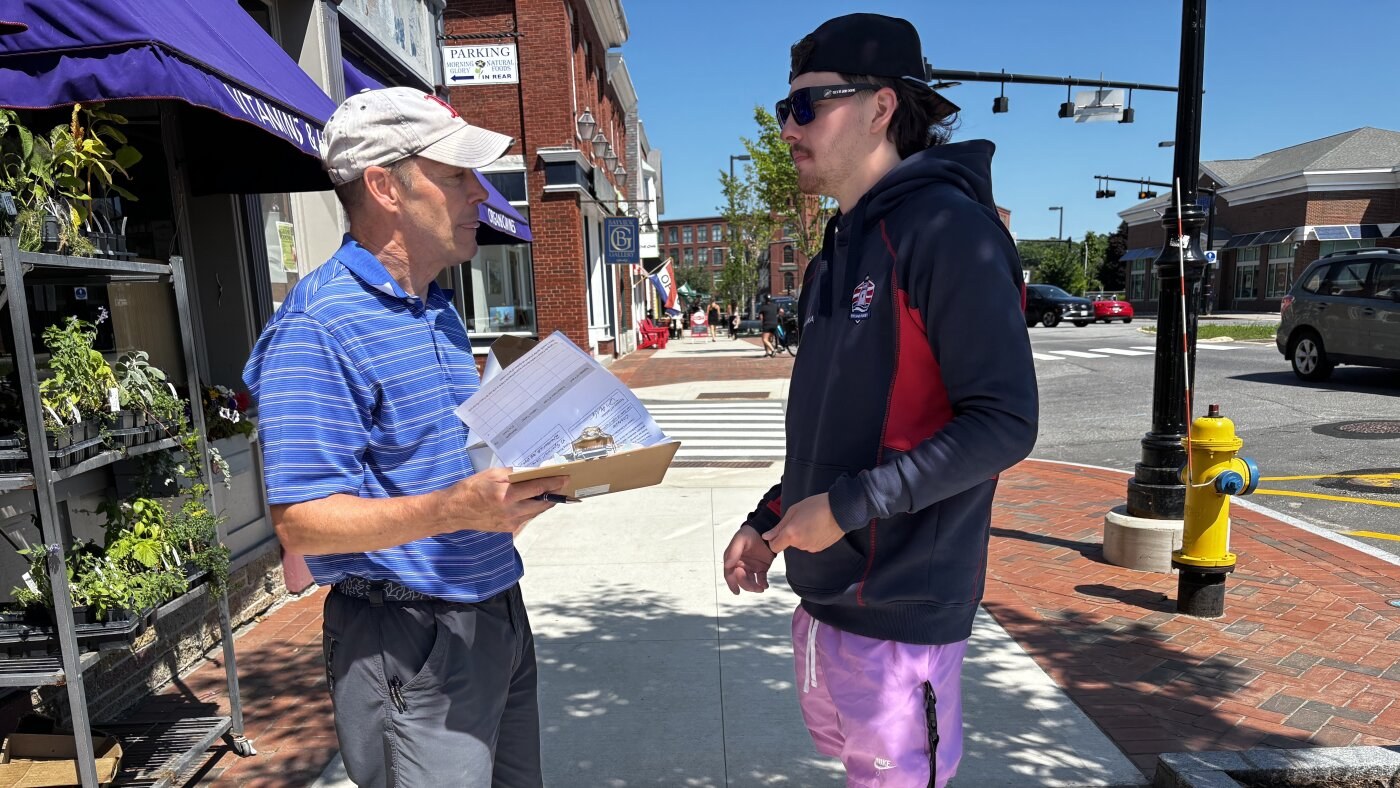
03The convention will seat 601 delegates: 101 state committee members and 500 county delegates chosen at county nominating meetings held July 18–19, with voting conducted in elimination rounds until one candidate wins a majority (The Maine Wire).
Show 6 more factsShow fewer
04Declared candidates include Nirav Shah, Troy Jackson, Jordan Wood and Dan Kleban, among others collecting support ahead of the convention (theintercept.com).
05On July 13, 2026, an ICE officer fatally shot Joan Sebastian Guerrero, a 26-year-old Colombian man, during a vehicle stop in Biddeford, Maine; DHS said the officer fired "fearing for public safety" (PBS NewsHour).
06The office of Sen. Angus King said Guerrero was not the target of the ICE operation and had work authorization and a Social Security number (NBC News).
07DHS Secretary Markwayne Mullin told Sen. Susan Collins that the department's Office of Inspector General, working with the FBI, is investigating the shooting, and the agent involved has been placed on leave (Maine Public).
08In June 2026 the Senate adopted a budget resolution 50-48 that included roughly $70 billion for ICE and Customs and Border Protection funding through 2029; Collins voted for it, and the measure did not include Democrats' proposed body-camera mandates, warrant requirements or face-mask ban (CNBC).
09Following the shooting, Democratic candidates Nirav Shah and Troy Jackson publicly called to abolish ICE and criticized Collins at protests outside her office and the ICE facility in Scarborough (Portland Press Herald).
ContextMaine's replacement convention must produce a nominee by July 27, giving delegates only two days after the July 25 Bangor vote to certify a candidate for the general-election ballot (Portland Press Herald).
How outlets handled it4 source groups · original passages and links▾
Where each side stood today
Democratic SocialistFrames ICE killing of Durán Guerrero as proof ICE must be abolished, not reformed1 source
“Not only did she vote to fund ICE with another $70 billion, she was the deciding vote for that.”Nathan Bernard, Drop Site News correspondent, quoted by Truthout · tying Sen. Collins to the ICE funding vote that preceded the fatal shooting
The left ties the seat directly to ICE, quoting a correspondent that voters want to "hold Susan Collins accountable" for the $70 billion vote after the Biddeford shooting. [61]
“We are in a perilous situation, and there is no perfect way to deal with an unprecedented situation like this,”Jordan Wood, candidate for the Democratic nomination, quoted by CNN · acknowledging Maine Democrats have no precedent for replacing a nominee this fast
“this movement has always been bigger than one person.”Troy Jackson, former Maine Senate President and Senate candidate, quoted by CNN · arguing Platner's working-class progressive movement should outlast him
The wire tier covers the mechanics: 500 delegates picked at county meetings, a July 27 ballot deadline, and campaigns making "an all-out blitz" of phone calls. PBS reports Democrats using the Biddeford killing to "shift the conversation away from" the Platner scandal.
House votes to make daylight saving time permanent
After 52 years, Congress is trying the exact experiment it repealed in under a year the last time.
A man sets the clock forward to March 25, 2023.Photo: BBC News
The House passed the Sunshine Protection Act 308-117; its fate in the Senate is uncertain. [130][154]
The split Backers say Americans want to "ditch the switch" [98][414]; critics say Congress is "reviving a failed experiment from the 1970s" that was repealed in months [103].
Unexpected alignmentboth the center and the populist right acknowledge the Senate is where this likely stalls.
Missing from all 91 sources we read todayany resolution of the standard-time-versus-daylight-time health debate the bill sidesteps.
3 source groups in today’s recordNo relevant coverage found from CommunistEstablishmentLibertarianReligious RightIdentityTech
The facts7 points
01The House passed the Sunshine Protection Act of 2025 (H.R. 139) 308-117 on July 14, 2026, as Roll Call vote 238 (House Clerk)
02The bill would end the twice-yearly clock change and put the country permanently on the time currently observed March through November, unless a state opts out before the act takes effect (Congress.gov)
03Twenty-two Republicans voted against the bill; House Minority Leader Hakeem Jeffries opposed it (Washington Post)
Show 4 more factsShow fewer
04President Trump has voiced support for making daylight saving time permanent (Fox News)
05The bill now moves to the Senate, where its floor path is uncertain (Washington Post)
06Sen. Tom Cotton (R-Ark.) previously blocked a Senate companion bill from passing by unanimous consent, citing concerns about dark winter morning commutes (Cotton Senate floor speech)
07Congress enacted permanent daylight saving time in December 1973 (signed by President Nixon in January 1974) and repealed it in October 1974 after public support fell amid winter-morning darkness concerns, including child traffic deaths in Florida (Smithsonian Magazine)
ContextThe last permanent-DST experiment began January 1974 under Nixon and was repealed by Ford in October 1974, after roughly nine months, when winter morning darkness proved unpopular (NPR).
How outlets handled it3 source groups · original passages and links▾
The source record
LiberalReports the vote straight, flags Senate doubts over dark mornings4 sources
“It’s time that people can stop worrying about the ‘Clock,’ not to mention all of the work and money that is spent on this ridiculous, twice yearly production. It will also be a very nice WIN for the Republican Party. Take it!”President Donald Trump, quoted by NBC News · casts ending the clock change as a political win for Republicans
“you get more depression, you get out of joint”Rep. Rich McCormick, R-Ga., quoted by NBC News · an ER doctor arguing the biannual clock change carries real health costs
The wire tier reports the vote and the split, noting proponents cite evening daylight while detractors warn of "darker and potentially more hazardous winter mornings," and flags the Senate as the obstacle. [130][154]
“It’s time that people can stop worrying about the ‘Clock,’ not to mention all of the work and money that is spent on this ridiculous, twice yearly production. It will also be a very nice WIN for the Republican Party. Take it!”President Donald Trump, quoted by MSNBC · casts ending the clock change as a political win for Republicans
“While the effort was initially popular — nearly 80% of Americans supported the switch when it was theoretical — public approval collapsed to 42% after a few months once the switch became a reality.”MSNBC · warns the 1970s precedent shows public support for permanent DST collapses once it takes effect
MSNBC foregrounds the history, reporting the 1974 version collapsed after "public approval collapsed to 42%," and notes leaders brought the bill up partly "to appease" Rep. Anna Paulina Luna.
“push winter sunrises to an absurdly late hour”Sen. Tom Cotton, R-AR, quoted by The Daily Wire · warning permanent DST would delay winter sunrises into unsafe, dark morning commutes
“I think having kids go to school when it’s dark doesn’t make sense.”Rep. Steny Hoyer, D-MD, quoted by The Daily Wire · opposing the bill over sending schoolchildren out before sunrise
Kat Cammack that "Floridians — we are the Sunshine State" and Trump calling clock changes "a ridiculous, twice-yearly production." [414][390][364]
The first statewide data-center ban lands the same week 200 economists say "act now" on AI's economic shock.
Unexpected alignmentthe hype-critical left (TYT) and the decelerationist camp both treat the economists' statement as a warning, even as the abundance optimist (Smith) reads the same labor data as evidence nothing has happened yet.
Missing from all 91 sources we read todayany hard number on how many jobs AI has actually eliminated, which the optimist camp notes is missing from the macro data.
4 source groups in today’s recordNo relevant coverage found from EstablishmentReligious RightIdentity
The facts8 points
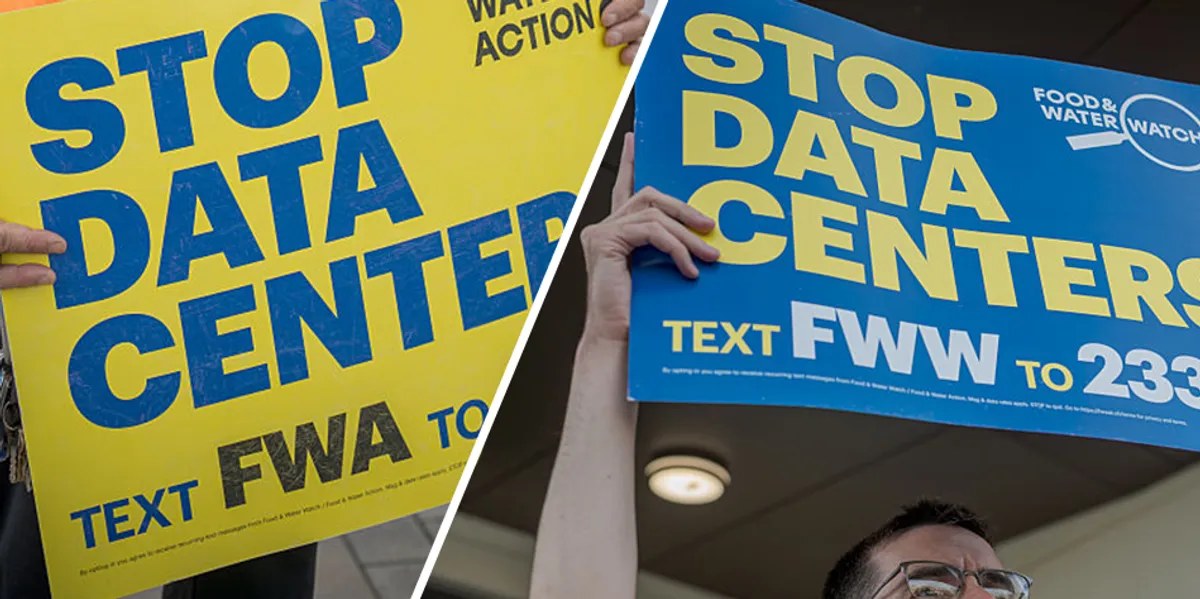
01New York Gov. Kathy Hochul signed Executive Order No. 62 on July 14, 2026, pausing discretionary state permits for data centers consuming 50 megawatts or more of power. (Governor's Office)
02The moratorium holds permits in abeyance until the state Department of Public Service completes a Generic Environmental Impact Statement; the order sets no fixed end date, though officials have described a roughly one-year process. (Governor's Office; CNBC)
03It is described as the first statewide moratorium on new large ("hyperscale") data centers in the United States. (Route Fifty; The Hill)
Show 5 more factsShow fewer
04As of May 2026, roughly 12 gigawatts of data-center load requests were pending in New York's grid interconnection queue. (Governor's Office)
05The order directs the Department of Public Service to design a "New York Grid Acceleration Fund" and Empire State Development to create a Community Investment Framework within 60 days, under which data-center developers could later be required to contribute to grid, community, and workforce investments, funding requirements are established as a future framework, not imposed immediately. (Governor's Office)
06A separate one-year moratorium bill passed by the state legislature in June 2026, which Hochul has not signed, would cover data centers drawing as little as 20 megawatts and mandates developer-funded community investment funds, a data-center-specific utility rate, and infrastructure contributions immediately, rather than through a future rulemaking. (Buffalo Toronto Public Media)
07On July 13, 2026, more than 200 economists and AI researchers, including 16 Nobel laureates, released the "We Must Act Now: A Statement on AI's Transformation of the Economy," organized by Erik Brynjolfsson, Ajay Agrawal, Anton Korinek and Tom Cunningham. (Stanford Digital Economy Lab)
08The statement warns AI could drive "an unprecedented transformation of our economy, larger than the Industrial Revolution," citing risks including large-scale job displacement alongside potential gains in living standards, and calls for expanded research and policy preparation. (Stanford Digital Economy Lab)
ContextThe legislature's own one-year moratorium bill, passed in June 2026 and not yet signed by Hochul, would have applied to data centers as small as 20 megawatts, twice as broad as the governor's 50-megawatt executive order threshold (Stateline).
How outlets handled it4 source groups · original passages and links▾
Where each side stood today
Democratic Socialist“Another company has fired 10% of their employees.”1 source
The Young TurksJul 15
“I'm not sure that it's ever gonna get better than today. Not because today's so great, but because I'm nearly positive tomorrow's. And the day after that is going to be worse, and on and on we go until best case scenario, we elect someone in 28 and they begin the turnaround in 2029.”Jank, TYT host · predicting a multi-year economic decline driven by AI job losses with no relief until a 2029 political turnaround
“Another company has fired 10% of their employees.”Jank, TYT host · citing AI-driven layoffs as the kind of news markets reward with higher stock prices
Cenk Uygur reads the economists' statement as vindication of alarm, warning of "an enormous amount of unemployment" and noting "white collar payrolls have been contracting now for years." [78]
“The bottom line is progress shouldn't arrive with a higher utility bill, deleted water supply or noise pollution. So we have no choice but to address these challenges created by these massive facilities.”Kathy Hochul, New York governor, quoted by NPR · justifying the pause by naming the concrete costs to residents the order is meant to stop
NPR reports the order as a consumer and environmental measure, quoting Hochul that "progress shouldn't arrive with a higher utility bill," and notes 15 states considered moratoriums this year. Fed Chair Warsh, by contrast, calls AI "the most striking feature of the economy right now." [136][88]
“So far they've just been wrong, and many of them are feeling pretty astonished right now.”Noahpinion (Noah Smith) · arguing AI industry predictions of job destruction haven't materialized in employment data
“the current focus on AGI is, in all but name, an agenda for displacing humans from meaningful work”Daron Acemoglu, economist, quoted by Noahpinion · the opposing view the statement's co-author holds, that AI development is aimed at replacing workers
Noah Smith declines to sign, arguing "steering" AI toward complementing humans is "basically impossible" because "no one actually knows how a technology will complement or substitute for human labor," and citing flat employment data. [617]
“the strongest standards in the nation for data center development”Gov. Kathy Hochul, quoted by Futurism · claims her order will produce the toughest data-center rules of any state, following the moratorium
Futurism frames the ban as Democrats belatedly capitalizing on a "bipartisan backlash," and separately reports "A Majority of Americans Now Support Seizing Wealth From AI Industry." [610][615]
4 days of coverage · last new coverage Jul 13 · 2 days since new coverage
The whole file ›
The claim ledger: what the record settled today
Contradicted
“Somewhat surreptitiously, the Pentagon has refused to acknowledge that since October 2023 that 750 U.S. service members have been killed in the Middle East region occupied by CENTCOM forces.”
Liberation News · logged Apr 3 · resolved in 103 days
The 750 figure is wounded-plus-killed combined; actual reporting puts deaths at only about 15, not 750 killed.
“The terms that Iran leaked out to the Fake News have NOTHING to do with the terms that were agreed to, in writing”
President Trump via Breitbart News · logged Jun 13 · resolved in 32 days
The official MOU text released later matches the IRNA-leaked terms on Hormuz and nuclear timing, undercutting Trump's claim the leaks had nothing to do with the real deal.
“The traffic of commercial vessels will immediately start”
the memorandum of understanding (MOU) via NBC News · logged Jun 21 · resolved in 24 days
Traffic resumed after the MOU but Iran shut the strait again days later and the truce later collapsed, so sources conflict on whether the resumption held.
Photo: CounterPunchWeapons manufacturers and defense contractors stand to gain from a US-Israel military-integration rider carried inside the FY2027 National Defense Authorization Act, which authorizes $1.14 trillion, not the $1.5 trillion reported in some coverage (congress.gov). Section 219 (House) and Section 1217 (Senate), the "United States-Israel Defense Technology Cooperation Initiative," would require the defense secretary to appoint an "executive agent" to fuse US and Israeli procurement, R&D, and production, positioning contractors for what critics call "new seamless contracts." Who pays: US taxpayers, through that $1.14 trillion authorization. Who decided: the House and Senate Armed Services Committees wrote the provisions into the must-pass bill, and the House Rules Committee blocked a bipartisan Massie-Khanna amendment to strip it without a vote or debate [3][4]. The connection: AIPAC actively lobbies for the initiative and reported $844,410 in federal lobbying spending in Q1 2026 (OpenSecrets), while Lockheed Martin, among the primes positioned to gain, spent $15.7 million lobbying in 2025 with the defense budget among its top issues (OpenSecrets). [3][4][63]›
Photo: World Socialist Web SitePrivate detention operators and an expanded ICE workforce gain from a $69.5 billion, three-year reconciliation package funding ICE and Border Patrol through FY2029 (CBO). Who pays: US taxpayers, via reconciliation appropriations that bypassed the Senate filibuster, and immigrant communities absorbing the enforcement surge. Who decided: Senate Republicans passed the bill 52-47 on a party-line reconciliation vote, with Sen. Lisa Murkowski the only Republican "no" and Sen. Susan Collins voting for final passage despite opposing an "anti-weaponization fund" provision; this was not a single deciding vote, the bill would have passed even without Collins. The connection: GEO Group and CoreCivic, which have already collected over $1 billion and $544 million respectively in post-2025 ICE contracting (usaspending.gov), maintain active corporate PACs (FEC: GEO Group, FEC: CoreCivic) and lobbied Congress on detention-related legislation (OpenSecrets). Senior ICE officials themselves have pointed to arrest quotas, not this connection, as the pressure behind the fatal Maine and Houston shootings [30][116][61].›
The only outlet to report Petro's claim that Israeli firm BlackCore "deployed 500,000 bots" against his leftist ally, a foreign-interference story the mainstream ignored.
Blaze uniquely framed New York's data-center pause as a Democratic economic self-own.
Voices: who spoke today, in their own words
They agree
Is there any way out of the Iran war
“He died doing what he loves most, selling a war. Like he went out to Ukraine to try to put Middle East peace is about as ambitious as a bucket-list item can get.”
“So now we're completely back in the Iran war, and there's no chance of peace left. So that's going to be a nightmare in a way that like no one understands right now.”
Is the planet the real emergency nobody leads with
“This massive increase in severe weather events is absolutely tied to climate change. And we're seeing an increase in droughts, an increase in famines, running out of water.”
“I can never understand why our burning planet isn't the top news story every day on every network. When Trump dies, and he will sooner than later, we are still going to be here on a planet that is quite literally gasping for breath.”
US bombs Iran for a fourth day, drops the 20% Hormuz toll, reimposes blockade
“This has turned into a war of attrition, and wars of attrition tend to go on for a long, long period of time.”
RRosemary KelanicDirector of the Middle East program at Defense Prioritiesin BBC NewsTodd Blanche faces AG confirmation as a judge blasts the IRS "settlement" he signed
“No sitting President has ever sued federal agencies completely subject to his control for monetary benefits, or any benefits that inure to him, his family, and associates.”
JJudge Kathleen WilliamsU.S. District Court for the Southern District of Floridain TruthdigRo Khanna says settlers and Israeli soldiers detained him in the West Bank
“They were violent settlers who surrounded our van brandishing M4s, kicking the tires of the van, blockading our van in, taunting us, laughing at us, videotaping us.”
RRo KhannaU.S. congressmanin guest on HasanAbiMaine Democrats scramble for a Platner replacement as ICE anger reshapes the race
“We are in a perilous situation, and there is no perfect way to deal with an unprecedented situation like this,”
JJordan Woodcandidate for the Democratic nominationin CNNHouse votes to make daylight saving time permanent
“you get more depression, you get out of joint”
RRep. Rich McCormickR-Ga.in NBC NewsNew York halts new data centers as economists warn AI is coming for jobs
“The bottom line is progress shouldn't arrive with a higher utility bill, deleted water supply or noise pollution. So we have no choice but to address these challenges created by these massive facilities.”
KKathy HochulNew York governorin NPRUS bombs Iran for a fourth day, drops the 20% Hormuz toll, reimposes blockade
“That's existing international law. That's the way it is in international waterways all over the world, and that's the way we expect it here.”
MMarco RubioUS Secretary of Statein BBC NewsTodd Blanche faces AG confirmation as a judge blasts the IRS "settlement" he signed
“I'm guessing I'll be in line,”
JJames Comeyformer FBI Directorin ReasonMaine Democrats scramble for a Platner replacement as ICE anger reshapes the race
“this movement has always been bigger than one person.”






 Breitbart NewsJul 15